
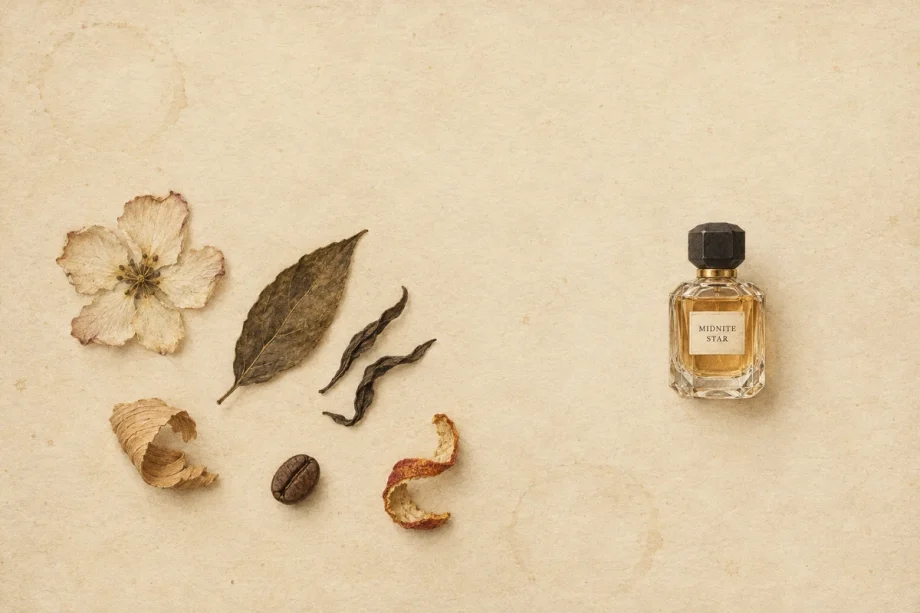
Perfume notes explained — this page is the map of them: every note this collection actually names, grouped by the job each one does, with a pointer to the full page for each note that has one. Think of it less as an essay and more as a perfume notes chart for the ten bottles in this range, written to be read in either direction: straight through on a first visit, or consulted one entry at a time when a perfume notes list leaves you guessing.
The collection has spent a month being documented note by note, and until now no page tied those pieces together. This is that page. Each entry below is two lines of orientation and a door: the individual explainers go deeper than anything here can, and they are where you should head the moment a note catches your interest. Everything in the atlas is drawn from the bottles’ own note lists — no borrowed claims, no outside authority — a small promise worth stating up front, given how much loose folklore circulates around the word note itself.
How a Note List Works, in Two Minutes
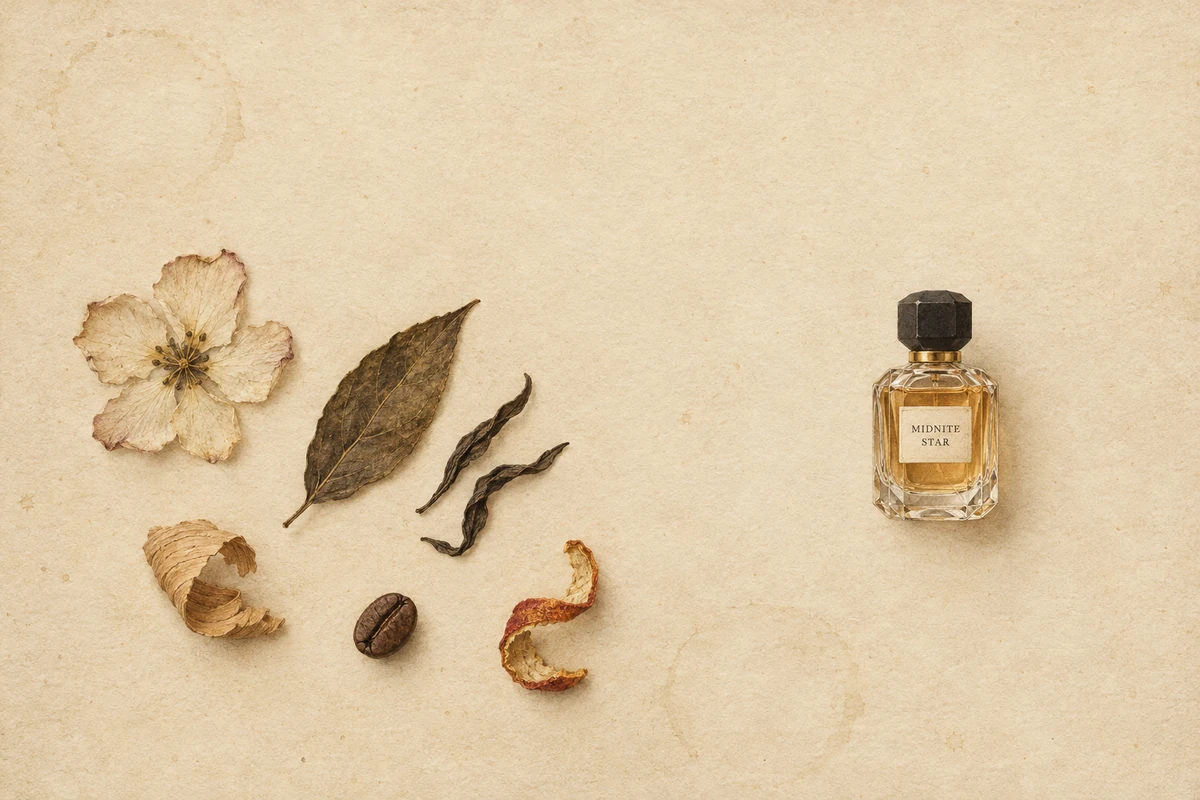
A fragrance is described as a pyramid of three layers. The top notes are what you meet in the first minutes: bright, quick materials that announce the composition and then step aside. The heart is the middle — the fragrance’s true face, arriving once the opening has burned off. The base is what remains for hours: the slow, heavy materials that decide how a fragrance ends and how long it stays. A note list is therefore a shape, not a recipe, and learning how to read perfume notes is mostly a matter of asking one question of each entry: what is this note doing here — announcing, carrying, or staying? The three layers, and the way notes behave across them, get a fuller treatment in how to read a note pyramid — read that page alongside this one, and the rest of this atlas will click. Keep the three layers in mind throughout: almost every entry below lives in one of them.
Musk: The Through-Line
Nine of the ten bottles list musk somewhere — and the one that does not is Manor Tea Party, alone in the range on that count. In 1957 it appears at all three levels at once, which tells you how load-bearing it is: musk is the note the collection leans on for rounding — the soft, skin-close texture that keeps a composition from feeling sharp-edged or unfinished, whether it is running through a floral heart or holding down a base. If you want to understand what half these bottles have in common before you read any of their note lists, the entry to start with is musk.
Reading musk on a list is easy once you know its habits. Near the base it is a foundation, softening everything above it. In the middle it is warmth and continuity — often the reason a floral heart does not feel cold. And when it appears at the very top, as it does in one composition here, it takes the first edge off the opening so the transition into the heart feels seamless. Same material, three jobs, and the musk page walks through all three — it is also a natural first lesson in note literacy, because once you can hear musk in a composition, you start hearing everything else around it.
The Floral Hearts
The middle layer is where this collection does most of its floral work, and four florals divide it between them.
- Jasmine — the range’s most used floral: seven of the ten bottles carry it in the heart, from 1957 and Black Aya to Midnight Star, Napoleon Eau, Pink Encounter, Hawthorn Blossom and True Goddess. It reads rounder and fuller than its reputation suggests, and its role is usually connective — rounding a citrus, bridging toward a wood — which is why it appears in so many different arrangements without ever dominating them. Full page: jasmine.
- Orange blossom — two hearts, in 1957 and Black Aya, doing two completely different jobs: in one it is part of a soft musk arrangement, in the other the single bright line in a dark roasted composition. Full page: orange blossom.
- Iris root — two bases, in 1957 and Hawthorn Blossom, and the range’s resident texture note: it is where the powdery, cool finish in those two compositions comes from. Full page: iris root.
- Violet — two appearances, split between the top of Hawthorn Blossom and the heart of True Goddess. No page of its own yet; it shares the powdery register with iris, so if that texture is what you are chasing, the two entries read as companions.
Rose and lily of the valley complete the register, each leading the bottles that carry them — the latter doing so in the range’s only eau de toilette. Both repay a closer look for the same reason: a floral word can stand for very different textures depending on whether it leads a composition or quietly supports one.
The floral group is also the clearest place to watch this atlas’s central rule at work: seven hearts carry jasmine, and no two of those seven read the same, because each one has different materials standing beside it. The flower is one half of the equation; the arrangement is the other.
The Dry Woods and the Mossy Floor
Beneath the florals sits the group that gives this collection its structure, and it reads as a contrast between dry and creamy.
- Cedar — five bases, more than any other wood: 1957, Midnight Star, Napoleon Eau, Pink Encounter and True Goddess all end on it. Cedar is the dry pole of this group — it keeps a base from going sweet or shapeless. Full page: cedar.
- Sandalwood — two bases, in Midnight Star and Lily of the Valley No. 7, and the creamy counterweight to cedar: smoother, softer, more rounded at the same depth. Full page: sandalwood.
- Patchouli — three appearances, at the base of Black Aya and Hawthorn Blossom and in the heart of Napoleon Eau. The darkest of the three woods, and the one most responsible for the earthy weight in this range. Full page: patchouli.
- The chypre skeleton — one base in the entire range carries the classic triad of oakmoss, birch and ambergris, the structure that gives a fragrance its mossy, old-library floor. As the range’s single example of that structure, it is also the quickest way to hear what the term means: where those three sit inside a composition is the subject of the chypre skeleton.
If woods are what you love, note that Midnight Star pairs cedar with sandalwood and musk at once — the range’s densest wood arrangement — and that this whole group is where the woody family lives.
Woods are where a fragrance’s second half gets its shape — the difference between an ending that feels composed and one that simply fades. The five cedar bases and the two sandalwood ones are this collection’s spine; almost every long arc in the range runs through them. If you want to test the difference in one sitting, put the cedar and sandalwood entries side by side — they describe the same layer of the same kind of structure, one dry and one creamy, and the contrast is there to be heard in half the bottles above.
The Sweet and Resinous Read
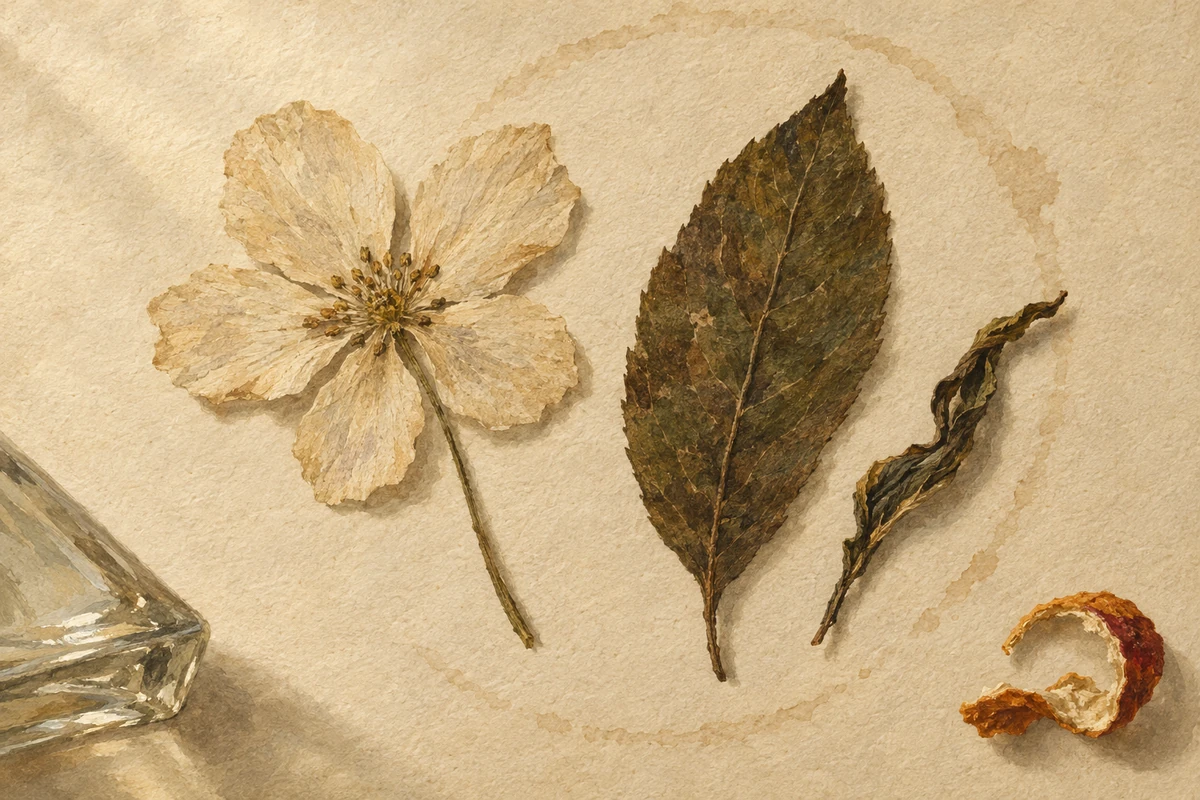
Sweetness in this collection arrives from several directions, which is exactly why it needs its own group.
- Vanilla — four bases (1957, Black Aya, Pink Encounter, True Goddess): the warm, rounded kind of sweet, sitting low and quiet rather than sugared.
- Honey and nougat — one appearance each, and each at a different altitude: honey deep in a base, nougat as the closing statement of Enchanted Fox. Together they make a tidy study in pitch — the same idea of sweetness placed at two different depths.
- Amber and frankincense — one bottle carries both, in its base, where a resinous warmth meets the same range’s only incense note. That bottle is Lily of the Valley No. 7.
The key distinction for a reader is between sweetness that comes from fruit, sweetness that comes from resin, and sweetness that comes from vanilla — three different readings that can make a bottle feel juicy, warm or dessert-like respectively. Vanilla covers the first of those in depth, amber the second, and the third — the dessert-adjacent reading and how to tell it apart — is the whole business of the gourmand explainer.
A practical tip for reading any sweet note: check what it sits above or beside. Sweetness next to a wood reads composed; next to fruit it reads juicy; alone at the bottom of a list it reads like dessert. Those three positions apply whatever the sweet material happens to be.
The Bright Aromatics
The first half of this collection is where its citrus habits and its spicier tastes live.
- Citrus opens most of the range in some form — bergamot in 1957, grapefruit and lemon in Midnight Star, grape and blackcurrant playing the same role in Pink Encounter. It is the range’s default way of starting a composition, and often the fastest clue about where the rest of a note list is heading.
- Mint, ginger and nutmeg — a single bottle carries all three: mint at the top, ginger and nutmeg at the heart of Midnight Star.
- Tea and thyme — the distinctive pairing at the top of Lily of the Valley No. 7, the only eau de toilette in the range.
- Chamomile, yerba mate and lavender — Manor Tea Party’s clear progression, from top to base. Neither lavender nor chamomile has a page of its own yet — this atlas is as good a place as any to notice the gaps as well as the entries — and for the note that does, see tea.
- Pink pepper and coriander — 1957’s opening spices, a brighter, airier way to start than the usual citrus.
- Coffee — a single top note in the range, roasted and unmistakable, opening Black Aya. Full page: coffee.
Taken together, the openings of this range run from bright citrus through dry spice to roasted coffee — a spread wider than ten bottles would suggest, and part of why the notes needed an atlas rather than a list.
Using the Map
The method is three steps, and it works in either direction. One: pick the note you already like, whatever its source — a soap, a tea, a candle, another fragrance. Two: read its page here, so you know what it does and who it tends to sit beside. Three: check which of the ten bottles lists it, and read that bottle’s note list as the composition it is.
Two worked examples. If you like clean laundry and soft skin, start with the musk page and read 1957, where musk runs through all three layers. If you like a fruit opening over a clean base, start with the jasmine page and read Pink Encounter. Neither route requires you to know anything about perfume in advance; both are simply the map doing its job. Do it a few times and you will need the map less — you start recognizing the arrangements themselves, the way a regular stops reading the labels.
And when a note you cannot find sends you back to the shelves, browse by fragrance family — the umbrella that holds every group in this atlas.
Why the Same Note Reads Differently
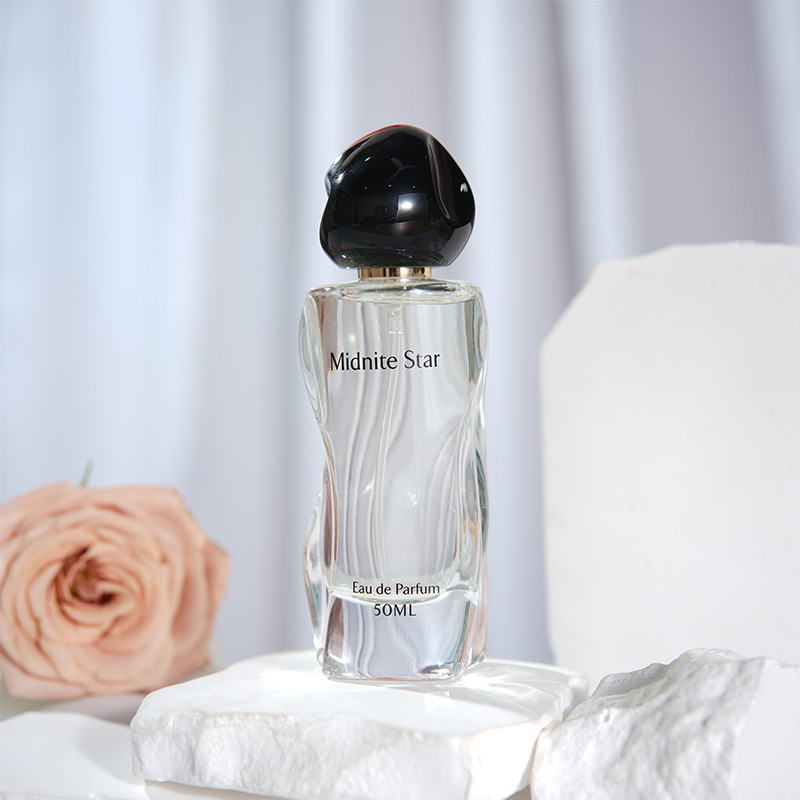
One last piece of orientation, because it is the thread running under every entry above: a note almost never reads the same in two bottles. Orange blossom reads soft in one composition and bright in another; musk is invisible in some arrangements and the whole point of others. This is partly the business of how compositions are built — how the fragrance families differ takes that system apart properly — and partly the fact that the same bottle will read differently on two different people wearing it. After thirteen note pages, the rule of this whole series fits in one line: a note is not a smell, it is a behaviour that changes with its neighbours. The meaning of a note is never fixed, which is why the notes in perfume repay pages like these rather than a chart alone — and why this map is built to be re-read, not memorized.
Perfume Notes Explained: Common Questions
What are perfume notes?
The vocabulary a fragrance is described with — each note being a material or accord that a composition uses, and a suggestion of how that fragrance will read. A note list names those materials and places them in the three layers of the pyramid: top, heart and base.
How do I read a perfume note list?
Start at the base, because it is the part you will live with longest; then look at what sits beside each note you care about, since neighbours decide how a note reads. The top tells you about the first minutes, the heart about the fragrance’s main character, and the base about how the day ends. Read in that order and even a long list stays readable.
Which notes does this collection use most?
Musk leads, in nine of the ten bottles; jasmine follows with seven hearts; cedar appears in five bases, vanilla in four, and patchouli in three. Beyond those, the range keeps its materials deliberately varied — which is the reason this atlas exists in the first place.
Where should I start if I am new to notes?
Pick one material you already know you enjoy — the soap, the tea, the candle — and read its entry above, then the bottle that lists it. One note followed honestly through one bottle teaches more than a dozen lists skimmed, and if you get lost, this page will still be here.