
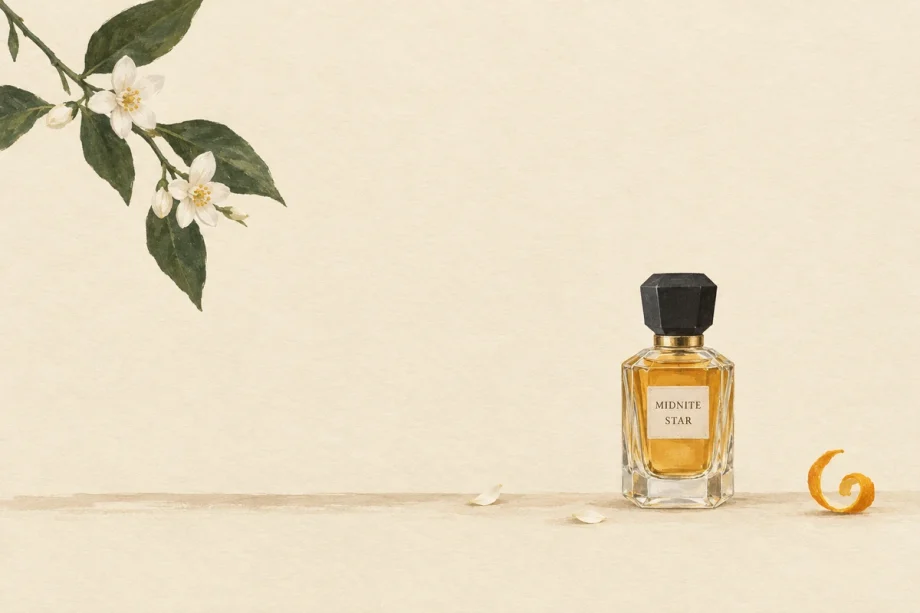
What does orange blossom smell like in perfume? Bright and softly honeyed, with a citrus-like lift — a flower that behaves a little like a fruit. It is lighter and more open than most white floral perfumes, and that double character is exactly why it turns up so often as a bridge note: bright enough to keep an opening company, warm enough to hold hands with a base.
Across this range of ten bottles, exactly two list it — and both place it in the heart, the middle layer where a fragrance does its connecting work. That small pattern contains the whole story of the note: what it is, where it lives, and why one flower can read two ways depending on whose side it sits on.
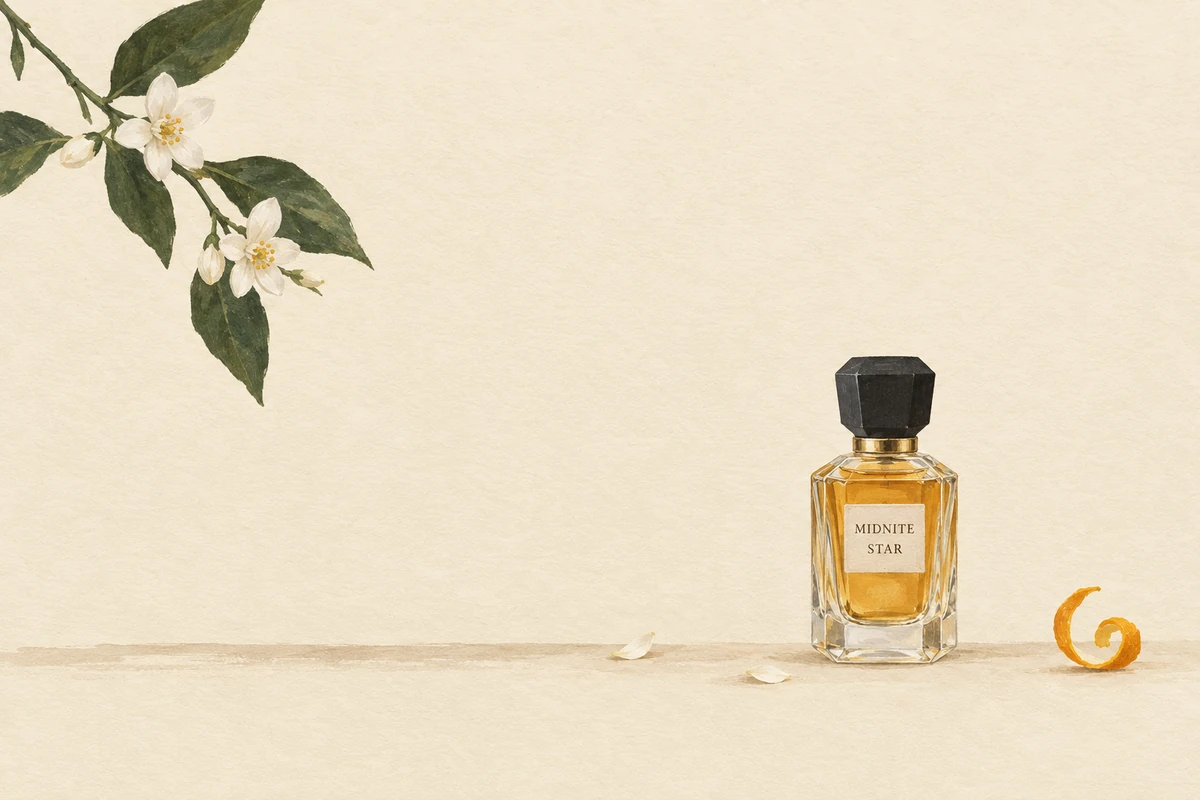
Orange Blossom vs Neroli: What Each Name Reads Like
The confusion worth settling first: note lists use two different names for two materials that come from the same flower, and the two do not read the same. The lighter, airier, more citrus-forward name — neroli — is usually the one people meet first, often in a light summer cologne, and it reads almost like a transparent citrus with a floral shadow behind it. Orange blossom, by contrast, reads fuller and more honeyed: still bright, but with weight and a soft sweetness that the lighter name does not have.
That is why the two names are not interchangeable on a note list. A composition that wants a clean, airy flicker of citrus-floral will choose one reading; a composition that wants softness with a honeyed edge chooses the other. Same flower, two materials, two different jobs. When you see orange blossom written, expect the fuller reading — and when you see the lighter name, do not budget for the honey.
For a shopper, the practical consequence is simple: the two names are two different shopping experiences. If you have ever loved a fragrance for its airy, barely-there citrus-floral quality and then bought something else because it promised the same flower, you may have crossed between the names without noticing. Read them as you would read two separate notes — because on a note list, that is what they are. And as a rule of thumb when you are scanning descriptions: if the aim was a light, lean effect, you are in the airy name’s territory; if the aim was softness with depth, the fuller name is likelier at work.
Where It Sits, and Why the Middle Makes Sense
Both bottles in this range place orange blossom in the heart. That is not a coincidence of taste; it is the natural home for a note with this job description. The top of a fragrance is where the sharp, volatile materials burn brightest and fade fastest; the base is where the heavy, slow materials settle in for the day. A note that has to bridge those two zones needs a little of both characters, and orange blossom — citrus-bright at its surface, soft and honeyed underneath — is a born middle manager.
You can feel the logic on skin. In the first minutes, the composition is all opening: the bright, sharp materials are doing the talking. Then, as that chatter dies down, the heart steps forward and the fragrance shows what it is actually made of — and if orange blossom is in that heart, this is the moment its double nature starts earning its keep, holding the brightness of the top and the warmth of the base in the same gesture. When people describe a fragrance as well-made, this handover is often what they are feeling.
If the language of top, heart and base is new to you, how to read a note pyramid is the ten-minute primer that makes everything below easier; the short version is that the heart is where a fragrance shows its true face, once the opening has said its piece and left.
Reading It by Its Neighbours
Orange blossom is one of those notes whose character is decided less by itself than by its company. Two bottles can both list it in the heart and arrive at completely different perfumes, because the same material will lean toward whatever surrounds it:
- Beside jasmine, it reads rounder and fuller — the two white florals reinforce each other’s softness, which is the pairing in 1957. If you want to understand that pairing from the other side, jasmine, the note it usually sits beside, is the companion piece.
- Beside vanilla, honey or musk, it turns softer and sweeter — the honeyed side of the note comes forward and the citrus edge recedes.
- Beside patchouli, coffee or dry woods, it becomes the single bright line in a darker composition — a lit window in a dark room, which is precisely its role in Black Aya.
- Beside green leaves, it stays cool and airy, keeping the citrus side dominant.
The practical method, then, takes two lines: find the orange blossom note in the middle of a note list, then read the three or four materials around it — that tells you whether you are in for the soft reading or the bright one. Do that exercise twice and you will have rebuilt, from nothing but a product page, the exact distinction this article spent its first half explaining — which is the real argument for learning to read note lists rather than memorizing verdicts.
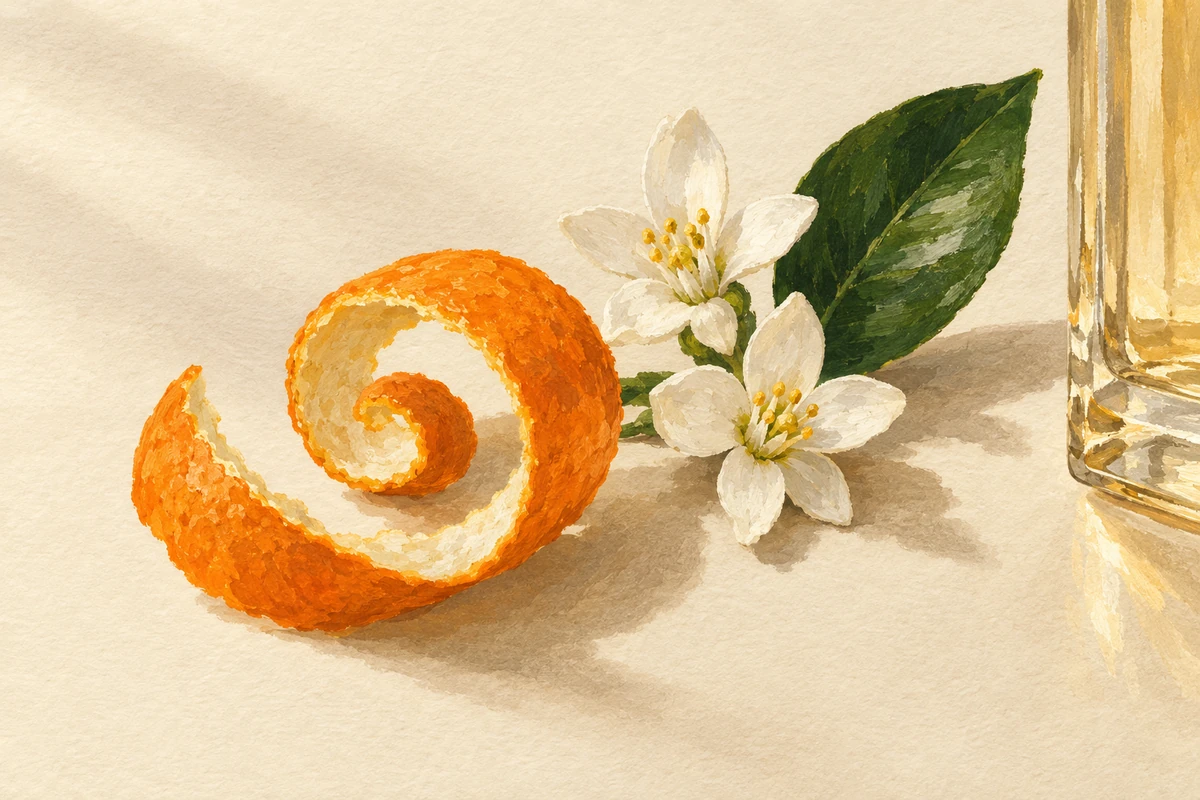
Two Worked Readings from the Range
1957: The Tidy One
1957 opens on pink pepper, coriander, bergamot, aldehyde and musk, then moves into its heart of orange blossom, jasmine and musk, and settles onto a base of vanilla, honey, musk, cedar, Kashmir wood and iris root. It is the tidiest reading of the note in the range: orange blossom and jasmine working as a pair to keep the soft, creamy base from going flat, with a thread of musk running underneath both and the iris root waiting at the very end. Worn, it reads as a single smooth arc — the opening’s spark fades into the floral heart without a seam, and the base arrives so gently that the powdery finish feels like the natural continuation of the blossom rather than a new chapter. The shop files this bottle under men and unisex — worth noting for a note with a reputation you are about to see dismantled — and it is the closest thing here to a daily-wear default: bright enough for mornings, soft enough for the rest of the day.
Black Aya: The Contrast Reading
Black Aya reverses the setting entirely. Coffee and citrus open the composition, then orange blossom arrives in the heart alongside evening jasmine and jade, over a base of musk, vanilla and patchouli. Here the note is the only freshness in the house: a dark, roasted composition with one bright floral line running through it, and the contrast is exactly the point. It is filed under women, and its character lands unambiguously on the darker, addictive end of the shelf — which tells you how far one note can travel depending on its neighbours.
A quick honesty note, since it is the question that started all this: the two bottles above use the note the way the rest of the range does — as connective tissue, not as a headline act. Neither is an orange blossom bomb, and that is worth knowing before you go looking for one. The note’s career, in other words, is mostly spent making other materials look good — and the two bottles show it doing that job from both ends of the light spectrum, one in a bright musk setting and one in a dark roasted one.
Is Orange Blossom Feminine?
No — and this range, rather than an argument, is the evidence. 1957 lists orange blossom in its heart and carries the men and unisex tags; Black Aya lists the same material in the same position and sits on the women’s shelf. The note is filed both ways, in the same range, at the same time. What differs between the two bottles is everything around the note — the coffee and patchouli on one side, the musk and iris on the other — not the flower itself.
The tags, in other words, describe the shop’s filing decisions, not the personality of a material. That is a general truth, but this particular note makes it unusually easy to see: the same flower, the same position in the composition, two different shelves — the only variable left is the company it keeps. If the botanical logic of that feels worth unpacking further, how the fragrance families differ maps where white florals like this one sit in the wider system — and if you simply want to see how the shop groups its soft side, you can browse the floral family directly.
When It Reads Best
The citrus lift makes orange blossom a daylight-friendly note: in warm air it feels open, clean and easy, which is why it dominated the lighter colognes you have probably met. In cold air, though, that same lift can read thinner than the base around it — the bright top half of the note travels less well in low temperatures, which is the same reason the range’s cold-weather preferences lean toward woods and resins in the darker months. Think of the reading as seasonal: in summer you will mostly meet its bright half, and in winter you will mostly meet the base it is sitting on. If you love the honeyed side of the note, shoulder-season mornings are its golden hour; if you love the citrus side, summer is.
A last practical sentence, because it saves real disappointment: the note is a supporting player in most compositions that list it, which means what you will actually smell is the conversation, not a solo. Choose it for what it contributes, and it will rarely let the rest of the composition down. And if you find yourself falling for this note in particular, the natural next step is the one this article has been practicing all along: look for it in the middle of note lists that surround it with materials you already like.
What Does Orange Blossom Smell Like in Perfume: Common Questions
What does orange blossom actually smell like?
A bright floral with a honeyed softness and a citrus-like openness — lighter than the classic white florals, and easier than most. Think of a flower that behaves a little like fruit: the top of the reading is airy and citrus-adjacent, while the underside carries a soft, nectar-like sweetness.
Is orange blossom the same as neroli?
A note list can use two separate names for materials that come from one flower, and they do not read alike. The airier, more citrus-forward name is typically the one encountered first; orange blossom itself reads fuller and more honeyed. Treat the two as separate entries, not synonyms.
Is orange blossom a citrus note or a floral note?
Both, and that is its charm. It is filed among florals, but its surface behaves like a citrus — that is what the lift is — which is why compositions use it at the seam between a bright opening and a soft middle. If a note list places it in the heart, the citrus character you detect there is the note working exactly as intended.
Is orange blossom feminine?
The note itself carries no such label; filings do. In this range the same material appears in a bottle carrying men and unisex tags and in another filed under women, because what gets gendered on a shelf is the company a note keeps, not the note. Judge it by the materials around it and your own taste, which is the only filing system that will ever fully apply to you.