
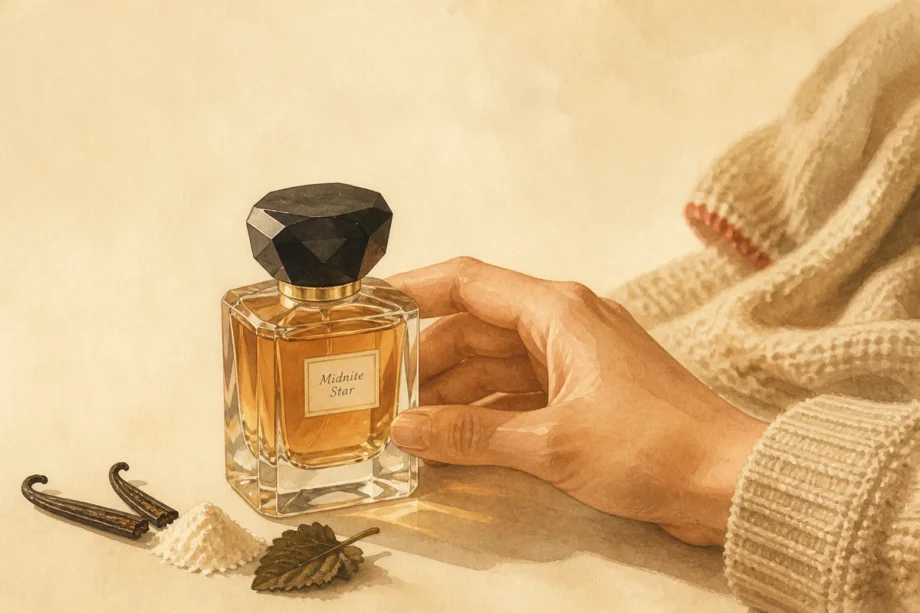
What does vanilla smell like in perfume? Rarely like the vanilla extract in a baking cupboard. In a fragrance it reads creamy, warm and soft — a rounded, enveloping smoothness rather than a sharp hit of flavour. And that is only the beginning of the story, because the same word can also read boozy, powdery, or remarkably dry. Vanilla is the most versatile material on a note list, and its reputation as a simple sweet note is the biggest misunderstanding in the hobby.
This piece unpacks the range. It explains why one word covers so much ground, how to tell from a note list alone whether you are looking at a sweet vanilla or a dry one, the honest answer about vanilla extract comparisons, and four bottles from this range that carry the note in four different directions — including one tagged for men and unisex, which quietly answers another question entirely.
Why One Word Covers So Much Ground
The first thing to understand about vanilla is that it behaves less like a smell and more like a texture that gets its flavour from its neighbours. Put it next to caramel, chocolate or tonka bean and you get a gourmand — rich, dessert-adjacent, unmistakably sweet. Put it next to musk and soft aldehydes and it disappears into cleanliness: a warm roundness with nothing edible about it. Put it next to amber and spice, as the oriental and ambery fragrances shelf does, and it becomes plush and glowing. And used in small amounts near the bottom of almost any formula, it acts as a rounding agent — there to soften harsh edges — in fragrances nobody would ever describe as vanilla perfumes.
That last use is the reason this note is everywhere and nowhere at once. If you go looking for it with the extract comparison in mind, you will miss it in half the bottles that contain it. The material’s job in a composition is often to make everything else feel smoother — where vanilla sits among the fragrance families is one way to map that, because its flexibility means it turns up in several of them at once.
Think of it this way: vanilla is not a destination, it is a road surface. In a gourmand it carries you through dessert country; in a clean fragrance it is the warm, invisible softness under the musk; in an oriental it is the glow beneath the amber. Change the scenery and the same road feels completely different — which is why trying to pin one smell on the word tends to fail.
The practical consequence for shoppers: a note list is not telling you the perfume smells like vanilla. It is telling you a warm softness is present, and the rest of the list tells you what shape it takes. Read the company it keeps, and you can predict the reading before the first spray.
Sweet Vanilla vs Dry Vanilla: Read the Note List
Here is the skill that pays for itself fastest, and it answers the question searchers ask most often: how to find a vanilla perfume that isn’t sweet. Vanilla turns sweet only when its neighbours allow it, and the base of a composition is where that decision gets made; why the base decides how a fragrance finishes explains the structure without any guesswork.
When honey, tonka bean, caramel or a nougat-like sweetness sit beside the vanilla, expect the full dessert reading: plush, edible, generous. When patchouli, woods, leather or resinous notes are down there instead, the vanilla gets pulled toward the other direction — drier, more textured, with the sweetness cut back until it reads as warmth rather than sugar. A single patchouli note can pivot an entire fragrance: it gives vanilla something astringent to sit against, so what arrives on skin is depth instead of pudding.
So when you see vanilla in a base next to honey and caramel, budget for sweet. Next to patchouli, cedar or iris root, budget for something more grown-up and restrained. Both are vanilla; they will smell like different perfumes, and the list already told you which one you were buying.
One comparison that belongs in this section, because the two are constantly confused: vanilla vs tonka. Tonka bean brings warmth of its own, but it reads drier and a little nutty — texture rather than cream — so a note list carrying both is promising you sweetness with an edge. When people say a vanilla fragrance smells sophisticated or grown-up, tonka sitting beside it is very often the reason.
Does Vanilla Perfume Smell Like Vanilla Extract?
The honest answer is no — and the difference is worth understanding, because it is exactly what trips people up. Vanilla extract opens sharp, a little harsh, and noticeably boozy; that alcoholic bite is the part perfume does not reproduce. What perfume gives you instead is the soft, rounded warmth at the heart of the idea — creamy, enveloping, and often sweeter than the baking version once the surrounding notes are counted.
One clarification, because it matters here: the notes on this site, and on most fragrance pages, list what a composition is built around, not what it is made of. Whether the vanilla reading comes from one material or several working together is a question for the perfumer’s notebook; for the shopper, the useful information is that the fragrance will read creamy and warm rather than sharp.
If you have only met vanilla in the kitchen, the perfume version will feel like a translation rather than a copy — smoother, rounder, and doing a structural job the extract never had to do. That is also why “vanilla” is not a personality description. It is the flavour; the neighbours write the character.
Is Vanilla a Women’s Note?
No, and this range settles it in one line: 1957 carries vanilla in its base and is tagged for men and unisex along with its other categories. The note takes its character from the composition — sweet or dry, powdery or textured, quiet or enveloping — and none of that has anything to do with who wears it. When people meet vanilla in a bottle that is filed under men and unisex, the question tends to resolve itself quietly: it simply smells good, and the shelf tag was the only thing suggesting otherwise.
Where the myth comes from is easier to understand than to defend: a certain era of fragrance marketing put vanilla on the feminine side of the ledger, and habits outlive their reasons. The correction is practical, not academic. If you like creamy warmth in a base, the note will work on you. The rest is merchandising.
Four Bottles, Read Tier by Tier
This range has four bottles that carry vanilla, and they read so differently that walking them side by side is the fastest way to see what the note actually does. One is unisex-leaning, one is dark and dry, one is as light as the note gets, and one keeps it strictly in the supporting role.
1957, Read Top to Bottom
1957 opens on pink pepper, coriander, bergamot and a soft aldehyde shimmer — bright and quietly peppery, with a delicate musk running underneath from the first second. Orange blossom and jasmine bloom in the heart, and the base is where the vanilla story lands: vanilla, honey, musk, cedar, Kashmir wood and iris root together. This is the creamy reading at its most polished — the honey sweetens, the iris root adds powder, the woods keep it from floating away. The result is soft and slightly powdery rather than sugary, which is precisely why it works as the answer to the assumption that vanilla belongs to one audience.
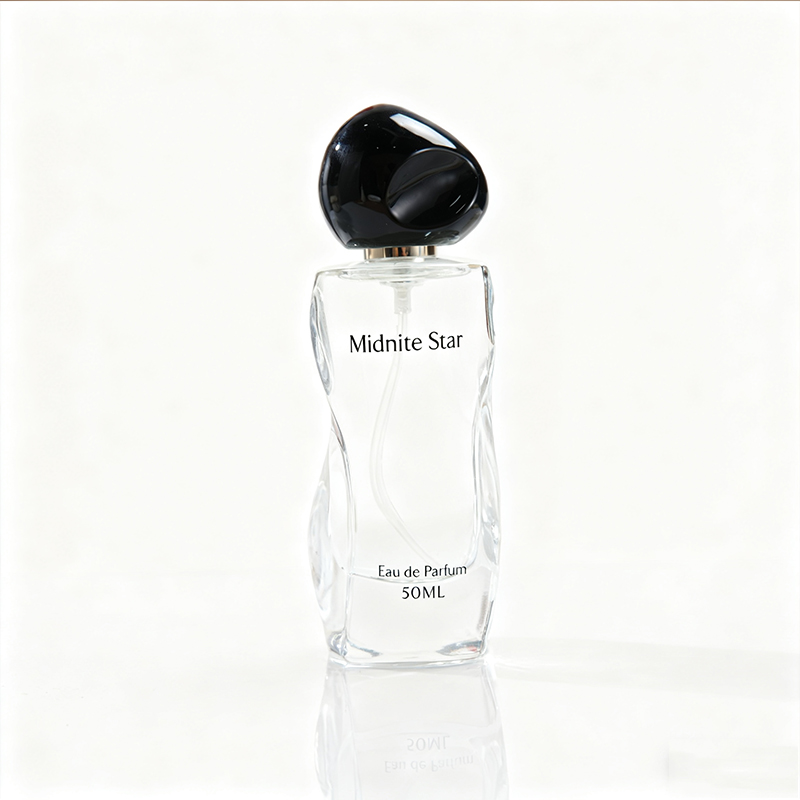
Black Aya, Read Top to Bottom
Black Aya is the darker, drier reading, and it makes the lesson visible. The top is coffee and citrus — roasted and brisk; the heart is orange blossom, evening jasmine and jade, soft florals kept on a short leash. Then the base: musk, vanilla and patchouli. That patchouli is the plot twist. Instead of letting the vanilla bloom into sweetness, it gives the finish an astringent, earthy depth — you can feel the warmth, but the fragrance never turns dessert. It is also the range’s most intensity-oriented composition, filed in the Addictive collection where the deeper, more enveloping scents live.
Pink Encounter, Read Top to Bottom
Pink Encounter carries the same note at its lightest. Grape and blackcurrant open the fragrance — fruit with a little tartness; jasmine and Rose Taif Flower take the heart; and the base closes on white musk with vanilla and cedar. Nothing here is heavy: the fruit stays airy, the musk keeps everything close to skin, and the vanilla is present as a softness rather than a statement. If the word “vanilla” makes you nervous about cloying, this is the bottle that proves the note can whisper.
True Goddess, Read Top to Bottom
True Goddess runs the opposite composition logic: fruit first, vanilla strictly behind it. Magnolia, cantaloupe, peach, pear, lemon and orange open — genuinely juicy, almost garden-like — with evening jasmine, plum, violet and orchid in the heart. The base is musk, vanilla, cedar and blackberry, and notice how late the vanilla arrives: it is the warm floor the fruit eventually settles onto, not the subject of the sentence. If you have ever wondered why two perfumes can both “have vanilla” and smell nothing alike, this bottle next to Black Aya is the entire explanation.
When Vanilla Reads Best
Vanilla is a cool-season and evening note by temperament. In heat it can feel heavy or cloying — which is why the same bottle that smells perfect in November can feel like entirely too much in July. That is not a flaw in the fragrance; it is the note doing what notes do, and it is worth planning around. The glass cases of late autumn exist for a reason, and most of them are made of vanilla.
In practice, treat this as a calendar preference rather than a rule: give vanilla-led bottles their evenings, their cooler months, and the occasions where you want to be felt before you are noticed. The rest of the year belongs to other shelves.
How Much to Apply
One short section, because the answer is short. Vanilla-heavy bases sit close to the skin and stay there, so the standard fix — adding sprays — rarely helps and can turn warm into heavy. Moisturised skin and one full application are enough; if you want more presence in the evening, refresh lightly rather than doubling up at the start. It is the rare case where restraint genuinely outperforms generosity, and your future self — meeting the scent again at hour six — will thank you.
If this way of reading notes is useful, the series has already asked the same question asked about coffee — a note with a completely different temperament, unpacked the same way.
What Does Vanilla Smell Like in Perfume: Common Questions
Does vanilla perfume smell like vanilla extract?
Not really. Expect a soft, rounded warmth instead of the sharp, boozy opening of an extract. Perfume’s vanilla is the calm centre of the idea, and depending on its neighbours it can be sweeter, powdery, or even dry — the kitchen comparison never survives first contact.
Is vanilla perfume always sweet?
No — and the note list tells you which kind you are looking at. Honey, tonka, caramel or nougat beside it means the sweet reading; patchouli, woods, leather or resinous notes mean a drier, more textured one, with the sweetness cut back to warmth. If you want vanilla that is not sweet, shop the second group.
Is vanilla perfume masculine or feminine?
Neither. It takes its character from the composition, and this range’s own shelves make the point: 1957 carries vanilla in its base while being tagged for men and unisex. The note does not belong to anyone, and the creaminess reads the same on every skin.
Why does vanilla smell different in different perfumes?
Because vanilla is a texture more than a flavour: its neighbours decide what you actually smell. Next to fruit it reads soft; next to patchouli it reads dry; next to honey and tonka it reads sweet; in a tiny supporting dose it reads as nothing more than smoothness. Compare Pink Encounter and Black Aya side by side and the range will teach you the whole lesson in one afternoon.
And that flexibility is not a footnote — it is the single most useful thing to know about the note before your next purchase. Once you stop expecting one signature smell, note lists stop being noise and start being directions. Vanilla was never the simple material its reputation suggested; it was the one paying attention to everyone around it, and now you can read those relationships at a glance.