
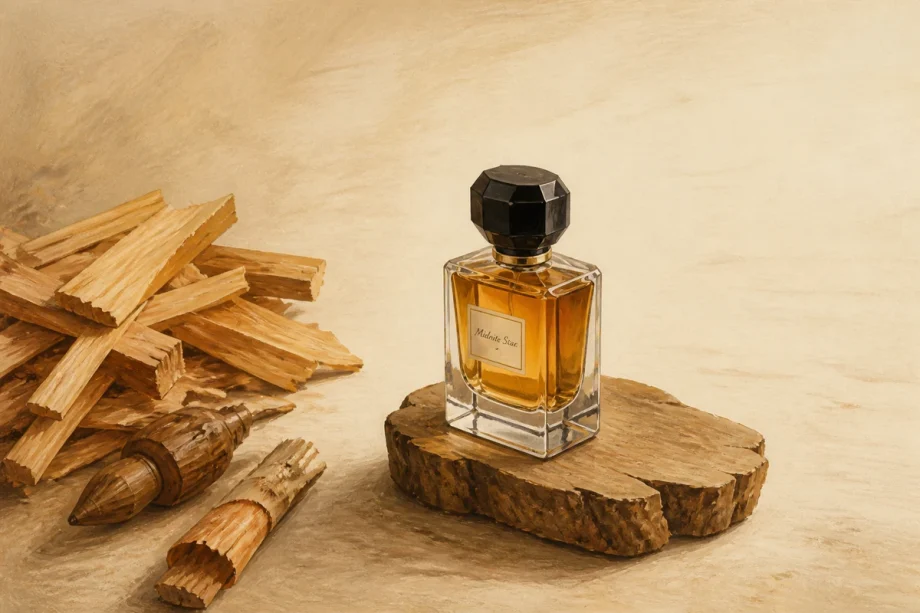
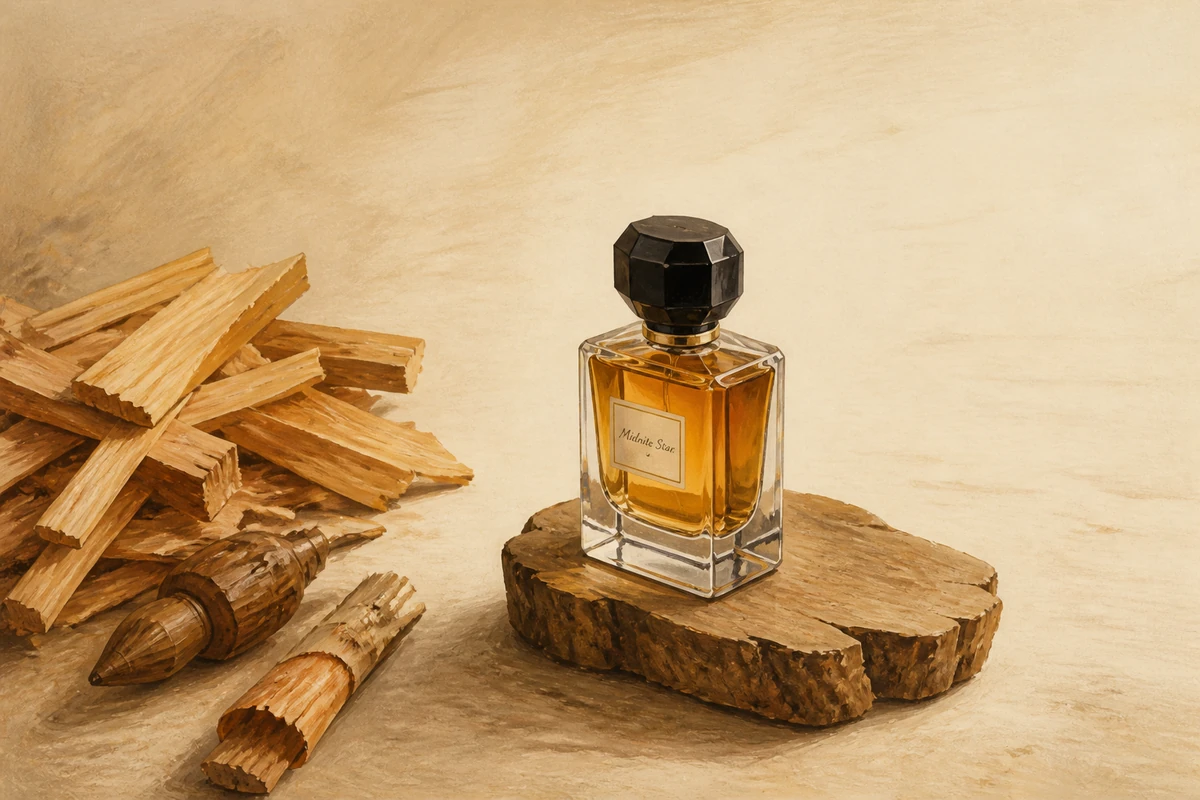
What does sandalwood smell like? Creamy, soft and warm — it is the wood that reads polished rather than cut, smooth rather than sharp, and gently sweet rather than resinous. Think of a warm wooden surface you want to rest a hand on, not the smell of fresh timber in a workshop. That distinction is the whole note in miniature, and it is why sandalwood turns up so often in the part of a fragrance you live in longest: the base.
If you have ever read a note list and found it at the bottom — cedar, musk, sandalwood — this piece unpacks what that word is actually doing there. Learning to read woody perfume notes is one of the quiet skills of this hobby, and sandalwood is the best place to start, because it explains why so many fragrances finish the way they do. It is also the answer to a question most shoppers only think of after the fact: why two perfumes that both list sandalwood can smell almost nothing alike.
What Sandalwood Actually Contributes
Sandalwood sits in the base for a structural reason: it is heavy and slow. It does not sparkle, it does not announce itself in the first minutes, and it does not fade quickly. Its job is to hold the composition together underneath — to anchor the base while everything brighter moves above it. When a fragrance still smells composed three or four hours in, a note like this is usually why.
There is a word that keeps coming up when people describe it, and it is the right one: warm. Sandalwood does not merely smell woody; it makes a formula feel warmed. Worn on skin, it reads close and gentle rather than loud — the kind of scent you notice from a scarf at the end of the day rather than across a room. It also has a smoothing effect, which is why it pairs so widely: florals become rounder over it, spices become softer, citrus gets somewhere warm to land. The note rarely takes the lead, and that is precisely its value.
It is worth understanding the note as a team player rather than a soloist, because that reframes how you read a list. A fragrance with sandalwood in the base is telling you where it intends to end up: smooth, warm, grounded. The specific smell you will spend the evening with depends on the teammates — which is why the comparisons below are the practical heart of this guide. One bottle’s sandalwood can read creamy-soft; another’s, sitting among cooler materials, can read nearly austere. Same word on the paper, different furniture in the room.
There is one more oddity worth knowing, because you will run into it. People rarely name sandalwood when they compliment a fragrance — they describe it as warm, smooth, or refined rather than chemical in the late hours. The note’s success is usually invisible, and its absence is what gets noticed, when a base turns harsh as it dries down. That quiet reliability is the entire assignment.
The range keeps its wood-led bottles together on the woody fragrances shelf, and if you would rather walk the whole neighbourhood, the browse by fragrance family index is the front door.
Sandalwood vs Cedar
If you only carry away one comparison, make it this one. Cedar is the drier, sharper, more angular wood — closer to pencil shavings and fresh-cut timber, with a certain grip to it. Sandalwood is rounder, creamier and softer at the edges. They are both called “wood” on a note list and they behave like different temperaments: cedar adds structure and definition, sandalwood adds warmth and cushion.
You can hear both at once in one bottle. Midnight Star closes on cedar, musk and sandalwood together — three materials doing three jobs. The cedar supplies the frame, a little dryness and grip; the sandalwood rounds the finish and warms it; and the musk sits between them as a buffer so neither one stands out as harsh. Worn on skin, the base reads as one smooth wooden surface, but now you know it is a small committee.
If you are choosing between the two on a note list, the adjectives are the tell. Bases described as dry, sharp or pencil-like are running on cedar’s temperament; bases described as creamy, smooth or soft are running on sandalwood’s. When a bottle lists both — as plenty do — you are usually promised the best of each: definition from the cedar, comfort from the sandalwood. The proportion, which you cannot see on paper, is exactly what testing on skin reveals.
Sandalwood vs Kashmir Wood
Cedar is not the only wood worth knowing by name. Kashmir wood is another soft, warm wood material — closer in feeling to sandalwood than to cedar, but with its own round smoothness. It appears in 1957, whose base also carries cedar, iris root, honey and vanilla: warmth from two directions, wood and sweetness, with the iris root adding a soft powdery texture. The result is a base that feels enveloping rather than dry — the opposite pole from cedar’s grip.
The lesson in the comparison is simple: do not treat all woods as one material. Cedar grips, sandalwood cushions, Kashmir wood wraps — and a well-built base will often use two of them at once. Think of them as three textures of the same broad idea, the way leather, suede and velvet are all “soft” without being interchangeable. If the distinctions feel fine-grained, that is because they are: how woods sit inside the wider family system is exactly the kind of fine print that pays off when you are hunting for a specific character.
Is Sandalwood Masculine or Feminine?
Neither, and this deserves stating plainly because the opposite myth is stubborn. Sandalwood takes its character from whatever it is paired with — that is the entire mechanism. Surrounded by vanilla and honey, it reads sweet and plush; sitting among citrus, it feels fresher and cleaner; next to suede and frankincense, it turns cooler and more austere.
The range itself shows the note crossing every line it has. Midnight Star carries it and is filed under men and unisex both. Lily of the Valley No. 7 uses it at the bottom of a woody floral, and True Goddess is a floral fruity whose base is musk, vanilla, cedar and blackberry — wood and sweetness with no sandalwood in sight, filed under the same house without any gender story attached. And 1957 wraps its florals over Kashmir wood and honey. If the note had a gender, this list could not exist.
A useful habit when the myth resurfaces: look at who actually wears the bottles. The shelves are sorted by character and use, not by sex — and sandalwood-based fragrances appear in every one of those sorts. If you like the way it smells, the note will work on you; the marketing will catch up.
Sandalwood in Real Bottles, Tier by Tier
Two bottles in this range finish on sandalwood, and reading them tier by tier is the fastest way to hear what the note does.
Midnight Star, Read Top to Bottom
Midnight Star opens deliberately bright: grapefruit, lemon and mint — cold sparkle, sharp edges, the opposite of creamy. The heart warms and complicates things with ginger, nutmeg and jasmine: spice and flower, a little sweetness. Then the base arrives — cedar, musk and sandalwood — and the fragrance settles into warmth with a quiet wooden floor under it. The sandalwood is what keeps the opening’s mint from floating away; by the second hour, the crispness has become a memory and the base is what you are wearing. Notice also what the base is not doing: there is no amber weight and no vanilla sweetness down there — the finish stays clean and woody, warmed rather than sugared.
Lily of the Valley No. 7, Read Top to Bottom
Lily of the Valley No. 7 runs the same exercise with different neighbours, and the difference is instructive. It opens on thyme and tea — herbal, dry, cool — with lily of the valley, saffron and rose in the heart. The base is suede, musk, sandalwood, frankincense and amber. Notice how much the company changes the reading: the same sandalwood that feels cushioned and warm in Midnight Star sits here among suede and frankincense, and comes across drier, more resinous, almost quiet. One note, two temperaments — that is the whole lesson about materials. One practical note while reading: this bottle is the range’s only eau de toilette, lighter by design than the surrounding eau de parfums, so judge its arc on its own terms — a shorter, closer wear rather than a failing one.
How to Tell if a Sandalwood-Led Scent Is for You
Step one is to read the base before anything else — the base is where a fragrance’s character settles, and why the base notes decide how a fragrance finishes explains the structure without any guesswork. Step two is to check what sits beside the sandalwood, because that is what you will actually smell.
Musk softens it further; vanilla and honey sweeten it, as in 1957; ambergris and oakmoss push it drier and more textured, as in Napoleon Eau — whose base is birch, ambergris, cedar, oakmoss and musk, and which contains no sandalwood at all, making it a useful counter-example to smell next. If you can picture which of those three directions you want — soft, sweet, or dry — a note list becomes a fairly reliable prediction, and you stop buying blind.
A practical exercise if you want to sharpen this skill: put two note lists side by side — one where sandalwood sits next to musk and vanilla, one where it sits next to ambergris and oakmoss — and predict which will feel softer. Then smell both, in that order. The prediction is usually right, and that success is the moment note literacy stops being homework. It also teaches the one limit of paper: a list tells you the destination, never the dose, which is why the skin test keeps the final vote.
If you enjoy learning materials this way, the series continues with the same question asked about coffee — a note with a completely different temperament to this one.
When Sandalwood Reads Best
By temperament this is a cool-season and evening note: its warmth feels right when the air is cool, and it is a large part of why so many autumn and winter fragrances feel warm without being sweet. That quality — warmth without sugar — is the signature of a sandalwood perfume in a winter wardrobe, and it is the reason a sandalwood base can carry a fragrance through the whole evening without ever asking for attention. In a small rotation, that makes a bottle like this the natural evening anchor: start it in the cooler months, and let it set the register for everything else on the shelf.
What Does Sandalwood Smell Like: Common Questions
What does sandalwood smell like?
Creamy, soft and warm: a polished wooden smoothness with a gentle sweetness, closer to a warm tabletop than to fresh-cut timber. It is rarely loud, definitely not sharp, and it tends to be one of the last notes still noticeable on skin at the end of the day. If you want the shortest possible reference points: polished furniture, warm skin, and a soft woody sweetness — not a forest, and not a sauna.
Sandalwood vs cedar — what is the difference?
Cedar is drier, sharper and more angular, like pencil shavings; sandalwood is rounder, creamier and softer. Cedar adds structure and grip, sandalwood adds warmth and cushion — and a bottle like Midnight Star shows both doing their separate jobs in one base. If you only remember one line: cedar drafts the blueprint, sandalwood turns on the heating.
Is sandalwood a masculine note?
No more than any other material. Its character comes from what surrounds it — sweet next to vanilla, glowing next to amber, cool next to suede — and the range slots it across men’s, unisex and feminine shelving without it ever reading out of place.
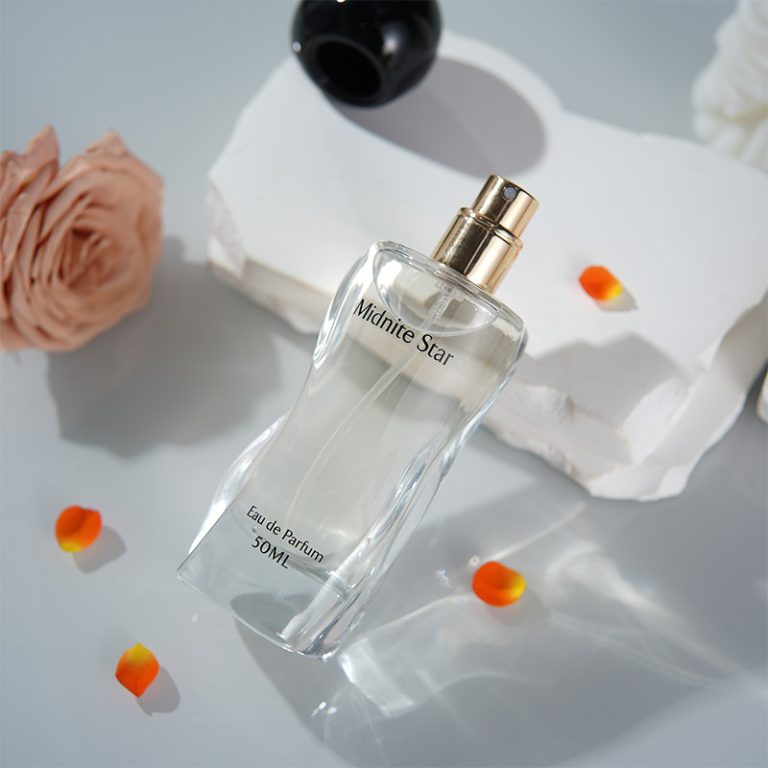
Which Midnite Star bottle uses sandalwood?
Two bottles build it into their base: Midnight Star (cedar, musk and sandalwood) and Lily of the Valley No. 7 (suede, musk, sandalwood, frankincense and amber — an eau de toilette). If you want to know what the note is not, 1957 closes on Kashmir wood and True Goddess on cedar without it — useful reference points on the same shelves. Wearing all four across a week is the fastest education the range can offer on how much the notes around a base matter.