
What is a chypre perfume — a note, a brand, a trend? None of those. Chypre is not a note and not an ingredient — it is a structure: a bright citrus opening sitting on a mossy, patchouli-and-wood base, with something floral or fruity in the middle. The word describes the shape of a fragrance rather than one material inside it, which is why two chypres can smell almost nothing alike and still be, structurally, the same kind of thing.
That also explains why a plain explanation is hard to find. The word turns up on product pages — our own included, as this piece will show — and most attempts to unpack the chypre perfume meaning chase history instead of structure. This guide stays on the structure: what the notes are doing, where chypre sits between the fruity and woody families, the two confusions worth clearing up, and how to decide whether the style is for you.
The Classic Chypre Structure
A classic chypre is built in three tiers, and each tier has a job. At the top: bergamot or another bright citrus — the cold sparkle of a citrus peel, meant to be noticed in the first minutes. In the middle: a floral or fruity heart, where the composition softens and becomes something you would call pretty before you would call it interesting. And underneath: the part that makes it a chypre — oakmoss, patchouli, and a warm resinous or woody base. Dry, mossy, faintly bitter, and unmistakably different from the soft musk-and-vanilla floors under most modern fragrances.
That base is the definition. Chypre is often filed between the fruity family and the woody family because it genuinely shares territory with both — it usually has fruit or flowers as its middle, and it always ends in something deep and structural. But the piece that decides the family is the floor: moss and patchouli over wood. When people describe a chypre as elegant or grown-up, this is the part they are reacting to.
Here is the same idea from the filing clerk’s point of view. A family label describes what dominates a composition, and most fragrances hand you an easy answer: fruit at every stage, or wood at every stage, or vanilla at every stage. A chypre does not. You could fairly describe it as a fruity fragrance with a woody finish, or a woody fragrance with a bright fruity opening — both descriptions are true, which is exactly why the style needed a name of its own instead of a seat in someone else’s section.
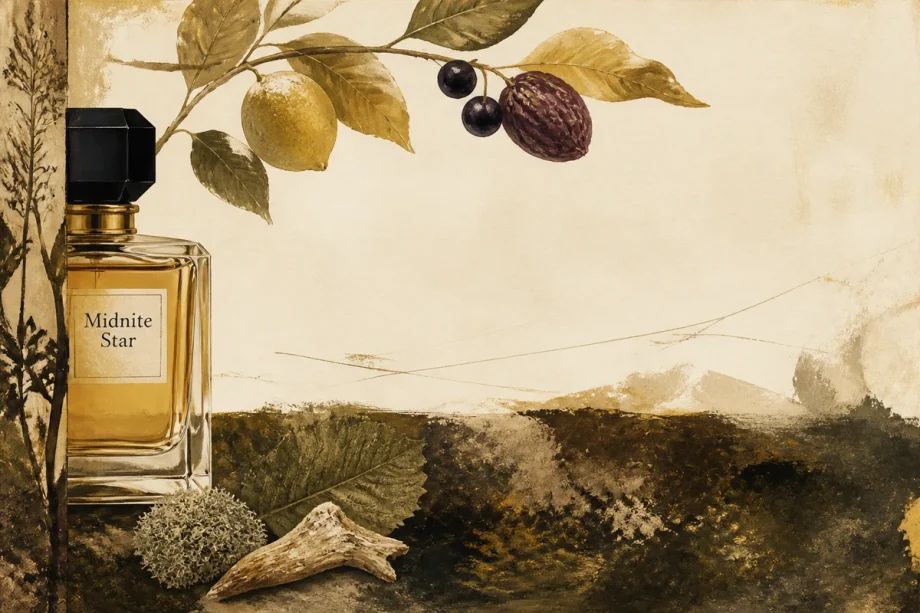
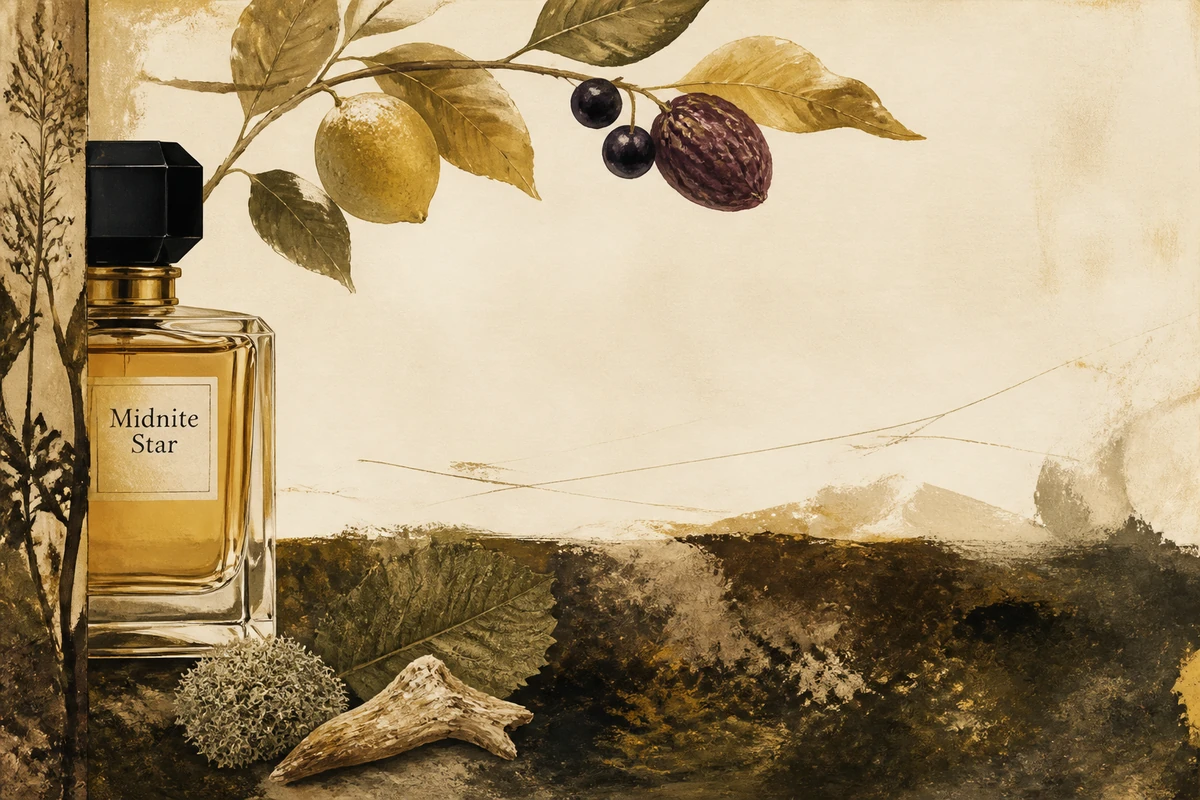
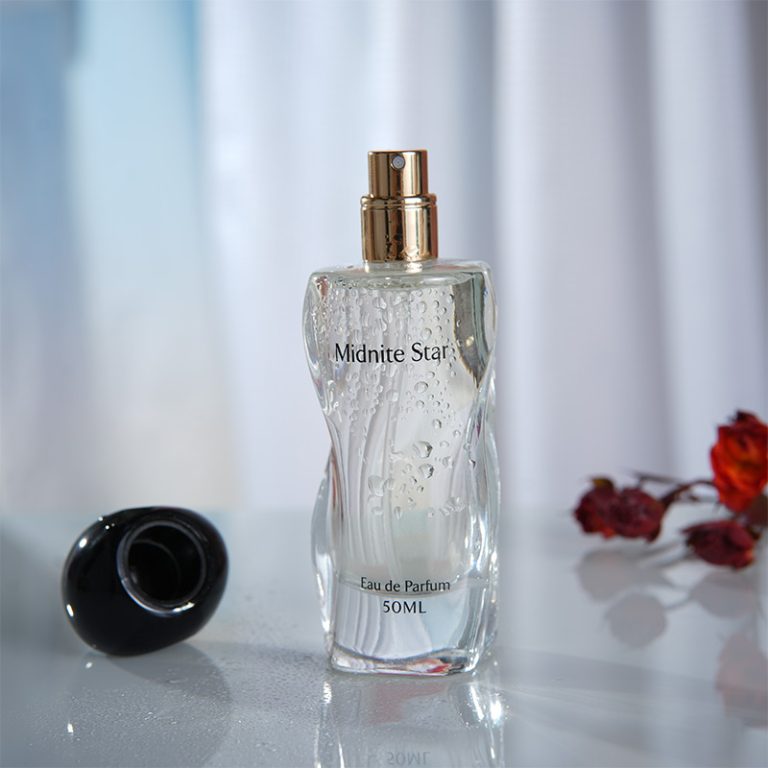
It is worth naming what the structure is not, because two handsome bottles in this range sit close to it without being it. Midnight Star opens on citrus — grapefruit, lemon, mint — and lands on cedar, musk and sandalwood: citrus resolving into wood, with no mossy, patchouli spine underneath. It is a lovely arc, and it is not a chypre, because the floor is clean rather than mossy. The distinction sounds technical until you smell the two side by side; then it is obvious.
What a Fruity Chypre Adds
Modern chypres often deepen the opening: plum, peach, a berry or an apple join the citrus before the mossy base arrives, and the result — a fruity chypre — reads rounder and more approachable than the austere classic structure. The fruit does not change the skeleton; it decorates the first impression.
That decoration is doing real work. The classic structure can come across as stern on first meeting — all dry moss and corners — and the fruit gives the opening a welcoming warmth for readers who would otherwise bounce off it. The base, meanwhile, keeps the composition from sliding into dessert. If a note list says fruity chypre, read it as a promise of two things at once: a bolder, friendlier opening than a classic chypre, and the same dry, mossy floor underneath.
This range has exactly one bottle to learn the style from, and its product page is unusually self-aware: Napoleon Eau describes itself as a fruity chypre with an oriental character. Read the tiers and you can watch the sentence unfold. The opening is lemon, pink pepper, apple and blackcurrant — citrus plus fruit, slightly spicy, exactly what the fruity label is describing. The heart is pineapple, jasmine and patchouli: the fruit stays sweet, the jasmine softens it, and the patchouli begins laying the dry floor. The base is birch, ambergris, cedar, oakmoss and musk — moss over woods and resins, the chypre skeleton, arrived.
As for the second half of the product page’s wording — with an oriental character — that is best explained by the next comparison.
Chypre Versus Oriental
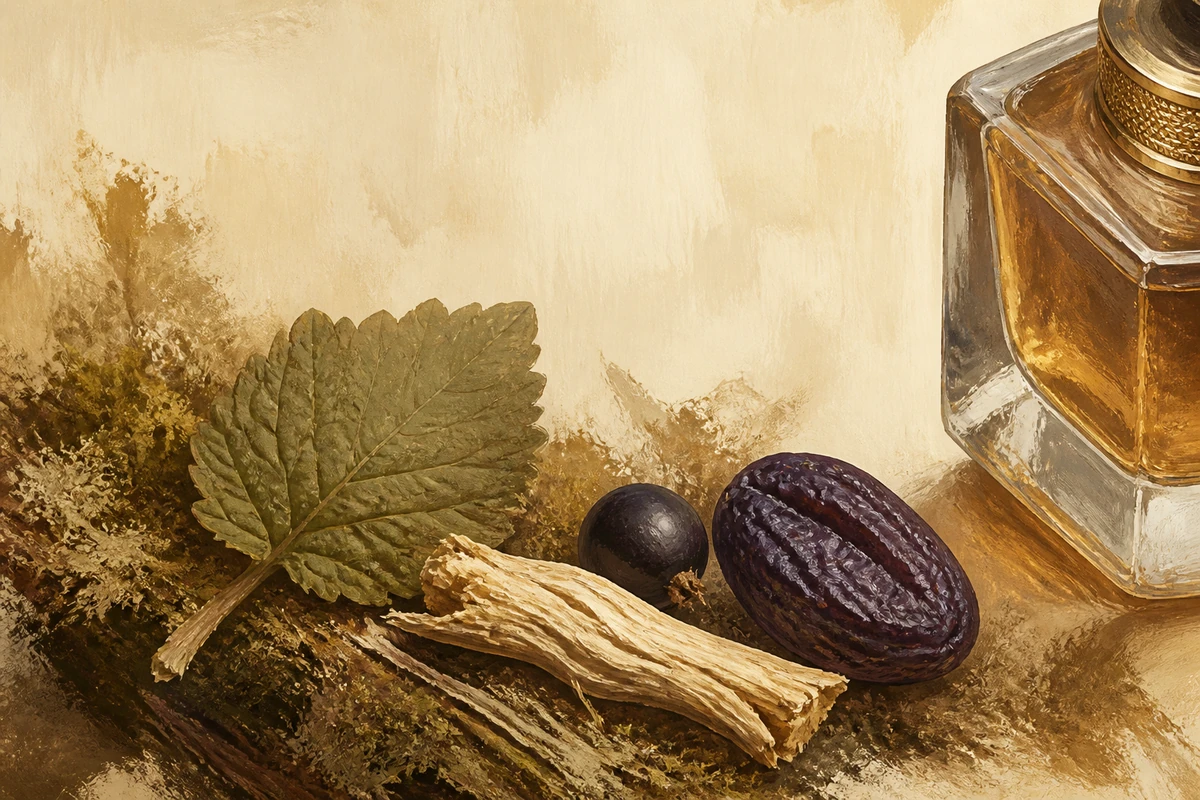
If the citrus-fruit opening is the mood, the base decides the family, and two traditions build very different floors. An oriental composition leans on resins, balsams, vanilla and warm spice: dense, soft, enveloping, sweet-adjacent even when it is not sweet. A chypre keeps a drier, mossier, more structured feel — bitter where the oriental is plush, architectural where the oriental is upholstered.
The honest wrinkle: Napoleon Eau is filed under the oriental family on its product page while remaining a chypre in structure, and that is not a contradiction — it is how family labels work. They are trade conventions, not laws of chemistry, and a composition can live on two shelves at once when it borrows from both traditions. The mossy spine is what tips this one to chypre; the warm, resinous character is what earns it the oriental tag. Both sentences are true at once.
A warm base alone is not a chypre, either — warmth needs the mossy structure to qualify. Lily of the Valley No. 7, for example, finishes on suede, frankincense and amber over a woody floral body: a genuinely warm, resinous ending, and no trace of oakmoss anywhere in it. It is a lovely illustration of depth without the chypre skeleton — and it is an eau de toilette, lighter by design, so it wears its warmth quite differently from a dense chypre. Touch it as a study in contrast, not as an example of the family.
Practically, the overlap makes the two shelves good neighbours for testing. If vanilla-heavy ambers sometimes strike you as too soft, a chypre is the drier next step; if classic chypres strike you as austere, an oriental-leaning chypre like Napoleon Eau is the friendlier doorway in. If this kind of overlap is interesting rather than annoying, the oriental and ambery fragrances shelf holds the range’s resinous side, and the full browse by fragrance family index is the easy way to walk the rest of it.
Chypre vs Fougère
This is the comparison the word most often gets confused with, because both families rest on a mossy, woody floor and both can open bright. The difference is in the backbone. A fougère is built around lavender and coumarin — the familiar clean-herbal, hay-like freshness — while a chypre is built around citrus, patchouli and oakmoss. Same idea, different skeleton: one leans aromatic and soft, the other dry and structured. If you want the wider picture, how the main fragrance families differ maps the whole neighbourhood; here, only this one boundary matters.
The range’s fougère-family bottles, 1957 among them, show the other side of that divide: an opening of pink pepper, bergamot and a soft aldehyde shimmer, and a warm landing of vanilla, honey and woods. Wearing a fougère after a chypre, the difference is easy to hear — the fougère is rounder, the chypre has corners. In practice the divide is also a temperature: fougères read fresh, clean and mildly soothing, while chypres read dry and shaded, with a seriousness of tone that sits more naturally in an evening than in a bright morning.
One small comfort for anyone still tripping over the vocabulary: neither name describes an ingredient. Fougère is simply French for fern, chypre is French for Cyprus; both are old labels for shapes, and the shapes are all you actually need to carry.
Is Chypre Masculine or Feminine?
Neither, and the question is worth retiring for this family in particular. Note structures do not carry gender; what changes the reading is the balance inside the formula — how much fruit and flower sits over how much moss and wood. A fruity chypre with pineapple and jasmine, like the one in this range, reads softer and rounder than a dry, austere chypre would; that is the lever, not the wearer. The range files its chypre under men and unisex both, which is the practical version of the same point: the shelves share it because the juice does not belong to one audience.
A quick way to hear the difference yourself, if you ever smell two chypres side by side: listen for which phase lasts longer. When the fruit and flowers linger, the composition reads softer; when the moss and woods take over early and stay, it reads drier and more formal. Both are correct chypres — and neither has a gender.
Who Tends to Like It, and How to Test
Chypre tends to suit people caught between two frustrations: sweet gourmands that feel like too much, and straight citruses that feel like too little. The mossy structure gives a fragrance somewhere to land — brightness above, weight below — which is exactly the shape those readers are missing without knowing it.
It is equally fair to say who tends to bounce off it. If what you love most in a fragrance is sweetness as the main event — dessert-adjacent gourmands, syrupy ambers, juicy fruit with no shadow — a chypre can read as serious, even strange, on first acquaintance. That is not a flaw in the chypre or in you; it is simply a different pleasure, and the test is the only way to know which side you fall on.
If you want to test the family properly, start by reading a note pyramid before you buy and pay special attention to the last row: the presence of oakmoss, patchouli and woods is the tell. Then try it on skin rather than paper, and judge it in the afternoon instead of at first spray — chypres are at their most interesting after the citrus has left and the floor is doing the talking. Spray one wrist only, live with it for an afternoon, and notice whether the mossy phase feels like home or like homework. A second wearing a week later usually settles the question for good.
When a Chypre Works Best
One line is enough here, because the mechanics of cold weather are their own subject: the structure is dense enough that a chypre sits comfortably through cool seasons and evenings, where lighter constructions can feel exposed. Think of it as a fragrance with a built-in coat. More broadly, that density makes it a good anchor for a small rotation — one chypre, one fresh scent and one comfort fragrance will cover most of a calendar between them.
What Is a Chypre Perfume: Common Questions
What does chypre smell like?
Dry, bright and mossy at once: a citrus opening that dries down into oakmoss, patchouli and woods, with fruit or flowers in the middle. The overall impression is structured and slightly bitter rather than sweet — closer to a forest floor after rain than to a dessert.
Is chypre the same as fougère?
No, though they are cousins. Both rest on mossy, woody bases, but a fougère is built around lavender and coumarin while a chypre is built around citrus, patchouli and oakmoss — one reads aromatic and soft, the other dry and structured. If you remember one contrast, make it that.
Is chypre masculine or feminine?
Neither. The structure carries no gender; what shifts the impression is the ratio of fruit and flower to moss and wood inside the formula. Fruity versions read softer; austere ones read drier. That is the whole mechanism.
Which Midnite Star bottle is a chypre?
Napoleon Eau — the range’s only chypre, and a fruity one at that. It is also the bold route in our picking a bold scent as a gift guide, so if you are choosing it for someone else, that piece explains the gamble: chypre rewards a wearer who likes structure, and surprises one who expected sweetness.