
What does iris smell like in perfume? The honest answer is that most people never smell it as iris at all. Iris root reads as a texture rather than a scent — soft, dry, faintly cool — and it is the thing people are reaching for when they call a fragrance powdery. If you have ever read that word on a product page and nodded without quite knowing what it meant, you are in the right place. This is a short, practical guide to reading that word the way a professional does.
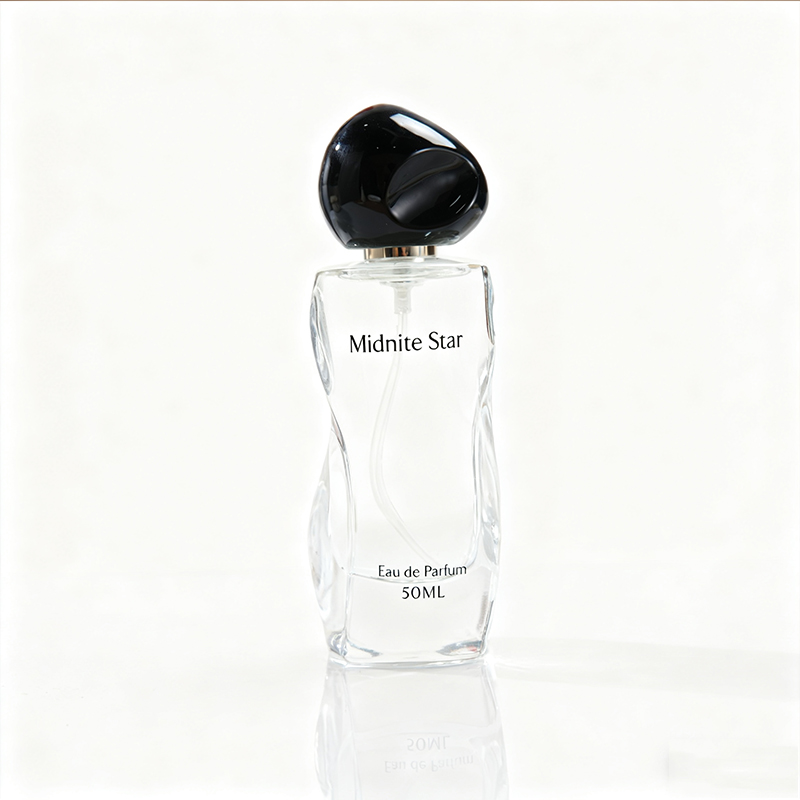
The Midnite Star range holds ten fragrances, and exactly two of them list iris root in their notes — 1957 and Hawthorn Blossom — both in the base. That small fact is the whole guide in miniature: iris is a finishing material, it shows up late, and the same note reads very differently depending on what stands around it. Along the way you will meet the texture word people use for it, the two directions it can take, and a third route some fragrances take to arrive at the same softness without it at all.
Powdery Is a Texture, Not a Smell
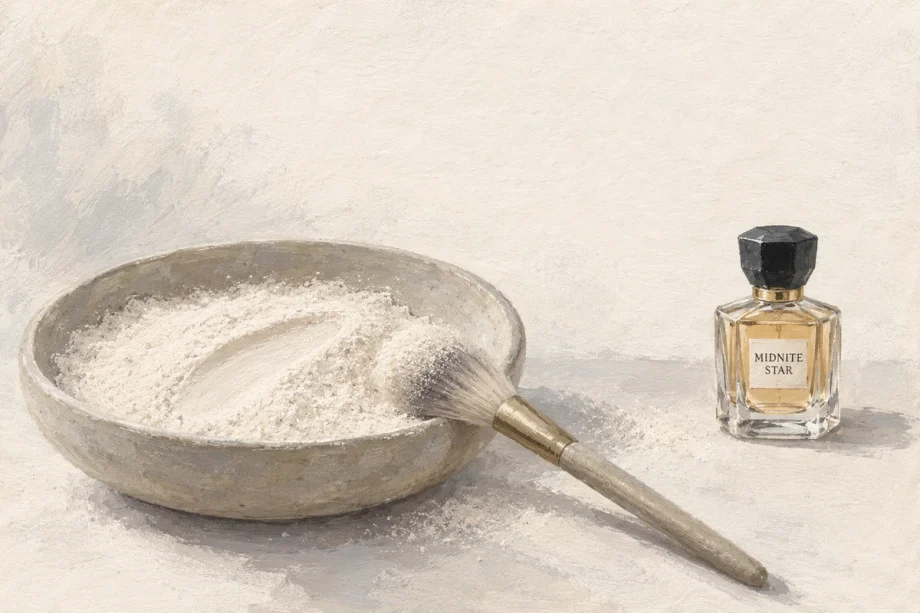
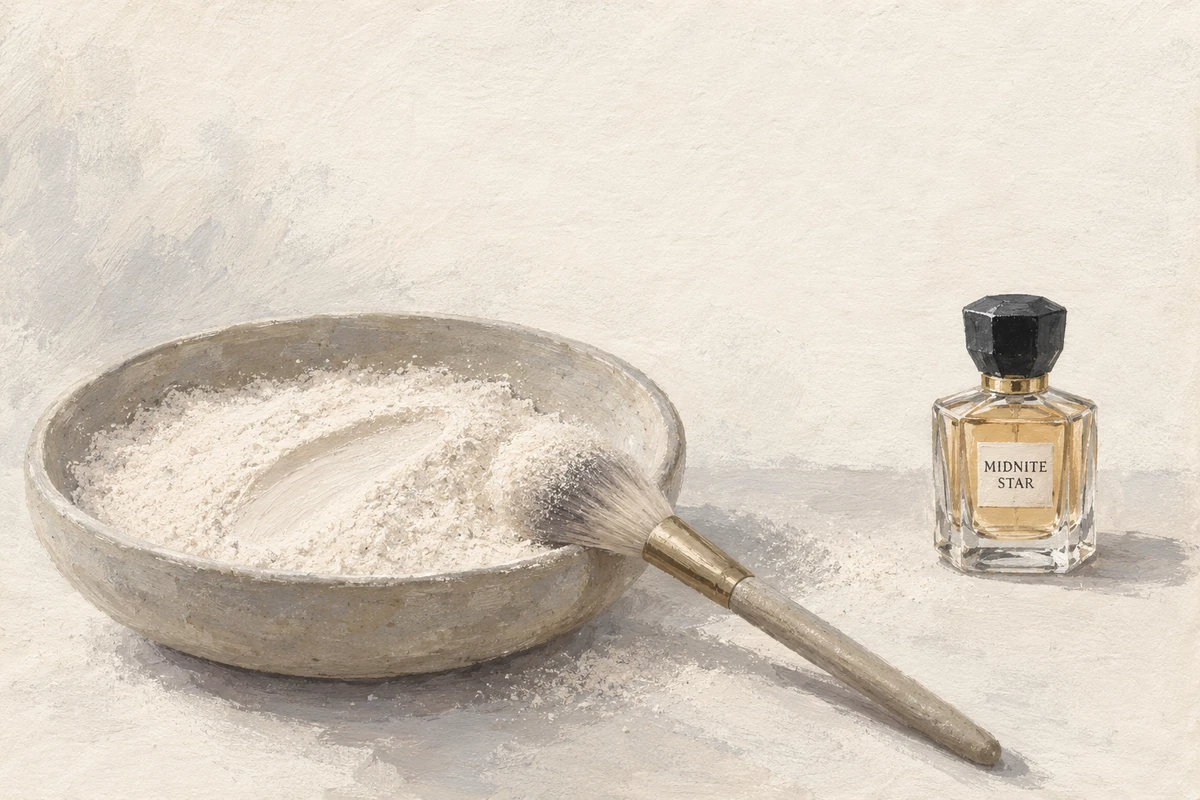
Here is the sentence to hold onto: powdery describes how a fragrance feels, not what it tastes like. It is a dry softness that sits on top of a composition the way face powder sits on skin, or the way the surface of a pressed flower feels under a fingertip — smooth, matte, slightly cool, and quiet. Nothing in it announces itself. That is precisely why it confuses people: every other word on a note list names something you can point at, and powdery points at a sensation instead.
Once you know what to feel for, powdery stops being mysterious and starts being useful, because it predicts how a fragrance will carry. A powdery base tends to sit close and finish softly; it does not project, and it does not sparkle. If your taste runs to crisp, bright or loud, that texture will read as the opposite of everything you like — and if your taste runs to polished and understated, the same texture will read as exactly the point. The word itself is neutral. What it describes is simply dry, fine softness, and it is one of the few textures you can spot on a note list before you smell anything.
A comparison makes it click: think of the difference between handling silk and handling chalk — both are smooth, but one glides and one coats. Powdery sits on the chalk side of smoothness: fine, dry, matte, a whisper of texture rather than a shine. That is why two fragrances with near-identical notes can feel completely different in the finish — one ends glossy and resinous, the other ends quiet and paper-dry. Once you can name that difference, the word stops being decoration on a page and starts being a prediction.
Where Powdery Comes From on a Note List
Two note-list signals do most of the work. The clearest is iris root — written exactly like that, and the iris root note is what people point to when they say a fragrance finishes powdery. The other is violet, a note people commonly associate with the same soft, pale effect. Alongside them, keep an eye out for the supporting vocabulary: descriptions like powdery, soft or suede-like usually appear next to these notes, because they are all talking about the same family of textures. An iris perfume note rarely arrives alone — it arrives with words that admit what it is doing.
The second signal is position. These words sit almost always in the base, which tells you something practical: a fragrance rarely opens powdery. The opening is bright, the heart is busy, and the powder arrives as the brightness burns off — often twenty minutes in, sometimes more. So when you read a note list and find iris root at the bottom, you are looking at a fragrance that becomes powdery, not one that starts that way. That single reading habit — look at the base row, check the texture words — is what makes powdery perfume notes predictable before a bottle arrives. For the full anatomy of the rows themselves, how to read a note pyramid is the primer.
It is worth saying plainly what this means for shopping: when a note list spends its texture words in the base row, the fragrance is telling you what its evening looks like, not its morning. The powdery perfume meaning, read this way, is a promise about an ending — soft, dry, low. Learn to read endings before openings and you will know most of what a bottle intends before the box is even open.
Two Iris Bottles, Two Temperatures
1957 — the Warm Reading
1957 lists its base as vanilla, honey, musk, cedar, Kashmir wood and iris root, under an opening of pink pepper, coriander, bergamot, aldehyde and musk, with orange blossom and jasmine at the heart. Here the powder reads warm, soft and faintly honeyed, because everything around the iris is creamy — the copy on its own page describes a creamy, slightly powdery finish, and that is exactly the right way to put it. This is the tidy, polished version of powdery: the texture of a dressing table in a good hotel, where the powder is part of the elegance rather than the point. See the full composition on 1957.
Hawthorn Blossom — the Cool Reading
Hawthorn Blossom puts the same note somewhere else entirely: violet and lemon at the top, jasmine, lily of the valley and green leaves through the heart, and a base of iris root, musk, patchouli and carrot. Under green material, the powder reads cool and clean — a garden after rain rather than a dressing table, with the iris contributing that pale, dry softness in the background instead of the foreground. If you have ever heard powdery described as fresh, this is the bottle that proves the point. Explore it on Hawthorn Blossom.
Same Note, Two Temperatures
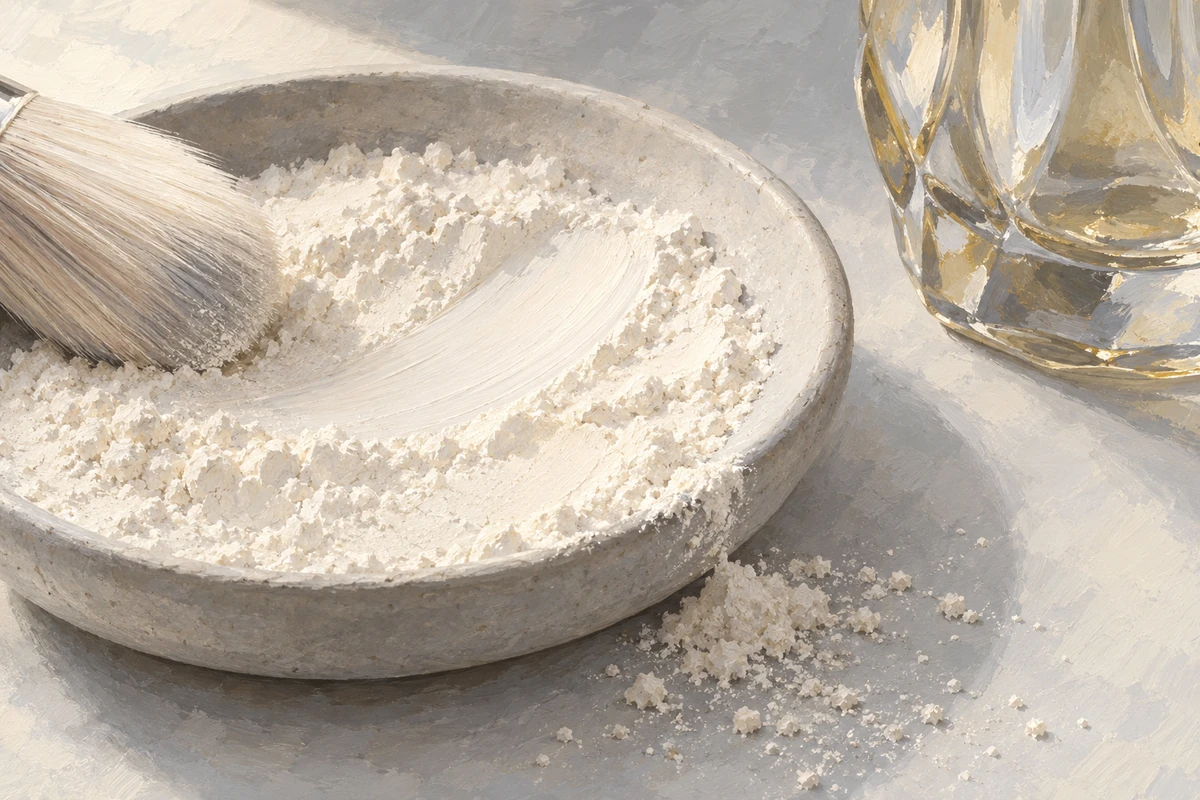
The lesson of those two readings is that iris is not a fixed smell. The note itself — that dry, soft, slightly cool texture — stays constant; what changes is the temperature of everything around it. Creamy materials like vanilla, honey and musk pull the powder warm and dressed-up. Green materials like leaves, violet and lemon pull it cool and clean. The place to check is always the same: the base row, and then the rows above it, because the surroundings decide how the powder will read.
This is also why the word powdery can feel unreliable when people use it loosely. Two fragrances honestly described as powdery can smell like two different worlds, and both descriptions are correct — one is telling you about a texture, the other is telling you about a temperature. Once you know to ask which one you are being told about, the confusion dissolves. A useful question to hold onto when you shop: which temperature is this bottle promising — the warm one or the cool one? The answer is always waiting a few rows above the iris, in its company.
A Third Route: Violet Without Iris
There is a third option worth knowing about, because it is how a fragrance builds softness when it does not have iris to reach for. True Goddess lists violet in its heart — alongside evening jasmine, plum and orchid — over a base of musk, vanilla, cedar and blackberry. Violet and iris belong to the same neighbourhood on a note list, and both read soft and pale, but they are not the same thing: True Goddess reads soft through its violet and its musky base, without any iris in its notes at all.
That distinction matters when you shop. If you love a softly powdered finish, and you find a bottle that reads soft without iris, do not assume the words are interchangeable — read the list you are actually holding. And if you are drawn to the softness but not sure about the powder, a violet-led composition is its own fair test. None of this makes violet a lesser route; it simply means the note list stays the final authority on what a bottle is actually doing. The composition is on True Goddess.
Who Tends to Like a Powdery Finish
Powder splits people, and it is worth being honest about why. Some read it as clean and quietly expensive — the texture of well-kept things. Others read it as dated, or say it smells like a drawer — a perception plenty of people hold, and worth treating as exactly that: a perception, not a fact about the material. Neither camp is wrong; they are describing the same texture with different reference points.
The practical move, if you are unsure which camp you are in, is to choose your first test deliberately. Try a powdery base in a cool, green setting — Hawthorn Blossom’s direction — before deciding you dislike the texture altogether, because the cool reading is the more forgiving introduction and the easier one to live with in daylight. If even the cool version feels like too much powder, then you have your answer, and you have it cheaply.
Two ways to run that test without committing to a full bottle: start from whichever side of the range you already trust, or sample one bottle from each temperature in the same order and compare them on paper over a week. The comparison is the point — texture judgments are much easier to make side by side than one at a time.
How to Wear a Powdery Fragrance
Keep it simple and practical. Powdery bases sit close to the skin and last — so apply less than you would with a loud woody or citrus scent; two sprays where you might use four. And expect the powder to arrive in the second hour rather than the first; judging a powdery fragrance by its opening is like judging a cake by its flour. If you are the kind of person who sprays and immediately decides, adjust the schedule rather than the dose: give a powdery fragrance a full afternoon before you form any opinion about it. If you want the full method for sizing these calls — how to judge a fragrance you cannot yet smell — how to judge a perfume before you buy it is the guide this article assumes you have read.
What Does Iris Smell Like in Perfume: Common Questions
What does iris smell like in perfume?
Like a texture more than a smell: dry, soft, faintly cool — the effect people call powdery. On a note list it appears as iris root, it almost always sits in the base, and its surroundings decide whether it reads warm and creamy or cool and green.
What does powdery mean in a perfume description?
Powdery describes a finish, not a flavour — the dry softness of face powder or a pressed flower, sitting quietly on top of a composition. It usually points back to an iris root or violet note in the base, and it tells you the fragrance will end soft rather than bright.
Is powdery perfume old-fashioned?
Some people hold that impression, and it belongs to them rather than to the note — the same texture that reads as dated to one nose reads as clean and polished to another. The unbiased way to find out costs one sample: start with the cool, green reading and see which camp you land in.
How do I know if a perfume will be powdery before I buy it?
Read the base row of its note list: iris root is the clearest signal, violet is the neighbour to watch for, and words like soft or suede-like confirm the direction. Then look at what surrounds them — creamy materials mean a warm powder, green materials mean a cool one. For the part of the range built on exactly these two readings, the quiet end of the shelf collects both bottles, and browse the floral family shows the territory they grew from. If the wider vocabulary still feels loose, how the fragrance families differ will tighten it — and with the base row in hand, you will never need to guess what powdery means again.