
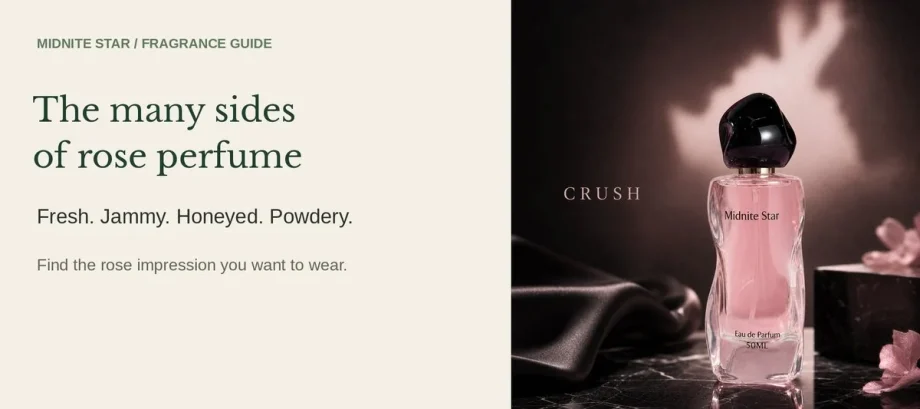
Rose in perfume can smell fresh and green, jammy and fruity, honeyed and soft, or slightly powdery. A rose perfume might bring to mind a just-cut stem, a spoonful of berry jam, or the faint scent of petals on warm skin. The word “rose” on a note list will not tell you which of these you are getting.
The notes around the rose usually explain the direction. Once you know what to look for, it becomes much easier to pick a rose scent you will actually enjoy wearing.
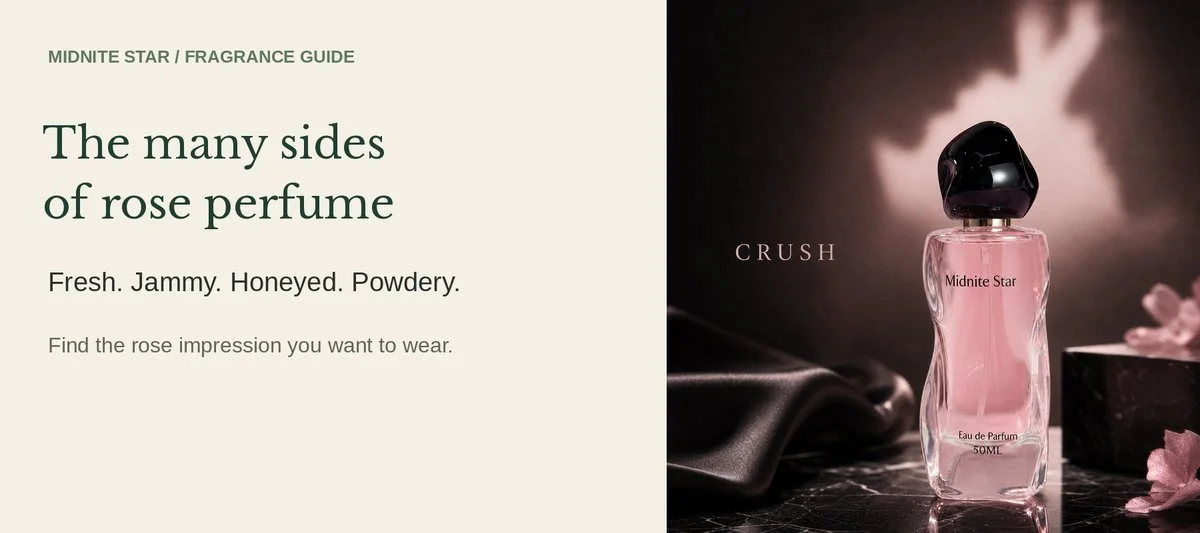
Rose perfume can take many forms. Pictured: Pink Encounter.
What Does Rose Smell Like in Perfume?
Think of the difference between a rose fresh from the garden, a rose-flavoured sweet, and a bowl of dried petals. All three smell of rose, but each stresses a different side of it.
Natural rose oil is a complex mix of many scent compounds. According to the Wikipedia summary of rose oil, citronellol and geraniol are among its major components, while trace materials such as beta-damascenone and rose oxide make up a large share of what we actually smell. The fragrance guide The Sniff Test links rose oxide to a green, slightly metallic freshness and beta-damascenone to a warm, jammy depth.
You do not need the chemistry to choose a perfume. It simply explains why one rose can feel crisp and another sweet. It also helps to know that a listed rose note describes the intended impression. It does not prove that a perfume contains rose extract; perfumers can build a rose accord from several materials.
| Rose facet | What it may remind you of | Notes that often bring it forward |
|---|---|---|
| Fresh and green | A cut stem, dewy petals, a hint of lychee | Citrus, green leaves, light musk |
| Jammy and fruity | Berry jam, plum, Turkish delight | Blackcurrant, raspberry, plum, grape |
| Honeyed and soft | Warm petals, a rounded sweetness | Honey, vanilla, white musk |
| Powdery | Dried petals, cosmetics, a soft haze | Iris, violet, musk |
| Spicy and dark | Rose with depth and edge | Saffron, pepper, patchouli, incense |
These are broad shopping descriptions, not a standard classification. Many rose perfumes sit across two or three rows.
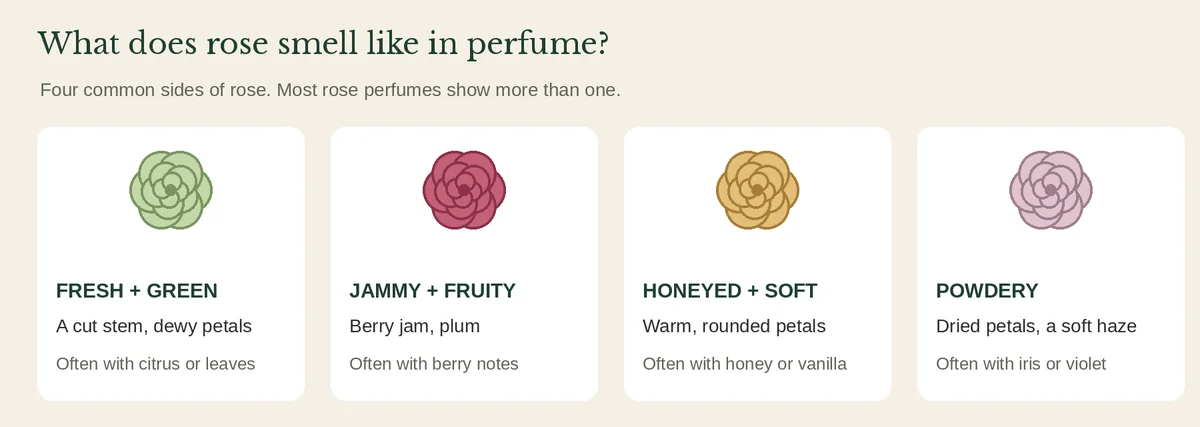
The notes around a rose help decide which side you notice most.
Rose Oil vs Rose Absolute
Perfumers mainly work with two natural rose materials. Rose oil, also called rose otto, is made by steam distillation. Rose absolute is made by solvent extraction. The Sniff Test describes the oil as generally brighter and greener, and the absolute as denser and fruitier, with a more honey-like sweetness. Wikipedia notes that the absolute is the more common of the two in perfumery.
You will rarely see this distinction on a retail note list, and many perfumes combine natural materials with synthetic ones. Treat it as background knowledge: if a rose smells like a fresh-cut flower, you are noticing the brighter side; if it feels thick and velvety, you are noticing the richer side.
How Other Notes Change Rose
Rose works well with a wide range of notes, which is why it appears in fresh, fruity, warm, and woody fragrances alike. Its companions often shape the overall effect more than the rose itself.
Fruit. Blackcurrant, grape, or berry notes push rose toward a juicy, jammy style. This is often what people mean by a fruity rose perfume.
Musk. Musk tends to make rose feel softer and closer to the skin. A rose and musk perfume can come across as clean or warm, depending on the musk. Our guide to what musk smells like in perfume explains that difference.
Other flowers. Jasmine is one of rose’s most common partners and can make a floral heart feel fuller. See what jasmine smells like in perfume.
Woods, resins, and earthy notes. Sandalwood, amber, frankincense, and patchouli give rose a deeper, warmer finish. Read more about patchouli and amber.
Spice. Saffron or pink pepper can add a dry, slightly sharp edge and keep a rose from feeling too sweet.
How to Choose a Rose Perfume You’ll Enjoy
Decide which rose you want. Do you picture a fresh garden rose, a sweet, jammy one, or a warm, smoky one? That answer narrows the search more than the word “rose” alone.
Read the whole note list. If you worry that rose smells old-fashioned, look for fruit, citrus, or clean musk alongside it. If you want depth, look for woods, amber, or incense. Our fragrance families guide explains labels such as floral, fruity floral, and oriental floral.
Notice where the rose sits. A rose in the top notes is part of the first impression. A rose in the heart usually shows up after the opening settles. Our perfume note pyramid guide covers how this works.
Give it time on skin. If a sample is available, smell it on application, again after about 20–30 minutes, and later in the day. This is a practical routine, not a fixed timetable. Fragrance can also come across differently from person to person; see why perfume smells different on different skin.
Judge strength separately. Rose does not automatically mean strong or long-lasting. How long a perfume lasts depends on the whole formula, the concentration, and how you apply it. Buying without a sample? Our tips on choosing perfume online can help.
Rose in the Midnite Star Collection
Three of our fragrances list rose, each in a different setting. These descriptions follow the published note profiles on the product pages. They are a starting point for choosing, not a substitute for smelling a fragrance on your own skin.
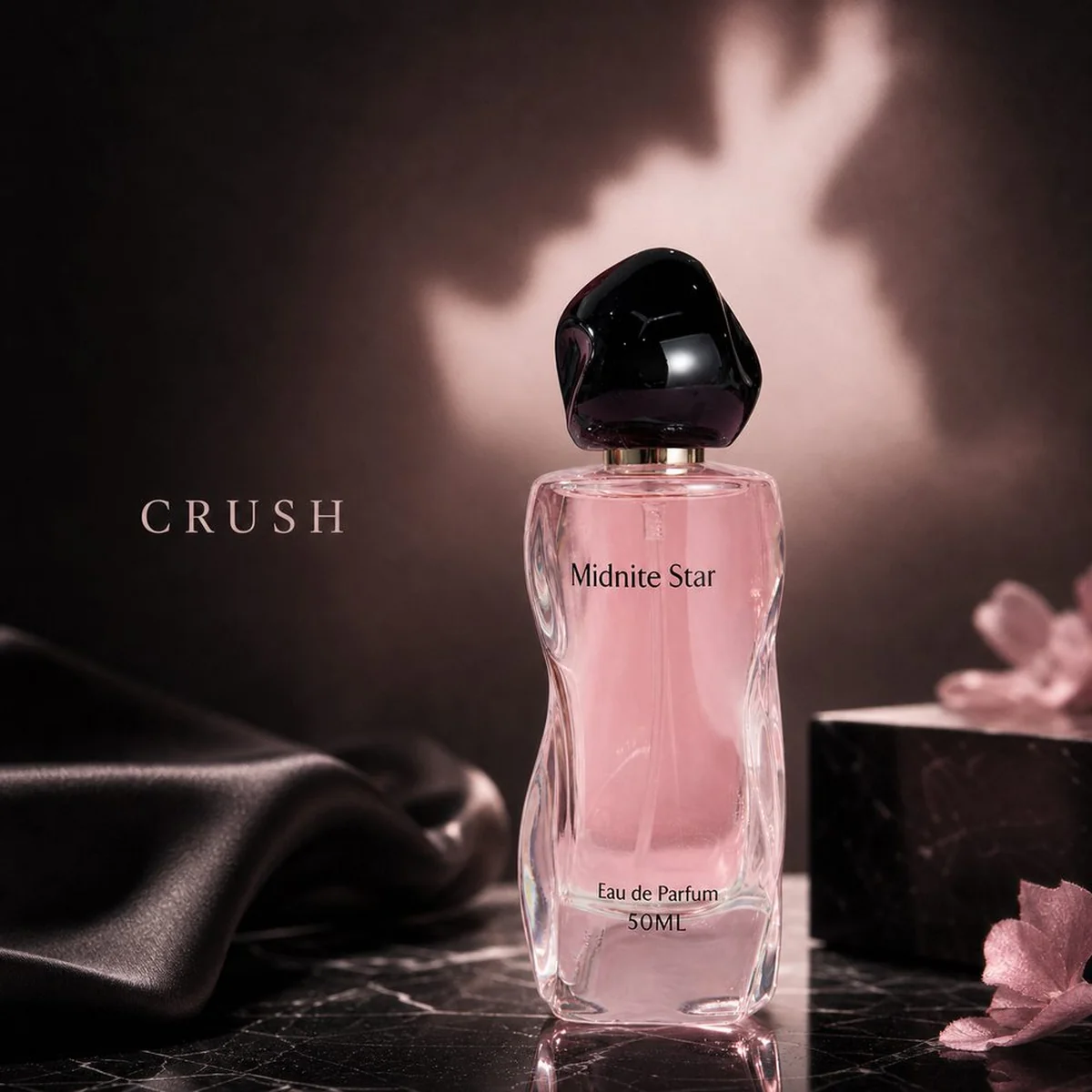
Pink Encounter · Eau de Parfum
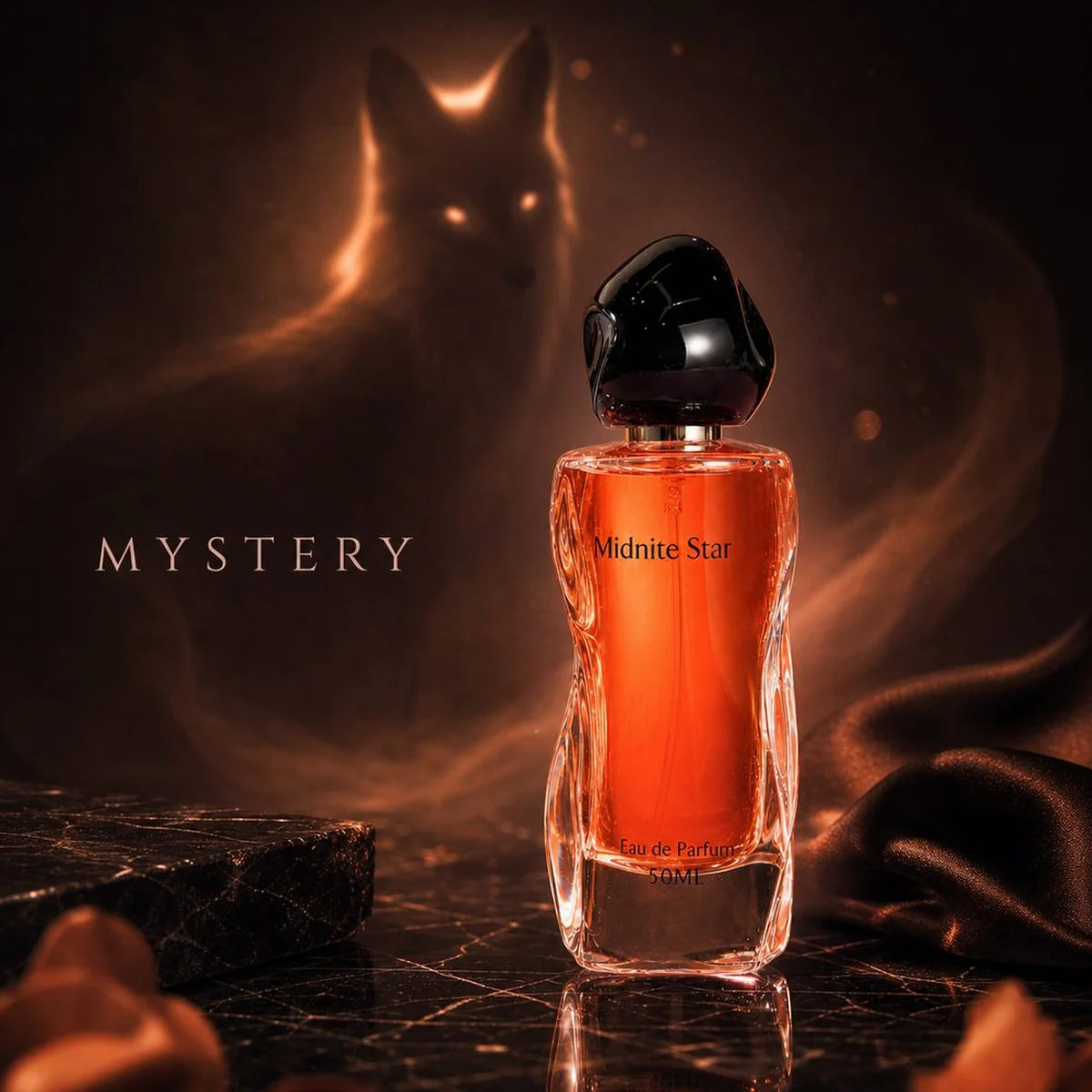
Enchanted Fox · Eau de Parfum
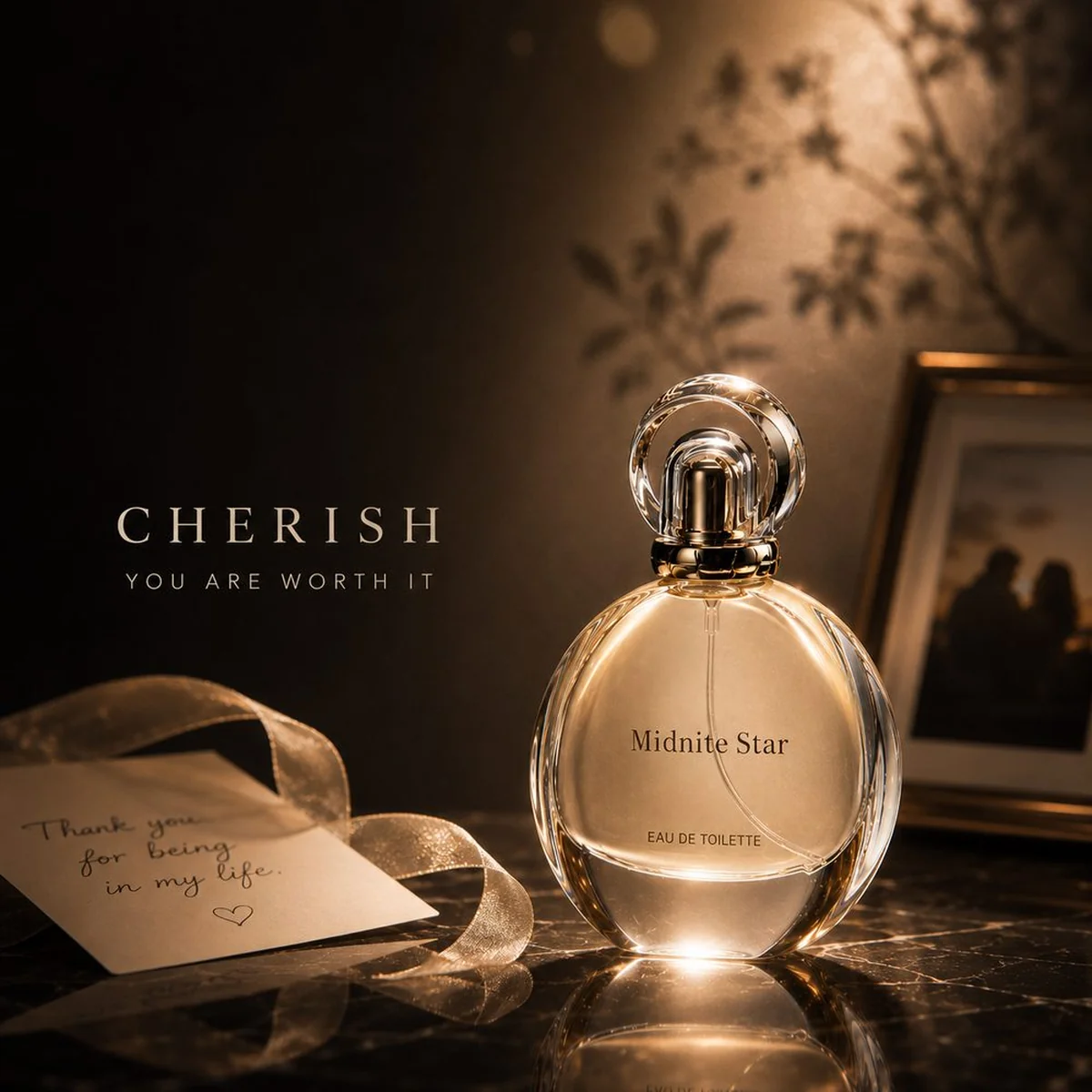
Lily of the Valley No. 7 · Eau de Toilette
Pink Encounter opens with grape and blackcurrant, moves to jasmine and Rose Taif Flower at the heart, and settles on white musk and vanilla cedar. The profile points toward a fruity, romantic rose. It is listed as a Fruity Floral Eau de Parfum.
Enchanted Fox places rose at the very start, together with orange, followed by musk and woody notes and a nougat base. That suggests a rose that leads into something warmer and slightly gourmand. It is listed as an Oriental floral Eau de Parfum.
Lily of the Valley No. 7 uses rose as one part of a larger floral heart, with lily of the valley and saffron. Thyme and tea open it, and suede, musk, sandalwood, frankincense, and amber form the base. Here rose is a supporting note in a woody floral composition, listed as an Eau de Toilette.
Start with Pink Encounter if you like fruit with your florals. Consider Enchanted Fox if you want rose up front with a warmer finish. Choose Lily of the Valley No. 7 if you prefer rose as a detail rather than the main character. You can browse more options in our floral fragrance collection.
What Does Rose Smell Like in Perfume: Common Questions
Is rose perfume old-fashioned?
Not necessarily. Rose has been used in perfumery for a very long time, but modern rose perfumes often pair it with fruit, clean musk, or woods. The surrounding notes shape whether it feels classic or current.
Does rose perfume smell like real roses?
Sometimes, but not always. Many rose perfumes interpret the flower rather than copy it, and a rose note does not confirm that a perfume contains rose extract.
Is rose only for women?
No. Rose appears in perfumes marketed to men, women, and everyone. The overall composition matters more than any single note.
What notes go well with rose?
Musk, jasmine, patchouli, sandalwood, amber, and fruit notes such as blackcurrant are all common partners.