
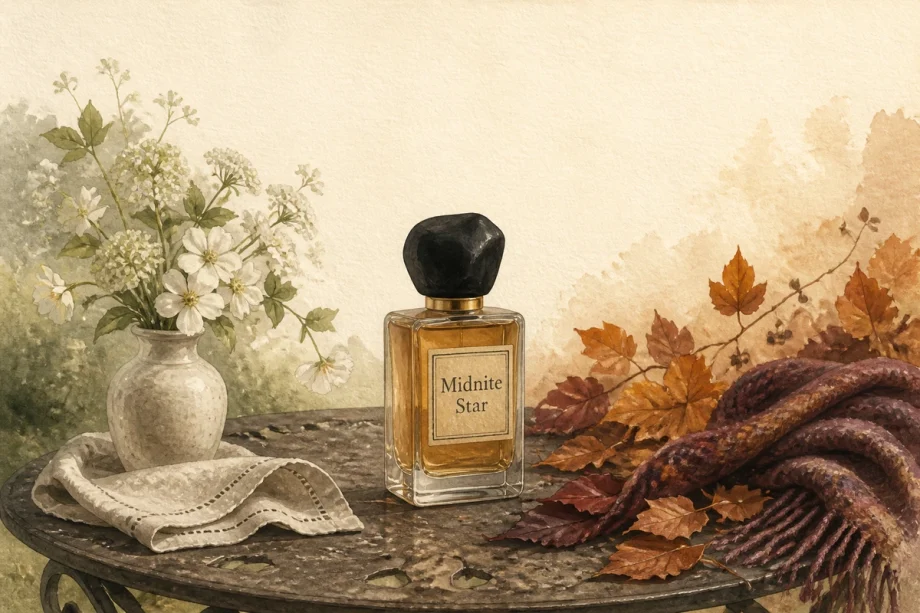
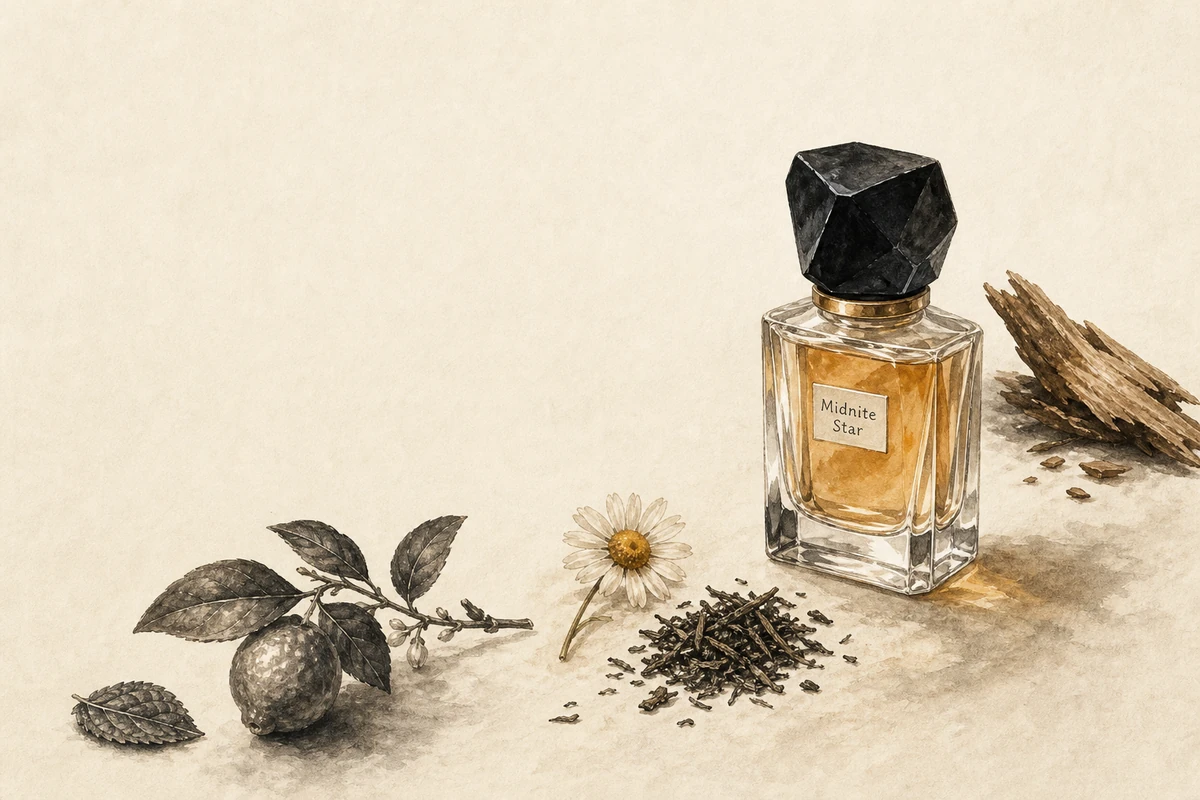
Can you wear summer perfume in autumn? It is the season of the same question, typed a dozen ways — can I wear summer perfume in fall, does fresh perfume work in cold weather — and the short answer is yes, with one adjustment, and the adjustment depends on the style. A tea scent can move straight into October unmoved; a citrus will want a warmer base underneath it; an aquatic, frankly, wants to sleep until spring. That is the whole shape of a summer to fall fragrance transition: not a new wardrobe, just a few deliberate decisions about the bottles already on your shelf.
This guide sorts the seven summer styles — the summer styles you were wearing all season — into three verdicts: keep, adapt, or retire until spring. Each verdict names the styles, the one thing to change, and a bottle that shows the way. Treat the verdicts as editorial judgment rather than rules; your own taste still outranks any framework, including this one.
Why This Shift Is Not Only About Temperature
Two things change in the first weeks of autumn: the air gets cooler, and it gets drier. Fragrance reads differently through both — and transitioning perfume to autumn has less to do with warmth than with weight; what cold air does to a fragrance is the longer version of the same mechanics. The same citrus that felt rich and generous in July’s humid air can read thin and nervous by early October, while a scent that felt like too much in August suddenly feels exactly right. That is not imagination, and it is not a flaw in the perfume: it is the same composition meeting less moisture in the air around it.
The other half of the shift is you: more clothing, longer evenings, eventually indoor heating. Scent on skin sits under layers now, and it has to compete with wool, scarves and coats rather than bare arms and sunlight. Later in the season, indoor heating adds a third environment — dry, warm rooms where a heavy composition can suddenly feel loud and a light one can vanish. The autumn arc has two stages, in other words, and early October is only the first of them. None of this argues for a hard reset of your shelf; it argues for reading it the way you read the weather in October — day by day, with a coat nearby. Most of what feels out of season in the drawer — and most of what this article is about — comes from the fresh side of the shelf: fresh fragrances are the family this decision is really asking about.
Keep: Styles That Read Right Into October
Some of the summer styles you were wearing were never really about temperature — they were about cleanliness or quiet, and those qualities survive the change of season without help. These are the styles you can keep wearing without touching anything.
Green and Herbal: Still Crisp
Green notes were never sweetened by heat, which is why they cross the border cleanly. A green and herbal fragrance still reads crisp in early autumn — arguably crisper — because cool air suits cut leaves and violet the way it suits a cold garden. Hawthorn Blossom is the bottle to keep out: violet and lemon over jasmine, lily of the valley and green leaves, finished with iris root, musk, patchouli and a carrot note that keeps it grounded. It is a daylight scent that works in lower light too, and the patchouli in the base gives it just enough weight to survive a coat.
Tea: The Best Crossover
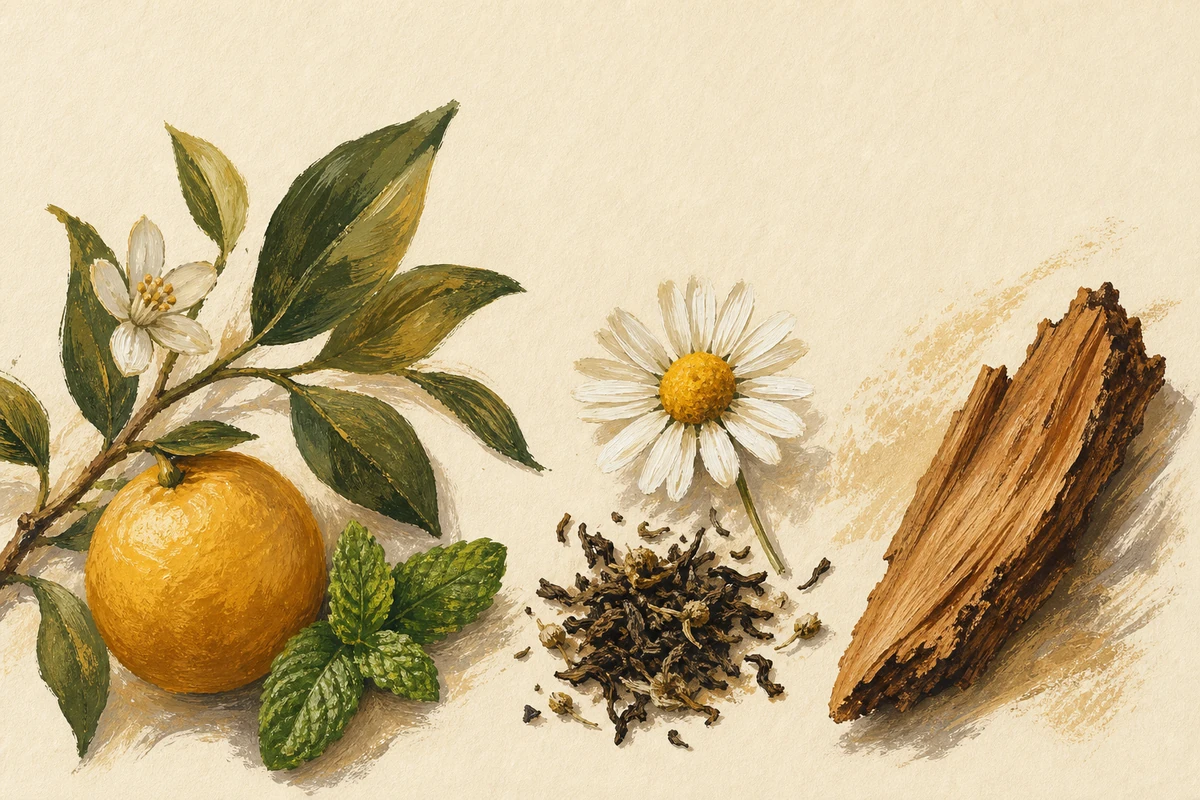
If one style crosses the seasons effortlessly, it is tea. Tea scents are quiet, dry and softly bitter — autumn qualities in summer clothing — and they wear as well with a coat as with linen. Manor Tea Party is the clearest example in the collection: chamomile, then a tea-like yerba mate heart, then a soft lavender finish that feels like exactly the right register for October mornings. Tea scents never shout, and in autumn that restraint becomes a virtue: they sit close to the skin, warm up under a scarf, and never fight the season’s ambient smells of coffee, rain and dry leaves. Lily of the Valley No. 7, which opens on thyme and tea, belongs to this story too — more on it in the Adapt section.
Clean Musk: The Safest Keep
Clean musk is the least seasonal idea in perfumery: skin-like, quiet, and indifferent to the calendar. Worn in summer it suggests sun-warmed skin; worn in autumn it suggests a good coat. 1957 is the reference bottle — pink pepper, coriander, bergamot and a soft aldehyde shimmer over orange blossom and jasmine, with vanilla, honey, musk, cedar and Kashmir wood underneath. It works in every month of the year, which makes it the safest autumn keep on the shelf; it is also the most forgiving bottle in the collection, equally at home layered under something brighter or worn on its own when the weather cannot make up its mind.
Adapt: Styles That Need One Adjustment
The adapt verdicts are about mechanics, not mood: a bright opening needs weight under it, and a light composition needs a different hour. One change each is enough — the scent itself is not the problem, and nothing here requires replacing a bottle you love.
Citrus: Wear It Over an Anchor
Citrus is the style that loses the most in cool, dry air — the sparkle stays but the body thins, because the materials that made it feel generous in July are the same ones that evaporate first in October. The fix is not to stop wearing it; it is to anchor it. Wear citrus over a warmer base rather than alone: a citrus opening sitting on cedar, musk and sandalwood (the shape you find in Midnight Star) or on honey and vanilla warmth (the shape 1957 shows) reads deliberate in October in a way a bare citrus cannot. Think of it as giving the sparkle a floor to stand on — the brightness is not dulled, it is supported. Layering a single soft base underneath is the practical version of this, and we will come back to it. And if you own a citrus and no warm base at all, the simplest route is not a new bottle: it is wearing the citrus in the middle of the day, while the sun still does some of the anchoring for you.
Transparent Floral: Move It to Evening
Transparent florals are built to shimmer in warm air, so in autumn they want the last of the day’s warmth rather than the first. Lily of the Valley No. 7 — thyme and tea opening, a lily of the valley heart, a suede-and-incense base — moves naturally from daytime to early evening: on a cool evening, against a jacket, the saffron and rose read softer and the base comes forward. The cool air is not the problem here; brightness without depth is. And this bottle has the depth — the suede, frankincense and amber underneath are precisely the materials that read best in low light. One note on rules of thumb: it is an Eau de Toilette, lighter by construction, so the shift is about when you wear it rather than how much more you apply.
Light Woods: Let It Graduate
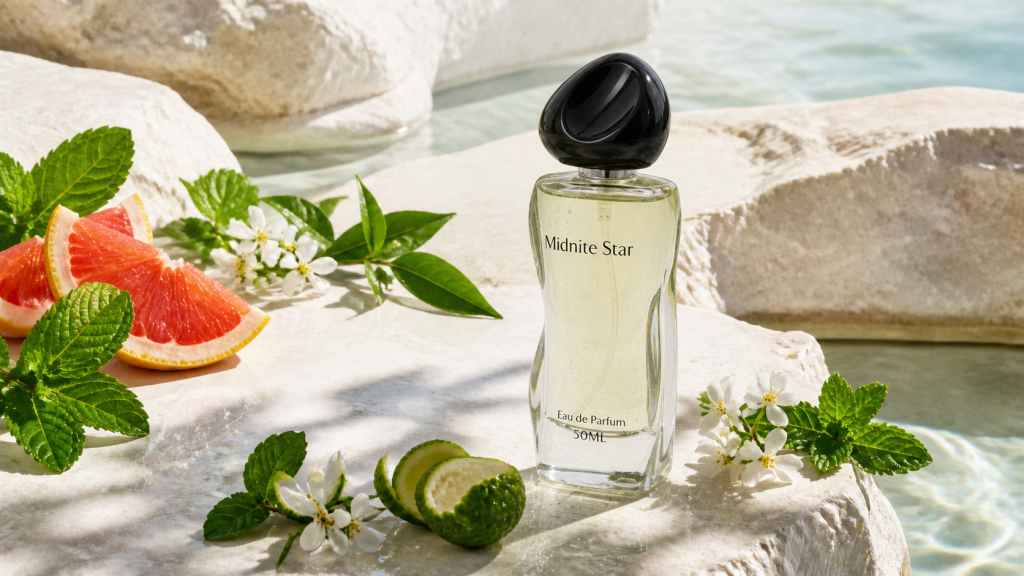
Light woods were the polished summer option for people who find fresh scents too thin — and in autumn they simply graduate into the fuller woody side of the range, rather than being replaced. Midnight Star shows both halves of that path: its opening of grapefruit, lemon and mint is still summer, while its landing of cedar, musk and sandalwood belongs to exactly the season ahead. If you spent the summer in light woods, woody fragrances are where the same taste goes next — same structure, more depth, no new vocabulary required.
Retire Until Spring: The One Style to Shelve
Aquatic and Marine: Retire Until Spring
Aquatic and marine scents are the genuine exception. They are built to suggest air, water and open space, and that impression depends on the contrast with warm air — once the temperature drops, the same molecules read cold in the wrong way, like a swimsuit in the rain. Retire them until spring without guilt; stored sealed and out of direct light, they will be waiting exactly as you left them, and they will still be good.
If your shelf is almost entirely aquatics and you do not want to wait, borrow a direction rather than a bottle: start from the tea or green and herbal styles above. They keep the cool, clean character that drew you to marine scents in the first place, but they read warmer against autumn — herbal materials like lavender and chamomile carry a softness that salt and mineral notes do not. Sample in those two aisles before you decide the season has nothing for you; a season is a long time to smell like nothing.
Three Practical Adjustments
The verdicts decide what to wear. Three small habits decide how it behaves — and they matter more from October onward.
First, moisturise before you spray. Cool, drier air leaves skin reading fragrance differently, and a well-moisturised surface holds the composition more evenly — the scent unfolds in a smoother arc rather than concentrating in one bright burst and fading early. Nothing about the perfume changes; only the surface it lands on. This is the single easiest change to make this month. Second, if a scent still feels thin, add a base layer underneath rather than more sprays — that mechanism is covered in our piece on layering a warmer base underneath. Third, move your application point: from the wrists to the chest or the back of the neck, where coats, scarves and body heat keep the fragrance moving upward through the day rather than fading in the open air. Application point also decides the trail a fragrance leaves: the same scent worn high and under fabric follows you differently from one sprayed on an exposed wrist. The wrists are exposed in summer and muffled in autumn — let the season pick the spot.
How to Test a Summer Bottle This Month
To decide a bottle’s autumn fate, do one deliberate test rather than guessing from memory. On a cool evening — not a warm afternoon, which flatters everything — wear it once, as you normally would, and then wait. Judge it at the twenty-minute mark rather than on the first spray, because the opening is designed for a season you are leaving. Test one bottle per evening and take a note; the point is a decision you can trust next week, not a new hobby. Then pay attention to the base — if the layers still feel fuzzy, how to read a note pyramid is the short version — because autumn’s verdict lives in the drydown, not in the sparkle. If the late hours feel thin, the bottle does not have to be retired — it may just be one of the styles that wants an anchor or a different hour. A fragrance that still feels complete at hour three, in cold air, is a keep; one that has quietly disappeared is telling you where it belongs in the rotation. That is the decision this month is really asking you to make.
Your Next Six Weeks: The Summer to Fall Fragrance Transition Plan
Here is the practical seasonal perfume rotation for the weeks ahead — deliberately small: three verdicts, seven styles, one evening of testing.
Leave on the shelf, front row: tea, green and herbal, and clean musk — the keeps. They need no adjustment and will carry you from now until the colder months without a second thought.
Move to the middle row, within reach but not the default: citrus and transparent floral, which work when you anchor them or wear them in the evening. They are not retired — they are conditional, and conditions this month are easy to meet.
Move to the back: aquatics, stored clean and closed until spring. A dark cupboard is fine; the point is simply to stop reaching for them by habit.
Bring forward in November: the fuller woody and oriental compositions — the destination of the light woods path. Late autumn is when weight reads as comfort rather than excess, and it is also when the bottles you were unsure about in September suddenly make sense. If you want to know which direction the season is moving before then, the notes defining this autumn are already gathered in our fall trends guide — worth one read before the next bottle.
None of this requires a new wardrobe. It requires knowing which of your bottles is a keep, which is a conditional, and which is simply waiting for spring — and now you do.