
What is sillage in perfume, and why does almost everyone use the word to mean something closer to strength? It is the trail a fragrance leaves behind as you move — the scented air in the place you were standing a moment ago, the wake rather than the cloud. Perfume sillage explained in one line: it is what follows you out of a room, not what fills the room while you are in it. And the distinction that makes the whole word useful: sillage is not the same thing as strength.
Most confusion about fragrance vocabulary comes from treating three different measurements as one. This piece separates them, shows a case from this range where the three plainly diverge, and explains why the trail matters more to most buying decisions than the volume does. It is one of those words that rewards being pinned down: once you have it, most product descriptions become easier to read. The word itself comes from French and is used in English as though everyone had agreed on what it means — in practice, half the people using it are describing something closer to strength.
Three Words People Use as One
Longevity is how long a fragrance lasts on you. The test is simple: spray it on, go about your day, and check at the end of it whether anything is still there.
Projection is how far a fragrance carries while you stand still — the bubble around you. The test: stay in one place and ask someone standing at a distance whether they can tell. What is projection in perfume, plainly? It is radius, not duration.
Sillage is the trail you leave as you move. The test: walk a few steps, then turn around and come back through the space you just left. That is your sillage — the room behind you, not the room around you. Worth saying plainly: none of the three tests asks whether you like the scent. They are measuring different things, and taste is not one of them.
The sillage vs projection question is the one that clears up most of the confusion, because the two are easiest to mix up: both are about distance, but one is measured from a fixed point and the other from a moving one. Longevity is the third axis entirely — it is time, not space. The site’s longevity piece and its blind-buy guide both approach these terms from other angles; this page is the separation. Run the three tests in that order and you will find they can give three different answers about the same bottle — which is exactly why the words need keeping apart.
The Case That Proves They Are Separate
The cleanest evidence sits in the product copy of Napoleon Eau, which opens on lemon, pink pepper, apple and blackcurrant and closes on birch, cedar, ambergris, oakmoss and musk. Its own description says those base materials “close the fragrance with a long-lasting, mossy finish that stays close to the skin.”
Read that again with the three words in mind. A vivid opening — bright fruit, a clear signature — and a finish that stays close. Both are true of the same bottle. A loud opening tells you almost nothing about the trail, and equally, a quiet finish tells you nothing about the first minutes. The front of a composition and its dry-down are simply different pieces of evidence. The composition is doing two things at once: setting the terms at the start and keeping its weight close at the end — and neither fact predicts the other.
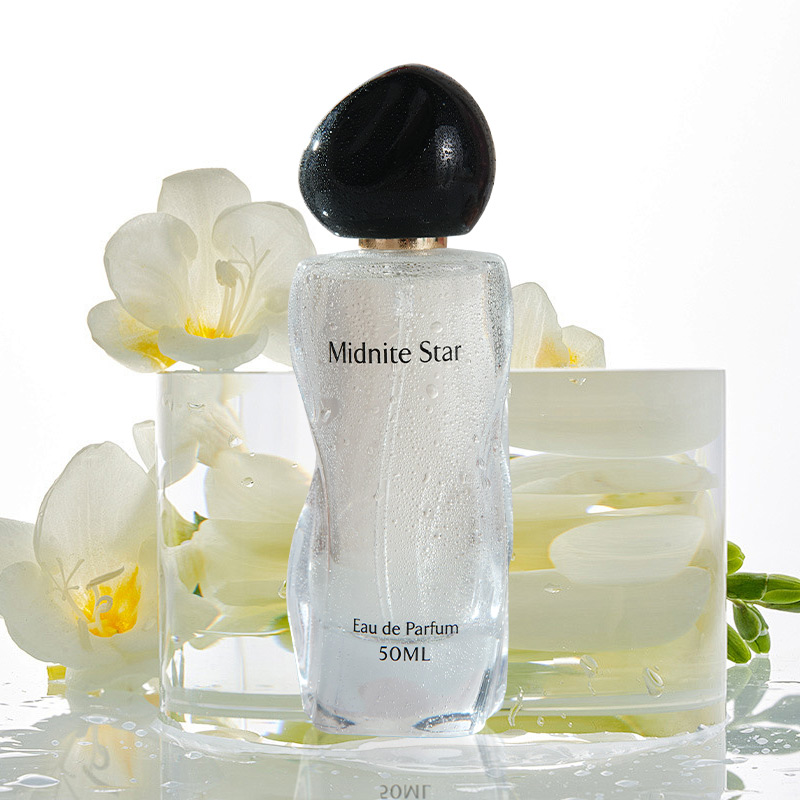
Two more bottles show the quieter end of the same lesson. Enchanted Fox is described in its own copy as having “a refined, quietly romantic character” — a composition whose whole manner is understatement. And Pink Encounter ends on white musk and vanilla cedar, which its copy calls “a soft, warm character as the fragrance settles.” Soft there is not the same as faint, and quiet is not the same as absent. That is the point: register and trail are separate properties, and only one of them is about movement.
Why the Trail Is a Social Question
Projection is what a person standing next to you is standing in. Sillage is what remains in the corridor after you have gone through it. Those are two different social experiences: one is being smelled across a desk, the other is leaving a trace somewhere you are no longer standing.
That difference is what most buying decisions are actually about, even when the buyer does not have the word for it. Some people want to be present in a room while they are in it; some want a trace in a lift for a moment after they have left it; plenty want neither. Naming the trail makes the choice concrete. It also explains a common disagreement: two people wearing the same fragrance can differ about how much it fills a room, because one is describing the bubble and the other the wake — and both can be right.
For how air and movement change what carries, the site already has the seasonal version: how air and movement change what carries covers cold air and projection in its own section, and nothing here needs to repeat it. This page stays with the vocabulary and the trail.
What Changes a Trail
Three practical levers, and none of them requires any science to use.
How much you apply. Dose is the biggest lever by far. The same fragrance, applied sparingly and applied generously, can read like two different decisions — and the trail is where that difference shows up first.
Where you apply it. A light mist to pulse points, as the product copy puts it, keeps a fragrance closer to you than a broad spray over clothing or hair. The application advice is already on the pages; what matters here is that placement changes the trail, not the composition.
How much of the composition sits in heavier base materials. A scent built on woods, mosses, resins and musks carries its weight lower down — the part of the fragrance that is still there when you have moved on. That is why two compositions with similar openings can leave very different trails.
None of this needs an explanation of why materials behave as they do; what a wearer can observe is enough to use the idea. As a rough ordering: dose comes first, placement second, composition third — and of the three, only the last is fixed before you open the bottle. If you want one habit from this section, make it this: apply less than you think you need, then see how the space behind you reads when you walk away from it.
How to Judge Sillage Before You Buy
You cannot test a trail from a product page. But you can read for it, and three habits do most of the work.
Read the base row, not the top row. The base is what is still with you later, and later is when trails exist. The pyramid tells you sequence, not intensity — a note list is an order of events, not a volume setting, and its own page says as much.
Look at how reviews describe movement. Words about travelling, following, lingering or leaving a trace are sillage language. Words about filling a room, announcing or carrying across a space are projection language. They are not interchangeable, and a review that uses one is not telling you about the other.
Prefer “stays close” over “strong.” Strong is a word about intensity; close is a word about distance. When a description says a fragrance stays close, it is telling you the trail will be short — which is useful information, not a criticism. Family is character, not volume makes the same point one level up: which family a bottle belongs to describes its manner, not how far it carries. None of these three habits is a measurement, and that is the honest limit of reading: a page cannot give you a trail, only a direction.
Choosing by Trail, Not by Volume
If you now know which end you want, the shop’s mood filings do the sorting. The presence shelf gathers the bottles filed for a bolder manner — the end of the range where a trail is part of the point. The close shelf gathers the ones filed for staying with the wearer rather than travelling.
Both are the shop’s own filings, not claims about who should wear what. Across the ten bottles in this range, the two shelves describe the two ends of a single question: do you want the scent to arrive with you, or to stay behind you?
What Is Sillage in Perfume: Common Questions
What is sillage in perfume?
The scent you leave in the air behind you as you walk — a wake, not a cloud. In short, the sillage meaning is movement, not strength: it describes how a fragrance travels behind you, which is why it is different from how strong a fragrance is or how long it lasts.
What is the difference between sillage and projection?
Think of projection as a radius and sillage as a wake: the first measures reach from one spot, the second measures what stays in the space after you have passed through it. A fragrance can have generous reach and a short trail, or the reverse.
What is considered good sillage?
There is no good number, and no universal standard — it depends on where you are wearing it. A trail that reads generous in the open air can read like too much in a small room, and a trail that suits a shared office can feel invisible outdoors. Judge it against the space, not against a figure.
Does a stronger perfume have more sillage?
Not necessarily. Strength and trail are different properties, and this range contains a clear example: Napoleon Eau opens vividly and finishes, in its own copy’s words, close to the skin. A composition can be bold at the front and leave little behind — and a quiet one can leave a longer trace than its opening suggests.