
How many colognes should a man own? Three is the practical answer, and it comes from occasions rather than from taste. One clean bottle for everyday, one that holds up in the colder half of the year, and one for evenings. Fill those three roles and you are covered for almost every situation a person actually wears fragrance in; that is a men’s perfume starter that works harder than a shelf of random purchases.
A word on the word: cologne is doing its usual loose job here, the way it does in everyday English. The point is not the label on the bottle but the three jobs — and this range happens to make the answer unusually concrete, because it carries exactly three bottles tagged for men, one per role. Everything below maps the roles to them. For beginners, this is also the answer to what is quietly the biggest men’s fragrance for beginners question there is: not what to smell like, but how much to buy before you know what you like.
Why Three Is the Practical Number
Why not more? Because the real risk in a first collection is not owning too few bottles — it is owning three bottles that all do the same thing. Buy three fresh citruses and you have one bottle in triplicate; you will still reach for nothing when the evening arrives, and still feel underdressed when the air turns cold. The number matters less than the coverage.
So think in roles. The everyday bottle has to sit close enough for an office, a commute and a shared room — pleasant at arm’s length and quiet at a distance. The cold-weather bottle has to survive heavier air and thicker clothing: colder outdoor air and warm rooms change how a fragrance reads, and perfumes for cold weather is a subject in itself. The evening bottle is the one allowed to have a point of view — structured, a little louder, interesting after dark rather than merely inoffensive. Three different demands, three genuinely different bottles — and no amount of spending on the first role can cover the other two.
Three roles, three bottles, no overlap. That is the whole system, and everything else — a fourth bottle, a fifth — is decoration once the basics are done.
It is worth naming the classic starter mistake while it is on screen, because it costs people the most money: chasing a signature scent for men before the roles are covered. One bottle asked to be the office scent, the cold-weather scent and the evening scent will do none of the three convincingly — and the wearer, sensing something missing, keeps buying more bottles without ever fixing the gap. The roles are the fix. Get the three jobs covered and the collection instinct quiets down on its own, because there is nothing left unserved to shop for.
The Three Roles, and the Three Bottles That Fill Them
Here is the part this collection makes easy: it tags exactly three of its ten bottles for men, and each one lands on a different role. You can see the full shelf on the men’s selection, but the mapping is almost too neat. If you have been assembling a perfume collection for men bottle by bottle without a plan, this is the moment the plan suggests itself — one clean, one cold, one dark, and you are done shopping for utility forever.
The clean everyday — 1957. Pink pepper, coriander, bergamot and a soft aldehyde shimmer over orange blossom and jasmine, landing on vanilla, honey, musk, cedar, Kashmir wood and iris root. It reads floral-fresh and softly musky — clean without being sharp, present without being loud. This is the bottle for the office, the everyday errands, and any room where you would rather be noticed for being well put together than for your fragrance.
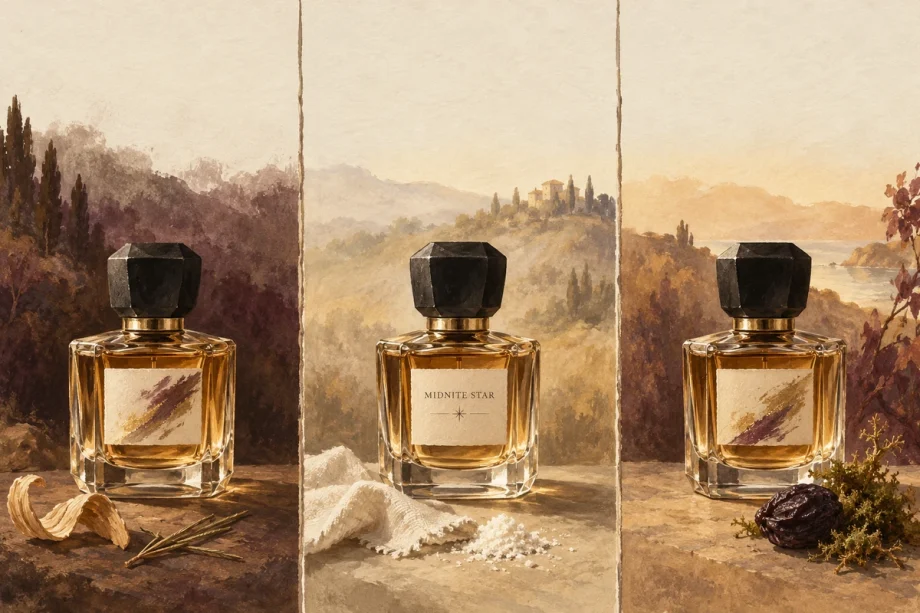
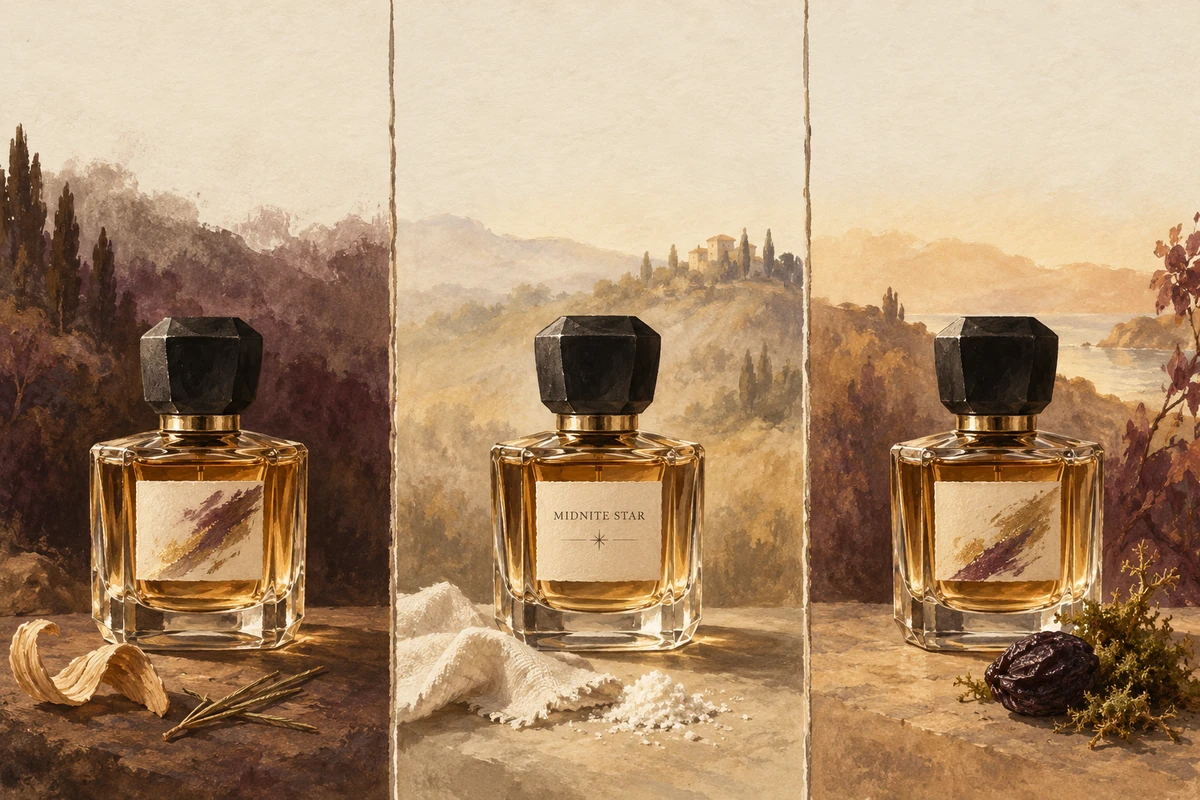
The cold-weather daily — Midnight Star. Grapefruit, lemon and mint open crisp and cool; ginger, nutmeg and jasmine warm the middle; and the base of cedar, musk and sandalwood gives it something to lean on when the temperature drops. It is the citrus you already trust, taken somewhere warmer — and it lives on the woody side of the collection, so if you enjoy browsing that way, browse the woody family is the shelf to walk.
The evening one — Napoleon Eau. Lemon, pink pepper, apple and blackcurrant over pineapple, jasmine and patchouli, with birch, ambergris, cedar, oakmoss and musk underneath. It is the boldest composition on the site — a fruity chypre with an oriental character — and the one bottle in the three that makes a statement rather than a good impression. Evenings, occasions, and any day you feel like being the interesting one in the room.
If you want the wider map these three sit on, how the fragrance families differ shows why a clean floral, a dry woody and a mossy chypre cover such different ground.
Which One to Buy First
Buying all three at once is fine, but if you are starting with one bottle, let your current habits decide rather than your ambitions.
If you already like the smell of clean laundry and fresh shirts, start with 1957 — it is the gentlest step up from soap and the safest of the three to live with daily.
If your current shelf holds a citrus aftershave or a fresh sport fragrance, start with Midnight Star — it speaks the same language as what you already wear, then adds spice and woods you will grow into rather than out of.
And if what you actually want is one bottle that never goes unnoticed, start with Napoleon Eau — with the honest warning attached. It is the most polarising composition in the range: people tend to love it or find it too much, and there is no middle. If bold is the goal, it delivers; if you want safe, it is questionably the right first buy.
Whichever you choose, buy the first bottle for the life you actually lead — then let the second and third fill what is missing. The first bottle tells you what you like; the following two exist to answer the gaps a month of wearing will reveal, which is a far more reliable shopping brief than any list you could make today.
The Skill That Prevents a Bad First Buy
One skill does more to prevent a disappointing purchase than any amount of browsing: read the base of a note list before you buy. The opening spray is the least reliable part of a fragrance — it is the alcohol-bright first minute that convinces people in shops — while the base is what you will actually live with for hours. A list ending in musk, honey, cedar and Kashmir wood is a promise about the afternoon; one ending in birch, oakmoss and ambergris is a different promise entirely.
How to read a note list walks through the full structure in ten minutes, and it is the single best investment a beginner can make before a first purchase. The short version: spend your attention on the last row of the list, not the first. In practice, that means opening a product page, reading the base aloud — cedar, musk, sandalwood; vanilla, honey, Kashmir wood — and asking which of the three roles that ending belongs to. Do it three times and the exercise becomes automatic, which is exactly the point: a buyer who reads bases does not need anyone to tell them what a bottle is for.
How to Test Before Committing
When you get a chance to try before deciding — a sample, a friend’s bottle, a store visit — use these rules and you will read the fragrance correctly.
Test on skin, not on paper: paper flattens everything and hides how a fragrance behaves with your warmth. Test in the afternoon rather than right after a shower, when skin is at its calmest and most representative. Wear one fragrance at a time — two wrists carrying two samples is how people misjudge both. And give anything you are seriously considering two or three wearings before you decide; first impressions are for citrus, not for depth.
One honest note about counter testing: a ten-second sniff at a shop will read woody and musky fragrances almost entirely wrong — those are exactly the notes that need an hour on skin to show their actual character. For Midnight Star and 1957 in particular, the counter is for confirming you like the opening; the decision belongs to the afternoon.
A habit that helps across all of this: keep two lines of notes on your phone the first week you wear anything new — what you smelled at the open, and what was left at hour four. Three bottles later you will have a small personal map of what you actually like, which beats every list anyone else could write for you.
How Many Sprays, and Where
Keep this part simple, because it is simple. Two or three sprays is the usual working dose — one on the chest, one behind the neck, and a third somewhere in the same region if the day calls for it. Spray onto skin rather than clothing: fabrics hold scent unevenly and longer than you expect, and a jacket that smells like Tuesday can follow you into Wednesday. In cold outdoor air you can afford slightly more; in a shared room, slightly less. That is the entire method, and it will serve you better than any number of added sprays.
If you remember one line from this section, make it the placement one: skin first, clothing never. Everything else is adjustability; that one is the difference between wearing a fragrance and being followed around by one.
One System, Two Tags
Worth saying plainly once: all three bottles carry both the men and unisex tags, and other bottles in the range carry unisex as well — Pink Encounter and Enchanted Fox among them. The tags describe how the shop files its shelves, not who is allowed to wear what. If the three-role system appeals to you and you are not a man, nothing above changes: three bottles, three roles, same coverage. The system belongs to the routine, not to the demographic — and once you notice that, the shopping question resolves into the only version of it that was ever useful: what does your week need?
How Many Colognes Should a Man Own: Common Questions
How many colognes should a man own?
Three, for practical purposes: a clean everyday, a cold-weather daily and an evening. The number is set by occasions, not by taste — once those three roles are filled you are covered for nearly every situation, and any bottle beyond that is a pleasure rather than a requirement.
Is one bottle enough?
For some people, genuinely yes — if you wear fragrance once a week and always in the same kind of setting, one good bottle in the everyday role will do everything you ask of it. The three-role answer is for people who wear fragrance regularly across work, weekends and evenings; if that is not your life yet, start with one and let the second bottle earn its place by being needed rather than by being wanted.
What should a first bottle be?
The cleanest thing you can find that you still genuinely like: for this range, 1957 fills the everyday role with the least risk, Midnight Star is the natural step if you already wear citrus, and Napoleon Eau is the bold choice if safe is not what you are after. When in doubt, buy for the version of your day that repeats the most — that is where a first bottle earns its keep.
Do you need separate summer and winter scents?
Useful, not required. A three-role rotation already covers the year reasonably well: the clean bottle works in warm months, the woody one carries the cold half, and the evening bottle ignores the calendar. Add seasons only once the three roles are filled, and only if you enjoy the variety — the routine comes first, the collection comes second. The people who own twenty bottles are not better covered than you are; they are simply collecting as well as covering, which is a different hobby on top of the same practical answer.