
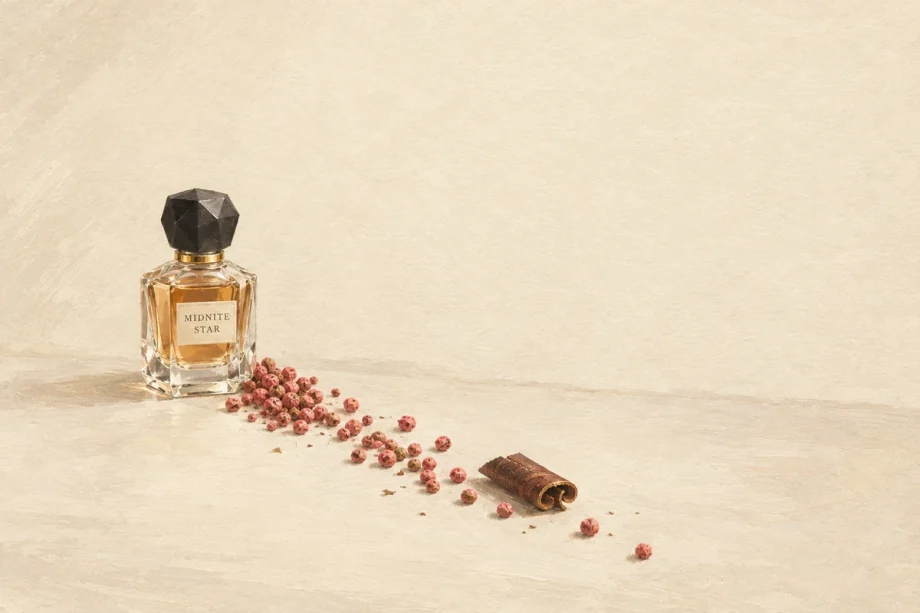
What does pink pepper smell like in perfume? Not like pepper, for a start. The name does the note no favours: pink pepper is a small dried berry, not a peppercorn, and it reads nothing like what sits on a dining table. In a composition it is bright, faintly rosy, a little fizzy — cool before it is warm — and its real value is structural. It is how a fragrance opens bright without opening on citrus, which is exactly what this range’s flagship does, and why it is worth a page of its own on this shelf.
This page is about the pink pepper perfume note as a working ingredient: what it does in the first minutes, who keeps it company (coriander, mostly), what happens when spice moves to the middle of a composition instead, and what spicy notes in perfume actually contribute — which is less about strength than most people assume.
What Pink Pepper Does in an Opening
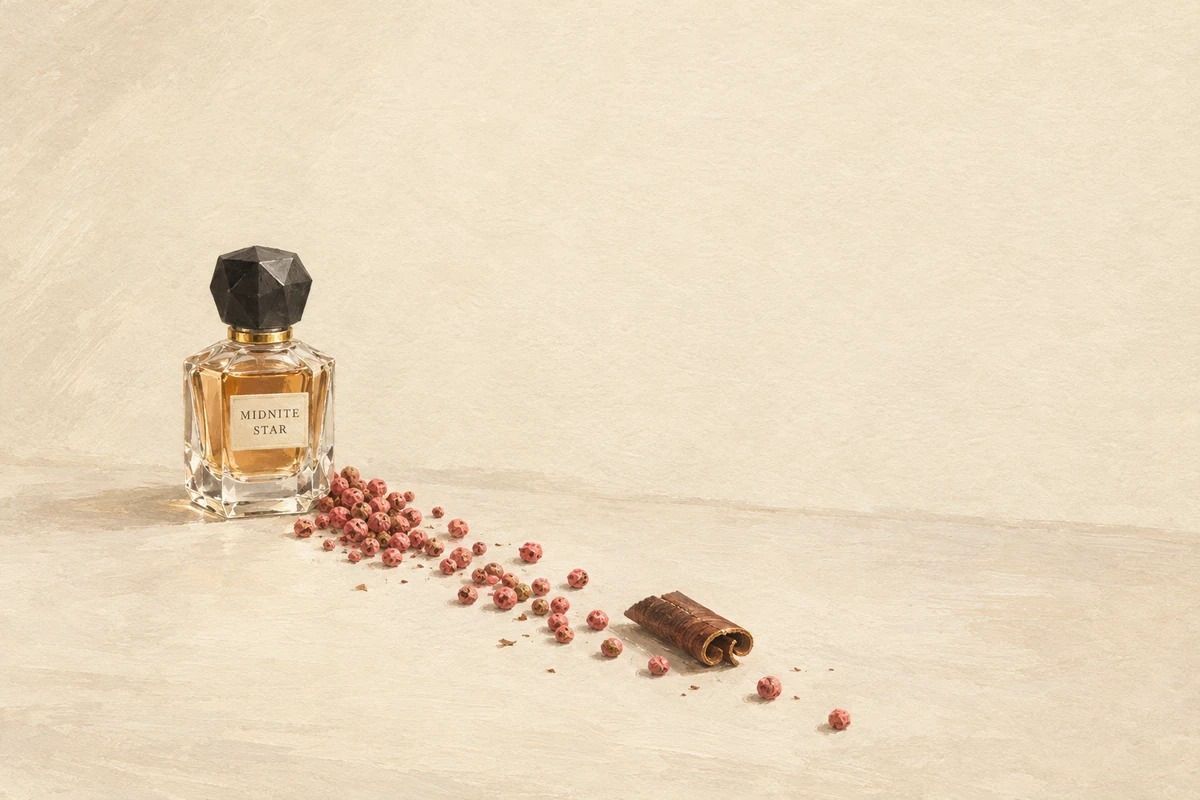
An opening has one main job: catch attention while the heavier materials are still waking up. Think of the first minute of a fragrance as a handshake — it sets the terms of everything that follows, and pink pepper is one of the few materials that can set those terms without raising its voice. Citrus does the same job, but citrus comes with a signature — the sharp, juicy, unmistakable lift of lemon or grapefruit. Pink pepper gives lift without that signature. The first minutes feel airy and modern rather than juicy; there is brightness, but it arrives dry, with a faintly rosy edge instead of a squeeze of fruit.
Two bottles in this range open on pink pepper, and comparing them is the fastest way to hear what the note can do.
1957 pairs it with coriander and bergamot over a soft aldehyde shimmer — a tidy, soap-clean opening that reads composed from the first breath. Napoleon Eau pairs it with lemon, apple and blackcurrant over a drier, mossier floor — louder, greener, more assertive. Same spice, two very different openings: one wears a pressed shirt, the other rolls its sleeves up. That contrast is the lesson: how much of a note’s character comes from its neighbours rather than from the note itself.
If you have smelled both, you have already felt the point of this page. A note is not a fixed smell; it is a behaviour, and pink pepper behaves like light — it takes its colour from whatever it passes through. In one bottle it reads clean and almost formal, in the other green and forward. Neither reading is the true one, which is exactly why the question what does pink pepper smell like has a longer answer than a single adjective.
Coriander: The Quieter Half of the Pair
Understanding the coriander perfume note starts with honesty: most readers will never pick it out on its own, and that is not a failure — coriander’s job in that composition is not to announce itself. It is the soft, faintly citrus, almost soapy presence that keeps the opening from turning into a citrus statement. Without it, the bergamot and aldehydes would read more like a clean cologne; with it, the opening stays gently cool and rounded.
So when a note list shows coriander beside pink pepper, read the pair together: the pepper supplies the brightness, the coriander supplies the smoothness, and the opening ends up bright but not sharp — a combination that is hard to get from citrus alone. That is worth saying plainly, because it means you never need to apologise for not finding coriander: pair notes are part of the architecture, not part of the test.
If you have read the notes the range actually uses, you will recognise coriander as one of the entries the atlas never gave a full page to — pink pepper and coriander are both quietly missing there, which is part of why this page exists. The site’s piece on iris root is the other place this pattern shows up: a material whose whole contribution is tone rather than announcement. And where a material sits in the pyramid — top, heart, base — decides how it reads, which is worth keeping in mind for exactly these quiet cases. It is a good example of a broader truth about reading fragrance: some materials are soloists, and some are glue. Coriander is glue, and glue rarely gets applause.
The Warmer Spices: In the Middle, Not at the Top
Spice is not only an opening move. Move from the top of a composition to its heart and the same word changes temperature entirely.
Midnight Star is the clean example: its heart carries ginger and nutmeg alongside jasmine, sitting on a base of cedar, musk and sandalwood. Ginger and nutmeg in perfume behave differently at the middle layer than at the top — by the time this spice arrives, the mint-and-citrus opening has already passed, so it reads warm, round and a little sweet, a glow rather than a spark. Nothing about it is sharp; it softens the floral heart instead of competing with it.
That is the general pattern worth carrying away: opening spices read cool and bright, heart spices read warm and rounded. Position is what decides it — the pyramid tells you which version you are reading about. When a description calls something spicy, the useful follow-up question is always the same — where in the composition? A reader who knows to ask it will get further with that single question than most shoppers do in an hour of browsing.
What Spice Does for a Composition
Set aside individual notes for a moment. Spice as a class does a small number of concrete things, and they are worth naming plainly.
- It gives a fragrance a spine. Presence in a composition tends to live in the spice, the woods and the moss — the materials that hold a shape while the brighter accents come and go.
- It keeps sweetness from going shapeless. A sweet base with no counterweight turns vague; a trace of spice at any layer gives the sweetness an edge to push against, and the composition reads more defined for it.
- It does not mean strong. This is the one worth repeating: a spicy fragrance is not automatically a loud one. Spice is a register, not a volume. A composition can carry spice quietly at conversation distance, and several do — the register says something about the character of the scent, not about how far it travels.
None of this makes spice a background material. Its work is simply structural, and structure is easy to miss when it is done well — which is why spice rarely gets the paragraph it deserves in a review, and why this page exists.
Reading Spice on a Note List
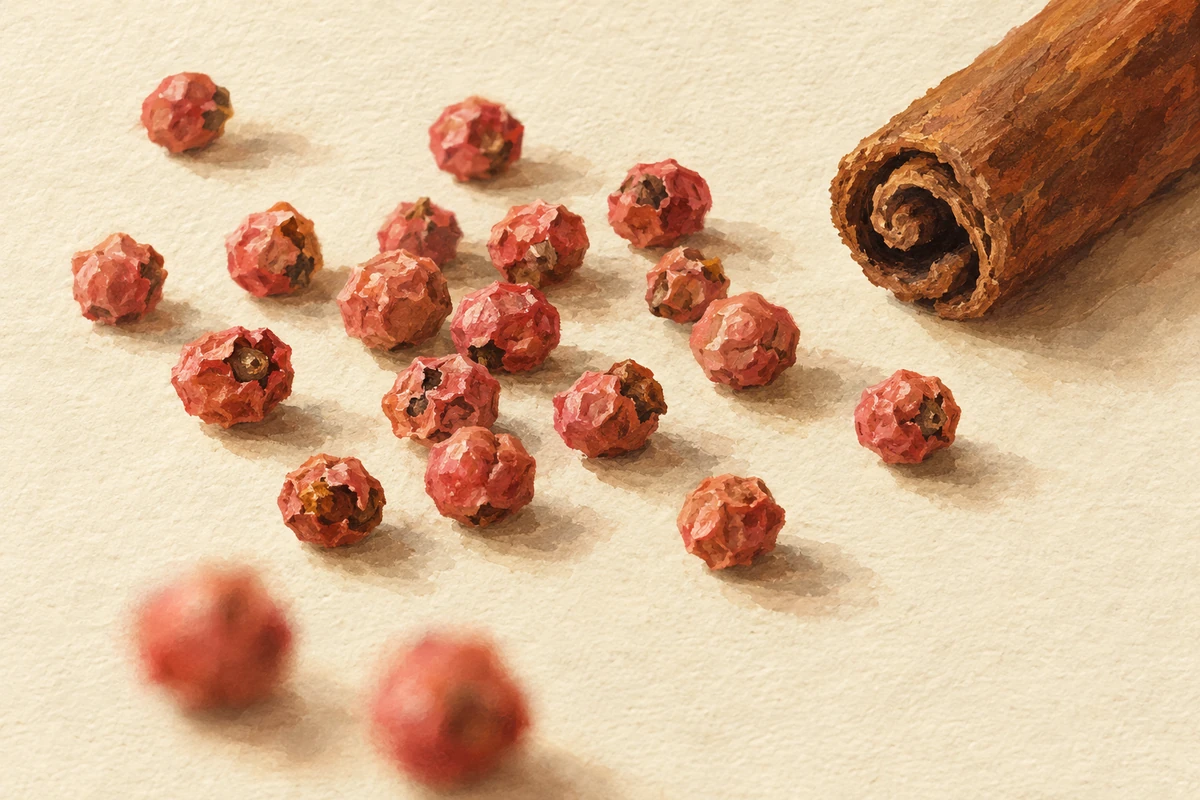
Once you know the pattern, note lists get easier to skim. A spice in the top row promises a bright, dry opening — expect lift without juice. A spice in the heart promises warmth and roundness later — expect the middle of the fragrance to be its softest, most glowing part. A composition that carries spice in more than one row is usually built to keep that thread running through its whole arc. None of this tells you whether you will like a fragrance; it tells you its shape. And shape is the fastest thing to learn about a scent.
Season and Wear
Spice is the register the cold half of the year belongs to. In cold air a spiced opening reads warm rather than sharp — the same bottle that feels brisk in June can feel comfortable in November, without anything in it changing. Think of it as wardrobe logic rather than a rule: the cold months ask for registers that read warm, and spice is the most reliable of them. If you want the fuller argument, why cold air suits a warm register is the seasonal companion to this page.
One practical line, since spiced compositions are often assumed to be demanding: two or three sprays is the working dose, and it is better to be under than over on the first wear. Spiced openings are generous — they make themselves known without help.
Who Tends to Like a Spiced Opening
Not a type of person — a type of taste. If citrus openings have always struck you as too sharp or too short-lived, pink pepper’s drier brightness is the obvious alternative. If you want brightness with an edge rather than a squeeze, the same applies. And if you like a fragrance to start composed rather than juicy — put together from the first minute — a spiced opening is exactly the register to explore, which is why the oriental and ambery shelf exists as a home for warm-spice compositions.
Both of the spiced openings above sit in the shop’s men’s edit as well as the unisex one — the shop’s filing, nothing more. Spice has never belonged to anyone in particular; it is simply a register some compositions are built around. None of the tastes described above is a demographic; they are tastes, and tastes are the only honest way to talk about who wears what. If you want to browse that filing directly, the menswear end of the shelf collects it.
And if you want to place these spices among everything else the range uses, fragrance families explained shows where warm-spice compositions are filed, and the notes the range actually uses maps every material the ten bottles list — including the two this page just filled in.
What Does Pink Pepper Smell Like in Perfume: Common Questions
What does pink pepper smell like?
Bright and faintly rosy, with a fizzy, dry quality — cool in the first moment before it warms. It is a small dried berry used as a note, not the pepper that sits on a table, and in a composition it reads more like a texture of light than a seasoning. Most people meeting the note for the first time are surprised by how gentle it is.
Is pink pepper the same as black pepper?
No. Despite the name, it is not a peppercorn at all — it is a small dried berry, and in perfume it behaves nothing like the black pepper you know from the table. The resemblance is in the name only.
Is spicy perfume strong?
Not necessarily — and assuming it is, is the most common mistake about the register. Spice is a character, not a volume: a spicy composition can sit close and read quietly, and several do. Judge a spiced fragrance by where its spice sits and how it wears, not by the word on the label.
What spices pair well with pepper in a fragrance?
Coriander first — the pairing in 1957 is the range’s cleanest example, a soft, faintly citrus partner that keeps the opening cool. Bergamot and aldehydes round it out in that composition. Vanilla and warm woods work on the other side, giving spice something soft to land on.