
The question what is a signature scent is usually answered with a bottle. That is the first thing worth correcting: a signature scent is not a product category but a description of a habit — the one you reach for without deciding, the bottle already in your hand before you have thought about it.
The confusion is easy to explain. The phrase turns up in retail copy as though it named something you could go out and buy, and that framing sends people shopping for a conclusion before they have any evidence. Search for how to find your signature scent and you will meet lists of candidates. The evidence itself never arrives on a shelf. It accumulates at home, over weeks, in the ordinary act of getting dressed.
Two Meanings, Kept Apart
In retail copy, signature means a bottle positioned as the one for you: the house’s candidate, described in a way that invites you to imagine it as yours. In practice, it means a bottle your own behaviour has promoted — by being worn, replaced, packed, reached for.
Neither usage is dishonest. The first is a description of intent, and intent is a reasonable thing for a brand to have. The second is a description of evidence. Only the second can be tested, and it cannot be tested in an afternoon.
That difference matters because the two meanings lead to opposite actions. If signature is a product, the sensible next step is to shop. If signature is a habit, the sensible next step is to notice what you already do — which costs nothing and takes longer.
Worth saying plainly: a bottle can become a signature, and often does. The distinction is about direction — whether the bottle was appointed by copywriting or promoted by repetition — and the same object can arrive by either route.
Why Searching First Fails
A signature is a claim about months, not minutes. Three mistakes follow from forgetting that.
Buying the most distinctive thing on the shelf. Distinctive and daily-usable are different properties, and they are often in tension. The bottle that stands out in a shop is usually making a strong statement at close range; that is a quality, but it is not the same quality as being wearable on an ordinary Tuesday. A signature has to survive repetition, and repetition flattens anything that depends on surprise.
Buying for the version of yourself you would like to be. Most of us can picture a life in which the right fragrance is obvious: the imagined version who travels lightly, reads in cafes, arrives somewhere interesting. The week you actually have usually looks different. Buying for the imagined life is one of the most reliable ways to end up with a bottle you admire and never wear.
Buying under time pressure. A trip, an occasion, an empty bottle that needs replacing — pressure turns a decision into an ending. The purchase closes the search rather than starting a habit, and the result is a bottle chosen for the day it was bought rather than for the months after it.
None of this requires a larger theory about people. It requires only noticing that a term describing months cannot be resolved by a decision made in an afternoon, and that a shop is a poor place to look for evidence about a habit.
The Thirty-Day Test, With Nothing to Decide
The test is deliberately dull. Pick one bottle you already own. If you own nothing worth testing, settle on one role you actually need rather than a bottle you admire — choosing by role rather than by list is the page that owns that method, and it is worth reading before you buy anything.
Then wear only that bottle for thirty days. Not most days; the point is the absence of alternatives.
Somewhere in those weeks, notice the moment you stop thinking about it. Not the moment you decide you like it — that comes early and is unreliable. The moment that matters is the one where the fragrance stops being the subject of the morning and becomes part of the background: you spray it without commentary, and the day proceeds. That moment is the evidence, and it is the only kind that predicts the next year.
If you are testing before buying rather than after, wear it for a full day rather than a few minutes. A shop test measures the opening, because the opening is what a shop has time for. A day measures the part you would actually live with, including the hours when nothing much is happening.
There is no decision inside the test. You are not scoring the bottle, ranking it against others, or waiting for a verdict. You are noticing whether your own behaviour moves toward it.
The rule is not a challenge and not an exercise in discipline. It is simply the shortest arrangement in which repetition becomes visible; a bottle worn once a week never gets the chance to become a default.
Four Signs You Already Have One
The signs are behavioural, and that is the point: none of them are about taste, and none of them require you to be able to describe the fragrance well.
You reach for it without deciding. The hand goes to the same bottle while you are thinking about something else. That is what a habit looks like from the outside.
You replaced it when it ran out. Repurchasing the same bottle is the least glamorous and most reliable form of commitment. Most people who claim to be searching have already done this at least once.
You stopped asking whether it suits the occasion. Early on, every wearing involves a small calculation: is this right for work, for dinner, for the weather. When the calculation stops, the bottle has become a default.
You pack it for trips. Travel is where people take the bottle they trust, because space is limited and the stakes feel higher. If it is the one that goes in the bag, it is the one you have chosen.
Most people who say they are still looking already have one. What they are missing is not a bottle but the recognition — the term has been treated as a purchase to complete rather than a pattern to observe.
None of these signs requires a good vocabulary for notes, and none of them is a judgement of taste. They are simply what repetition looks like when you stop to notice it.
Name the Register, Not the Bottle
In technical terms, what a signature amounts to is a base you keep returning to. Why the base is what you live with is a matter of exposure: the base is the part still present for the longest stretch of the day, so it is the part you spend the most time with, whether or not it is the part you noticed first. The opening is the introduction. The base is the company.
That is why signature scents so often feel similar to the people who wear them and different to everyone else. The wearer is not choosing an opening; the wearer is choosing a register to sit in.
Naming the register in words is what the family vocabulary is for. It lets you say what you keep choosing without naming a bottle — fresh, floral, woody, oriental, aromatic — and it makes the pattern visible across bottles that look nothing alike.
Three patterns from this range show how different those registers can be.
1957 runs “from a juice-bursting opening to a light, soft finish” — the finished, clean-reading register that people tend to settle into. Pink pepper, coriander, bergamot, aldehyde and musk open it; vanilla, honey, musk, cedar, Kashmir wood and iris root carry the base.
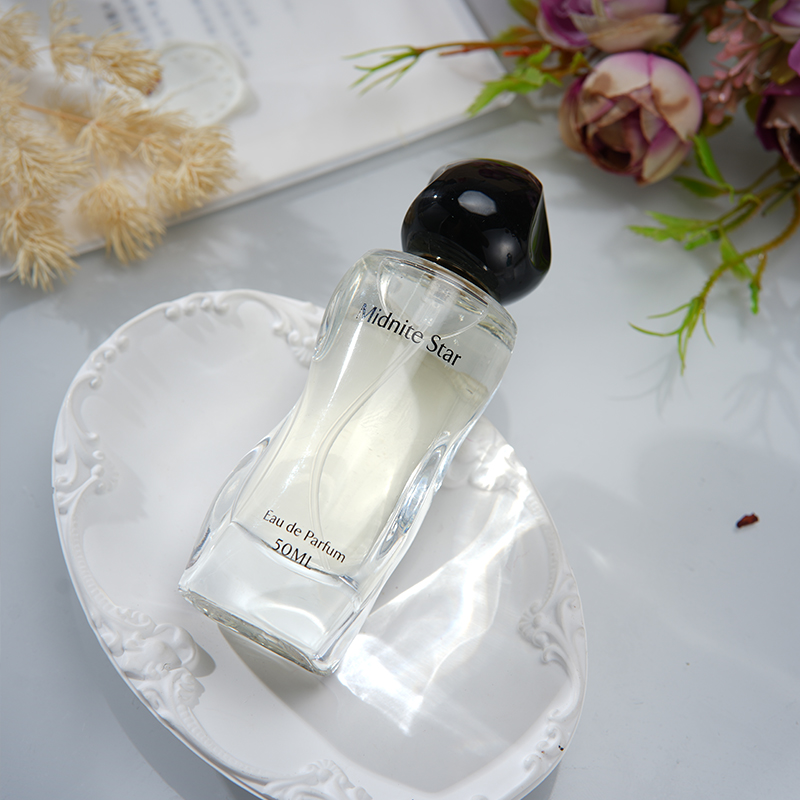
Midnight Star is the working-day register: bright citrus and mint over ginger, nutmeg and jasmine, landing on cedar, musk and sandalwood. Its own key features read “Bright citrus and mint opening with a spicy floral heart” and “Woody base built around cedar, musk, and sandalwood” — a bright front and a woody floor, which is a register many people wear on the days that need composure.
Pink Encounter is the light register: grape and blackcurrant, jasmine and Rose Taif Flower, white musk and vanilla cedar, with “a soft, warm character as the fragrance settles.” For a reader who wants to begin light rather than dense, that is the pattern to recognise — not because it is a starting point, but because it is a register that repeats easily.
These are registers, not a ranking. The useful question is not which of the three is best; it is which one you would still be reaching for in a month with no one watching.
When You Have Outgrown the One You Had
A signature can stop fitting, and the honest way to describe that is a role change rather than a loss. The bottle was right for a period — a job, a city, a way of dressing — and periods end. Nothing has failed.
Two shelves make that change cheap. The shelf filed for anyone is the low-risk place to change register, and the quiet shelf is where the close, soft compositions sit. Both are the shop’s own filing rather than a claim about who should wear what.
The range holds ten bottles — nine eau de parfums and one eau de toilette — which is enough variety to change register without changing much else.
What Is a Signature Scent: Common Questions
What is a signature scent?
It is the bottle you reach for without deciding. The phrase describes a habit rather than a category of product, which is why it cannot be bought directly and why shopping for one tends to produce a bottle rather than a signature.
Do I need one?
No. It is optional. The term describes a pattern some people settle into; it is not a requirement, and wearing several bottles instead is not a deficiency of any kind.
How long does it take to find one?
You do not find it; you notice it — usually after months of wearing something you already like. The thirty-day test above is a way of noticing sooner, not a way of forcing the result.
Can it change?
Yes, and that is normal. A role changes and the bottle that suited the old one stops being reached for. The section above on outgrowing a signature is about exactly that, without the drama.
Nothing about that is a loss, and nothing about it needs a decision today.