
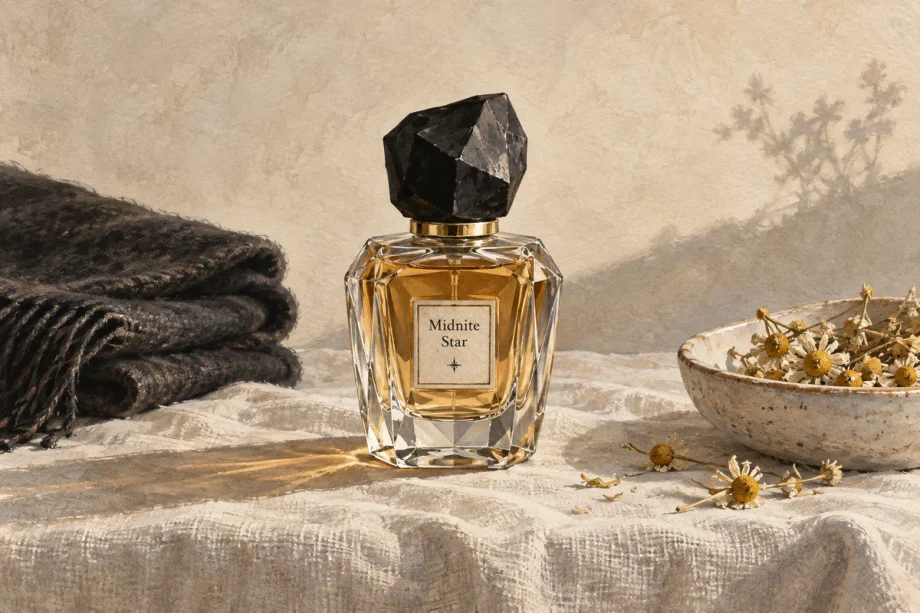
Most people shop for perfume the way they shop for groceries: by ingredient. Vanilla, rose, oud, something with citrus. Then the bottle arrives, smells nothing like the idea of it, and quietly moves to the back of the shelf. The list was accurate. The problem is that a note list describes what a fragrance is made of, while what most of us are actually looking for is a feeling: composure before a difficult meeting, a slow Sunday, an evening that matters. This is why choosing perfume by mood works better than choosing by note, and it is the idea this guide is built on.
The Midnite Star collection is arranged around exactly that idea, with four moods and a small set of bottles for each. The store calls them Power, Relax, Romantic and Addictive, and between them they cover most of what people are shopping for when they say they want a scent for confidence, for winding down, for romance, or for an evening with a little pull. The link between scent and feeling is deep and well documented, and why scent and feeling are so tightly linked is worth reading once. This guide stays on the practical side of it: what each mood asks of a fragrance in note terms, when to wear it, how much to apply, and which bottle to start with.
Perfume for Confidence and Presence
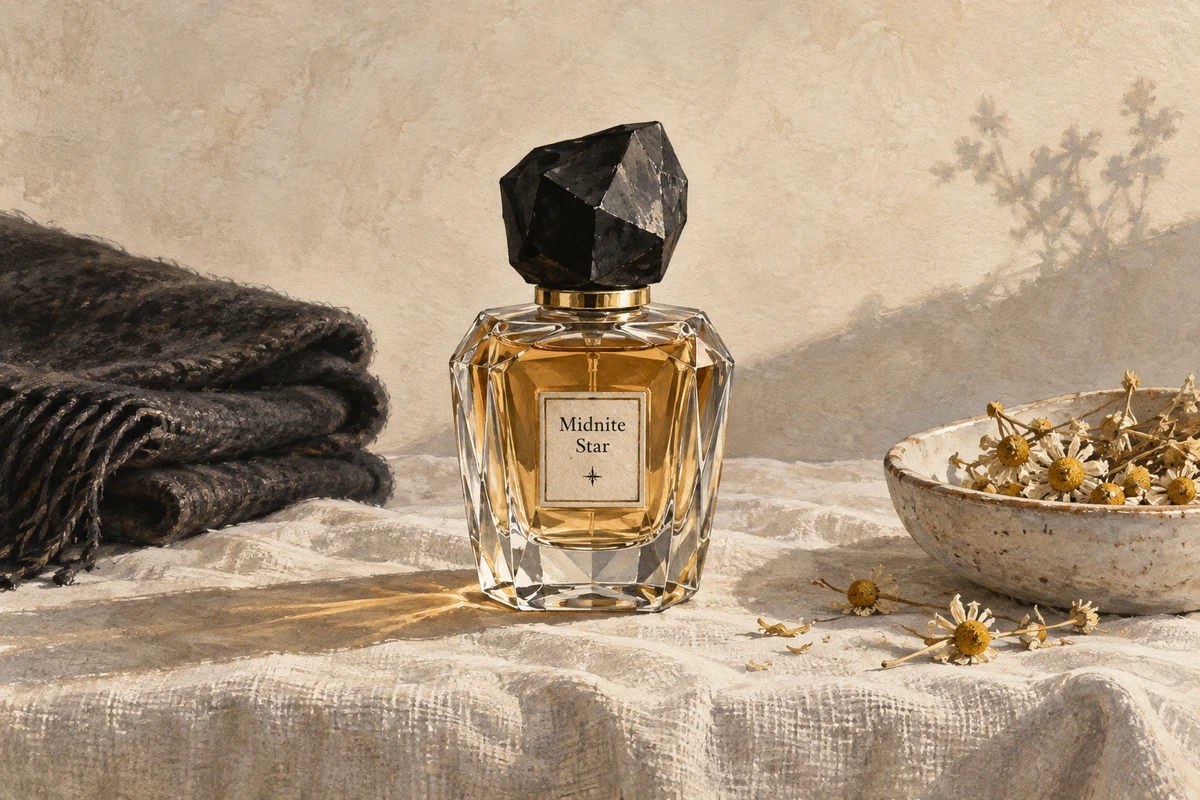
What confidence asks of a fragrance is structure. Brightness alone reads as casual; sweetness alone reads as soft. The register that carries presence tends to live in spice, woods, moss and ambergris, materials that give a scent a spine and a shadow. In practice, that means citrus sharpened by pepper, fruit set over patchouli, or a composition that stays composed hours in rather than sparkling for ten minutes and then vanishing.
This is the register for interviews, presentations, first meetings, and any evening where you would rather be remembered than merely noticed. It is also the mood people most often over-apply, because the occasion feels important and a heavier hand feels safer. It is not. One or two passes, a pass being one full press of the sprayer, is enough when the composition already has a point of view. A restrained trail reads as self-possession; a saturated one reads as effort. The collection keeps this mood small, which is a kindness: the Power collection holds only two bottles, and between them the choice is quick.
The recommended bottle for presence is Napoleon Eau. Lemon, pink pepper, apple and blackcurrant open it sharply; pineapple, jasmine and patchouli carry the middle; birch, cedar, ambergris and oakmoss settle the finish into mossy depth. It is the most extroverted composition in the collection, and worn with a light hand it reads as authority rather than volume. Think of it for the meeting before the meeting, and for dinners where you intend to be the one people remember.
The alternative is True Goddess, and there is a detail about it worth knowing. It is the only bottle in the collection that belongs to two moods, Power and Romantic, which makes it the natural choice when a day moves between the two registers. Magnolia, cantaloupe, peach and pear open it bright and social; evening jasmine, plum and violet keep the heart graceful; musk, vanilla and cedar close it warmly. One bottle, two moods, no change of clothes required.
If you are deciding between the two, let the occasion break the tie. Interviews, pitches and formal rooms sit naturally with the chypre structure of Napoleon Eau, while the floral-fruity warmth of True Goddess suits openings, celebrations and rooms where warmth will do more work than authority.
Perfume for Calm
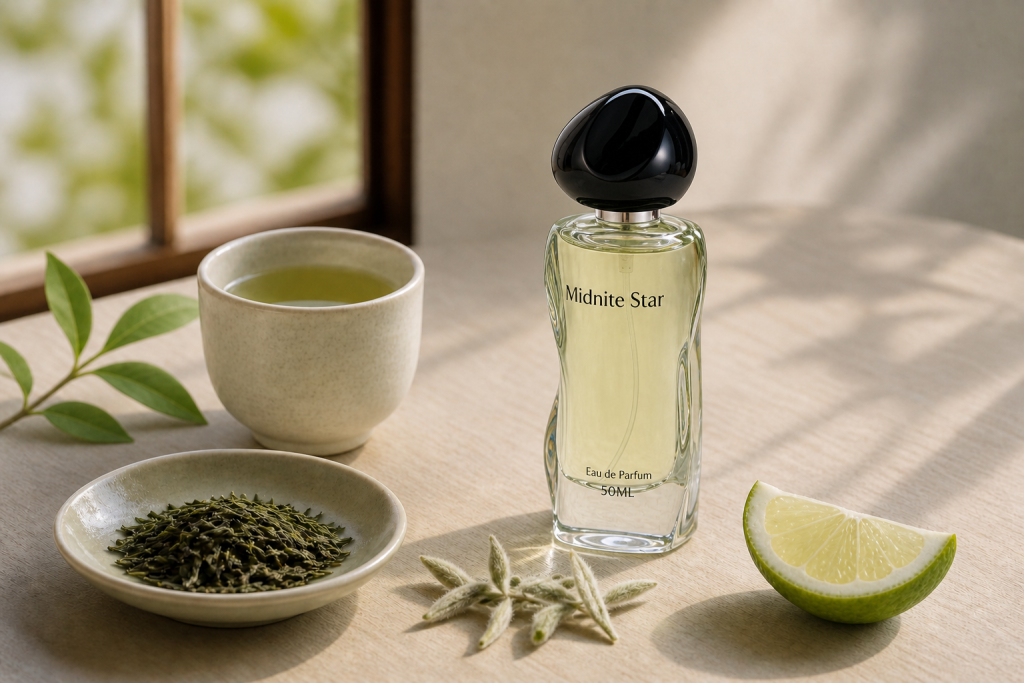
Calm is the easiest mood to describe in notes and the hardest to buy well, because calm is often mistaken for weakness. A relaxing perfume does not need to be barely there; it needs to be unhurried. The materials that carry it are chamomile, tea, lavender, soft musk and clean woods: ordered, quiet notes that smell like a room you would like to spend an afternoon in. What people usually mean by a relaxing perfume is not drowsiness but decompression, a composition with nothing in it that nags for attention. It is also the honest answer to the late-night search for a mood boosting perfume: at that hour, what most of us are reaching for is not stimulation but a soft landing.
Wear calm on the days that have no audience: working from home, a long train ride, the hours after dinner when the day needs to end slowly. It is also the right mood for delicate company, new colleagues, quiet rooms, anyone who should not be able to smell you from across a table. Keep the application light, one or two passes at the wrists and the sides of the neck, applied to moisturised skin so the fragrance settles in rather than sitting on top. Calm scents are built to be close. Enjoy them at reading distance.
The recommended bottle is Manor Tea Party. Chamomile opens it gently, yerba mate gives the middle its tea-house character, and a soft lavender close keeps everything unhurried. It is the clearest calm-by-note composition in the collection, and the easiest of the three to wear every day. It is also one of the bottles the collection offers in more than one size, which suits a mood people tend to wear in quantity.
The alternative takes calm in a more polished direction: 1957, whose white musk runs from the opening into the base, where honey, vanilla, cedar and Kashmir wood gather beneath a soft iris powder. This is calm that does not read as sleepy: composed, a little powdery, the scent equivalent of a pressed shirt. And if your version of calm leans greener, the third member of the shelf is Hawthorn Blossom, which routes the same mood through violet and lemon, a jasmine, lily of the valley and green-leaf heart, and a base of iris root, musk and patchouli. A garden rather than a tea room. All three live together in the Relax collection, scents built for winding down, which the collection keeps deliberately small and quiet.
Perfume for Romance
When people describe a romantic perfume, they tend to reach for two families without knowing it: rose and the softer white florals, and fruit that behaves like them. The Romantic shelf uses both, plus the materials that keep them from turning sweet: jasmine, Rose Taif Flower, white musk, and a base of cedar or vanilla. Romance in fragrance is not intensity. It is intimacy with a little lift, notes that feel spoken at a lower volume, close to the skin. The mistake to avoid is reading romance as sweetness: sugar without structure smells young rather than close, and every soft note on this shelf is anchored to musk or wood for exactly that reason.
Wear it for dates and anniversaries, but also for the ordinary evenings you want to feel deliberate: dinner cooked properly on a Wednesday, a film at home with better tableware. Nothing about this mood requires an occasion. Often the application of a romantic scent is the occasion.
This is also where concentration earns its keep when deciding how much to apply. Most of the shelf is eau de parfum, and one or two passes is plenty; Lily of the Valley No. 7 is the exception, an eau de toilette and the lightest format in the collection, which rewards a slightly more generous hand and takes a second pass without becoming heavy. If the formats are new to you, how concentration changes what you smell explains the difference in detail.
The recommended bottle is Pink Encounter. Grape and blackcurrant open it like a first spark; jasmine and Rose Taif Flower form the middle; white musk and vanilla cedar close it soft. It reads more composed than its fruit suggests, a rose for people who believe they dislike rose, and it is the easiest bottle on the shelf to wear on a first date, because it never shouts.
The alternative is Lily of the Valley No. 7: thyme and tea open it, lily of the valley, saffron and rose form the heart, and suede, musk, sandalwood, frankincense and amber give it a quiet, textured base. Worn with its extra pass it becomes the most atmospheric of the three, romance with a little smoke in the air. The third member, True Goddess, skews brighter, magnolia and peach over jasmine, plum and violet, and as noted it also lives under Power, so a single bottle covers two of the four moods in this guide. All three sit together in the Romantic collection, and between rose, fruit and air, the shelf covers most of what a romantic evening can mean.
Perfume for Magnetic Attraction
The Addictive collection runs darker than the rest of the store. It is the shelf built for the kind of attraction that works quietly: coffee, dark fruit, rose, warm musk, vanilla, patchouli, a soft sweet base. If calm scents are built to be close and confidence scents built to be felt, these are built to be followed, the trail that makes someone lean slightly nearer without deciding to.
Wear them for evenings, dinners, nights out, and the quiet hours that are not trying to be useful. Application follows the same discipline as everywhere else: one or two passes, at the neck and the wrists, applied early enough that the opening has softened into the skin by the time it matters. Timing matters more in this mood than in any other. Applied twenty minutes before you leave, the opening is at its brightest; applied an hour ahead, the coffee, fruit and musk have melted together into the softer version most people are actually leaning toward. These scents are conversational, not broadcast. They are also the most natural bottles to layer, and if you want to extend one into the night, pairing two bottles on the same day is a small craft of its own; our layering guide walks through seven combinations built around exactly these notes.
The recommended bottle is the coffee-forward Black Aya. Coffee and citrus open it sharply; orange blossom, evening jasmine and jade keep the middle luminous; musk, vanilla and patchouli settle underneath. The bitterness of the coffee keeps the vanilla honest, which is why it never tips into dessert. It is the bottle for late dinners and for evenings with a little ceremony.
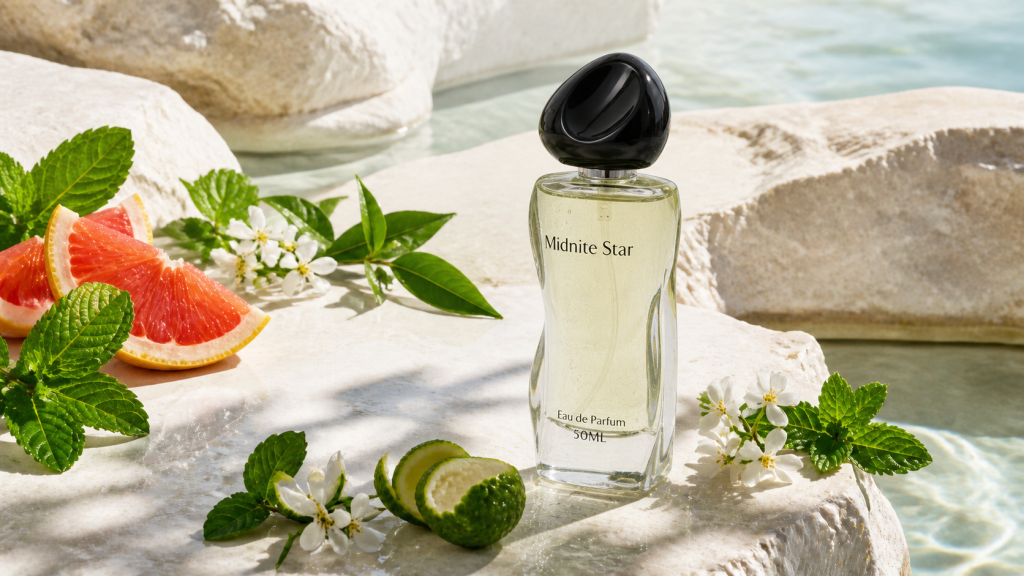
The alternative is Midnight Star. Grapefruit, lemon and mint open it cold and clean; ginger, nutmeg and jasmine warm the middle; cedar, musk and sandalwood close it. On a shelf that runs dark, it is the fresh edge: attraction with composure rather than shadow, and the right choice when coffee and patchouli feel like too much for the evening ahead. The third member, Enchanted Fox, takes the same mood softer, rose and orange over musk, woody notes and a nougat base, for evenings that would rather charm than announce.
How to Choose Perfume by Mood: A Short Routine
Four steps, in order.
- Name the mood and the moment. Not “something nice” but the actual scene: a Tuesday afternoon that needs to feel organised, a dinner that needs to feel warm. A mood is easier to shop for than a note, because you have been carrying it around all day. The mood is the brief; everything else is detail.
- Choose the note family that carries it. Citrus and spice for presence, chamomile, tea and soft musk for calm, rose and fruit for romance, coffee and warm musk for attraction. If two moods seem to fit, the bottle that belongs to both is your answer, and the collection keeps one of those on purpose.
- Test on skin for a full wear before buying the full bottle. A blotter shows you the notes; skin shows you the blend, and the way your own warmth changes it over a day. Wear the sample from morning to evening once, and you will know more than any description can tell you.
- When you cannot test first, buy small. A sample or a small format costs a fraction of a full bottle and answers the only question that matters, which is whether you reach for it again.
None of this requires expertise, only a little patience and the discipline to let the feeling lead. Choose by mood, confirm it on your skin, and the bottles you keep will be the ones you actually wear.