

What does lavender smell like in perfume? Cool, herbal and faintly sweet, with a clean edge that most people end up calling soapy. It is not the lavender of a garden border, and it is not the lavender of a laundry product either, though it sits closer to the second than to the first.
Here is the fact that makes this page worth reading: in this range, exactly one bottle names lavender, and it puts it in the last row. The herb does not announce itself here. It finishes — which turns out to be the most useful thing to understand about how lavender behaves in a composition.
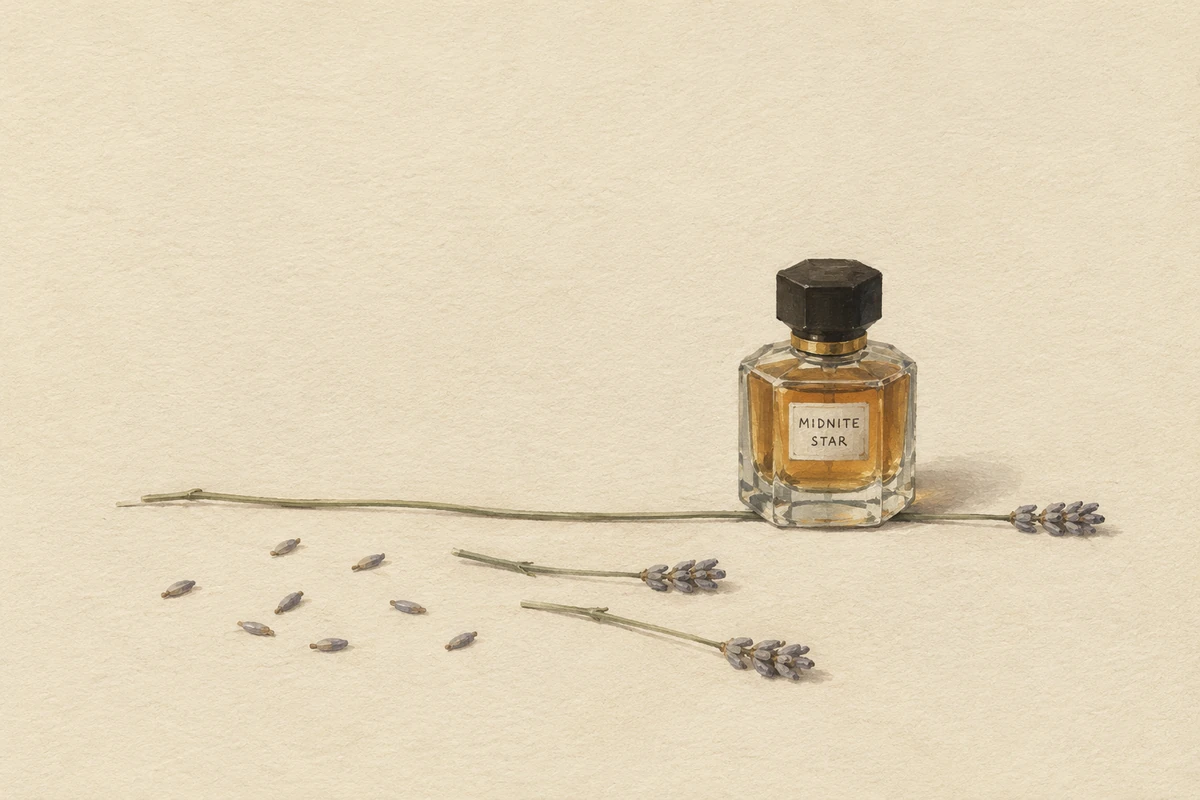
Where It Actually Sits
Manor Tea Party runs chamomile at the top, yerba mate in the middle, and lavender as the base. Read that order again: the herb arrives after the tea has done its work, and then it stays. Its own copy describes the result as having “a soft, understated character,” which is exactly what a base lavender produces — a finish rather than a first impression.
The tea side of that bottle is its own subject, and the tea reading of this bottle covers it properly. What matters here is the placement: by the time the lavender appears, the composition has already introduced itself, and the herb is left holding the floor.
What a base note is doing at the end of the day is the mechanism, and it belongs to that page rather than this one. The short version is enough: a material in the last row is the part that remains after the brighter stages have passed, and it is the part another person is most likely to meet at close range.
There is a practical consequence to that arrangement. A base lavender cannot give a bottle its first impression, so it cannot rescue an opening you dislike; what it can do is decide how the day ends. That is a narrower job than an opening has, and it is the reason the placement matters more than the quantity.
A base note also changes how a bottle gets judged in the first minute. If you test it on paper and walk away, you may never meet the lavender at all — the part that carries the herb arrives after the point where most shop tests stop. That is one reason a bottle can feel different at home: the part you meet in the shop is rarely the part you live with.
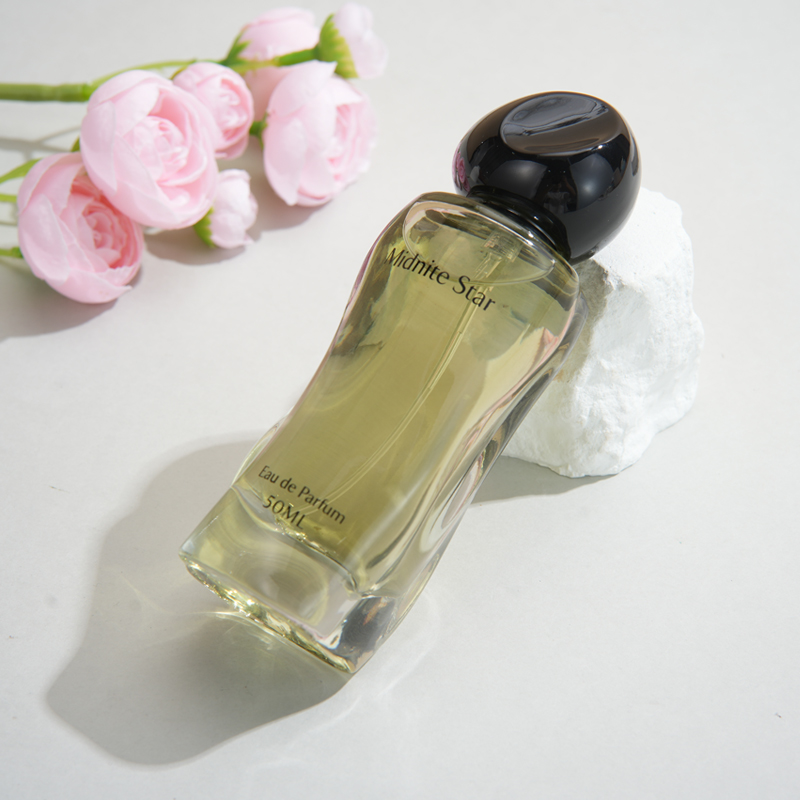
The Backbone of the Fougère Family
Lavender is the herb the fougère family is built around: a lavender-and-herb opening over moss and woods is the shape that gives the family both of its reputations, clean and barbershop. The aromatic fougère family explains the family itself, so there is no need to repeat it here.
The interesting part is what the shelf does and does not tell you. Four bottles in this range are filed under the same aromatic-fougère shelf — Hawthorn Blossom, Lily of the Valley No. 7, 1957 and True Goddess — and only one of them names lavender. The aromatic fougère shelf is where the shop gathers them, and it is a better place to browse for the style than for the ingredient.
None of the other three lists lavender anywhere, and it would be wrong to suggest otherwise. The filing describes a style: a family of clean, herbal, green-edged compositions. It does not describe what went into the bottle. That distinction is worth keeping, because it is the difference between reading a shelf label and reading a note list.
It is also why two bottles can sit on the same shelf and smell nothing alike. A green floral and a soft woody composition can share the fougère label because both are built on the same clean, herbal idea, while their note lists have almost nothing in common.
The range holds ten bottles — nine eau de parfums and one eau de toilette — and lavender is named in exactly one of them. That is not because the material is rare; it is because this range uses it as a finish, and a finish only needs to be called on when a composition wants that particular ending.
Two Reputations, One Scent
Lavender divides people more than most materials, and the division is about association rather than about the smell itself.
To some noses it is the cleanest thing in perfumery: dry, cool, faintly bitter, the smell of air after laundry has been brought in. To others the same impression reads as a barbershop, or as the inside of a linen cupboard — familiar in a way that feels less like perfume and more like housekeeping.
Both readings come from the same dry, herbal coolness. Neither is more correct than the other, and neither says anything about who wears the note or when it was fashionable. It is simply a material that arrives with a strong domestic memory attached, and that memory is doing most of the work. If you have ever smelled a hotel bathroom and a herb garden and noticed that they share something, you have already met the effect.
The split is also oddly stable. People who like lavender tend to like it for exactly the reason others avoid it, so there is no middle position to argue for — which is why the note produces strong opinions rather than mild ones.
Why It Reads Soapy
This is the question people actually ask, and it has a straightforward descriptive answer.
Lavender’s cool herbal dryness sits very close to the way clean laundry and soap smell. A composition that leans on it therefore reads freshly washed rather than perfumed — the scent of something that has just come out of a cupboard, not something that has been applied. That is not a defect and not a trick; it is what the material does when it is allowed to lead.
It also explains why lavender divides. If you want a fragrance to read as a deliberate choice, a soapy register can feel like the wrong kind of clean. If you want to smell like a person rather than a perfume, it is exactly right. The same quality is a flaw or a feature depending on which of those two you were hoping for.
Worth saying plainly: reading as soap is not the same as smelling cheap. Some compositions are built precisely to land in that register, and a great deal of what people describe as fresh in a fragrance is this effect doing its job.
How to Wear It
If you want lavender up front, this is not the bottle. In this range it finishes rather than opens; the first minutes belong to chamomile and tea, and the herb arrives later.
If you want a clean landing that holds into the afternoon, this is the placement you want. A base lavender is quiet without being thin, and it keeps the composition reading fresh long after the brighter stages have gone.
It is also the forgiving version for close quarters. Because the herb sits close and reads clean rather than loud, a composition built this way tends to be easier to wear at a desk or in a car than one that opens with a strong floral statement. If close, quiet compositions are what you are after generally, the quiet shelf is where the shop files them.
A simple rule follows: judge this kind of composition at the end of a day, not at the counter.
Who Tends to Like It
Lavender appeals to a particular set of preferences rather than a type of person. Readers who find sweet or resinous compositions tiring often like it, because it never turns sugary. Readers who like the smell of clean linen tend to like it for the same reason. And readers who want something plainly wearable — a bottle that does not ask to be interpreted — usually find that lavender is the least demanding thing on the shelf.
None of that is a claim about who someone is. It is a description of what the note is good at. There is also a practical kind of reader here: someone who wants one bottle for ordinary mornings and does not want to think about it again. Lavender is unusually good at that job, because it never asks for attention and never turns loud in a warm room.
What Does Lavender Smell Like in Perfume: Common Questions
What does lavender smell like in perfume?
Dry rather than sweet, with a herbal coolness and a faintly bitter edge. Most people reach for the word clean when they describe it, and many reach for soap.
Is lavender a top note?
In this range it is a base note: the last row of Manor Tea Party, under chamomile and yerba mate. Where a lavender sits in any composition is easy to check — read the bottom of the note list first.
Why does lavender smell like soap?
The dryness is the reason. Clean linen and soap share that same cool, bitter edge, so a composition built around this herb reads washed rather than worn.
Is lavender for men or for women?
The shop files one bottle under women’s, which is a filing rather than a property of the note. Lavender itself is not gendered, and it appears in compositions filed several different ways.
The last row is where this herb does its work, and it is the row worth reading first.