
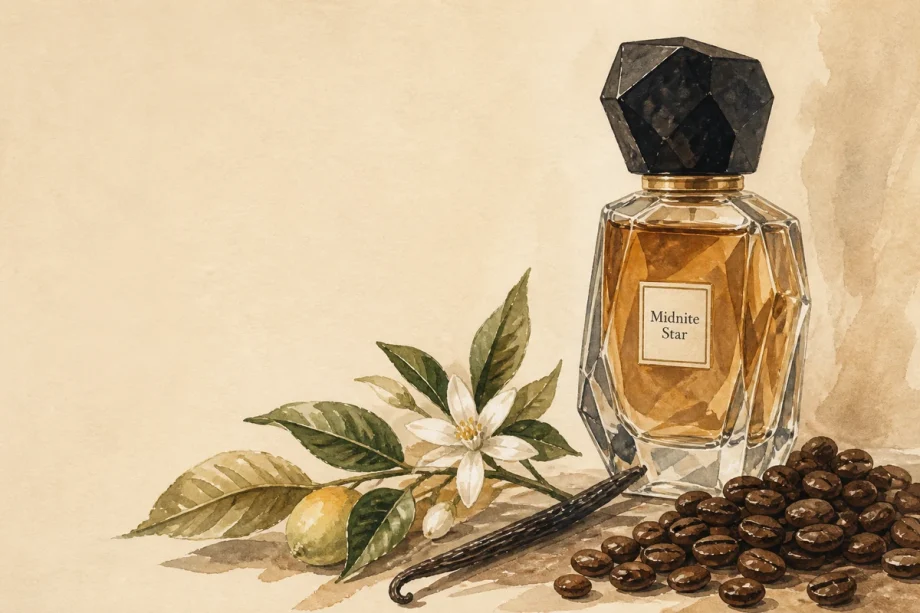
Coffee perfume does not smell like a cup of coffee. It smells like the idea of one: roasted, faintly bitter, warm rather than sweet, closer to fresh grounds or dark chocolate than to anything you would drink with milk and sugar. That is the first thing to understand about this note, and it explains why coffee scents range from cosy to austere — almost everything depends on what sits next to the coffee in the bottle. Black Aya is the site’s only coffee-forward fragrance, and it is the worked example we will return to. The rest of this guide is about learning to predict which version of that impression any given bottle will deliver.
The note has also become a seasonal direction: coffee is among the notes defining autumn in our seasonal guide this year. But a note list alone will only get you so far. The word “coffee” predicts less than you would expect, and learning what it does and does not tell you is the useful part — how the note behaves, how to judge it before you buy, and one bottle read closely from first spray to last hour.
The Word “Coffee” Tells You Less Than You Think
Here is the honest caveat first: “coffee” on a note list does not tell you whether the fragrance will smell edible, bitter, dark or soft. A coffee accord is almost never a solo act. It is shaped by whatever surrounds it, and four neighbourhoods cover most of the range you will meet.
Pair coffee with vanilla and musk and it turns creamy and rounded — the style that people are describing when they search for a coffee and vanilla perfume. Pair it with citrus and the coffee turns bright and clean, closer to roasted citrus peel than to any drink. Pair it with patchouli, woods or leather and it goes dry and savoury, closer to a roasting house than a café. And place it behind florals and the coffee softens into a shadow of warm bitterness rather than a statement.
Same word, four different experiences. Two people can both say they love coffee perfume and want completely different bottles — which is why reading the neighbours matters more than reading the note. So before you read the word “coffee”, read the rest of the list. The note is real, but the neighbourhood is the recipe.
Coffee is not the only drink note that behaves this way, either. Tea works along the same lines: we unpacked what tea smells like in perfume separately, and Manor Tea Party — chamomile, yerba mate, a soft lavender finish — is the bottle to read alongside it. A warm note is never just warm; it is warm in the context of its quiet companions.
Does Coffee Perfume Smell Like Actual Coffee?
No, and yes. No, if you are expecting the smell of a latte: coffee in fragrance is an impression rather than a reproduction, built from the smell of roasted beans rather than the drink. Yes, if you are expecting the roasted, slightly bitter warmth of fresh grounds — that part carries over, and it is what makes the note feel comforting rather than sharp.
The distinction matters when shopping, because it sorts expectations. A literal coffee-drink smell would be sugary and edible, at home in a kitchen. A coffee note in a properly composed fragrance is drier, more aromatic, closer to dark chocolate or roasted nuts — gourmand-adjacent without being dessert. The roasted, nutty, faintly bitter side of the bean is exactly what survives into the bottle; the milky, sugary side does not. It is also why coffee pairs so naturally with dark woods and dry spices in a composition: they share the same register.
If you do want sweetness around a coffee note, understand where it comes from: not from the coffee itself, but from the base. Vanilla, honey, tonka or nougat-style materials are what pull a coffee composition toward the creamy style. Without them, coffee leans dry.
How to Tell a Sweet Coffee Perfume From a Dry One
This is the single most useful skill for this note: read the base. If the bottom of the note list contains vanilla, honey, tonka or nougat, the fragrance will read sweet and rounded. If it contains patchouli, woods, moss or leather instead, expect a drier, more savoury coffee — the kind people are asking about when they want a coffee perfume that isn’t sweet. It is also the fastest filter you can apply when browsing: two seconds on the base line saves an afternoon of sampling.
The site holds two neat demonstrations, neither of which contains coffee at all. 1957 is the sweet direction taken to its logical end: pink pepper and bergamot up top, orange blossom at the heart, then vanilla, honey and a musky sweetness below. If that finish is what you love about the idea of coffee perfume, you are really looking for its base materials. Enchanted Fox makes the same point from another angle: rose and orange above, then a nougat base that shows how a soft gourmand sweetness reads when coffee is nowhere near it.
Black Aya deliberately sits between the two: its base pairs vanilla with patchouli and musk, so it is neither dessert nor roast — soft warmth with a dry edge underneath. If you are unsure which side of the coffee spectrum you fall on, that balance is the one to test first.
There is a third route, of course. If what you love about the idea of coffee is really its creaminess and warmth, you can skip the coffee note entirely and choose a composition that delivers those qualities directly — a soft gourmand base is a soft gourmand base, whichever note it is billed under. Read coffee scents the way you would read anything else: for the finish, not the headline. Sweetness also reads differently in cold air; a creamy base feels cosier in September than in July, while a dry coffee stays crisp all year.
Is Coffee Perfume for Men or Women?
Neither — and it is worth retiring the question. Fragrance notes are not gendered; what decides the impression is the company a note keeps and the person wearing it. A coffee note is warm and dark, but warmth and darkness do not belong to anyone.
Black Aya makes the point neatly. Coffee and citrus open the fragrance, but the heart is orange blossom, evening jasmine and jade — soft, floral, unhurried — and the base is musk, vanilla and patchouli. It reads warm rather than obviously masculine, and it sits on the floral fragrances shelf here: coffee dressed in flowers, not smoke. Judge a coffee scent by that kind of context, never by a label on a shop filter.
The better question is the one a note list can actually answer: what surrounds the coffee — soft materials or austere ones — and does that match what you like to smell like? That is a more reliable guide than any label written for a marketing category.
Where Coffee Sits in the Pyramid, and Why It Fades
Coffee usually appears in the opening or the heart of a fragrance rather than in the base, which is why coffee lovers sometimes feel the note vanishing on them. Nothing is wrong with the perfume. The first materials to leave a composition are the lightest and most volatile ones, and coffee is usually placed right there to make the first impression — why the opening notes fade first is a useful read once, if you want the mechanics in full. Black Aya is a textbook case: its note list files coffee under top notes, exactly where the coffee’s short but vivid life is designed to happen.
Some compositions split the difference and place coffee in the heart instead, where it mingles with the flowers before settling — a gentler read of the same note, and something to look for when comparing bottles.
The practical version: expect the coffee to be at its most vivid in the first stretch of wear, then to settle into whatever the heart and base have prepared. If you are buying for the coffee specifically, that first stretch is the product you are actually purchasing — everything after it belongs to the flowers, the musk and the woods.
Black Aya, Read Tier by Tier
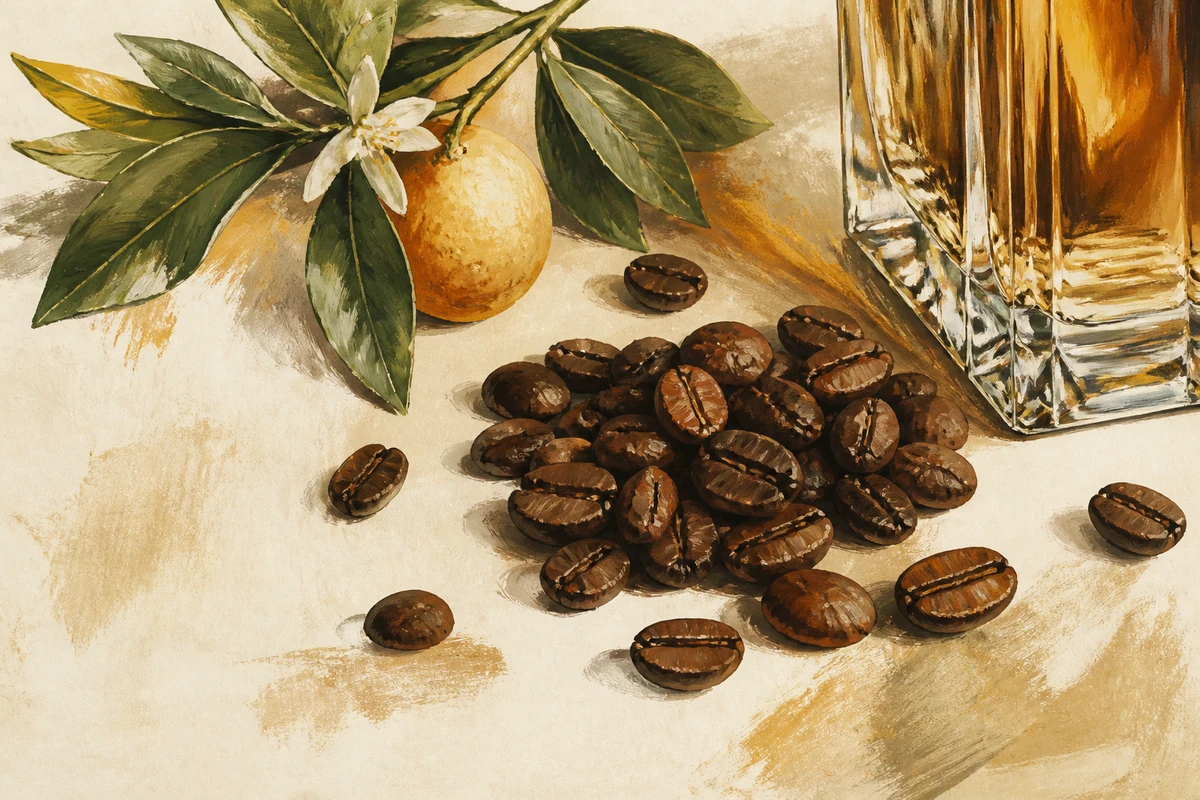
Black Aya is an Eau de Parfum built around the tension between bitter and soft, and reading it layer by layer is the clearest way to see how a coffee note works in practice.
The top is coffee and citrus — a wake-up opening, bright and roasted at the same time, deliberately unfriendly to the idea of a sweet coffee drink. Expect the first twenty to thirty minutes to be the most vivid and most bitter stretch of the whole wear. It is an opening with a point of view: bright enough to wake the nose, roasted enough to carry weight, and gone before it can become a gimmick.
The heart is orange blossom, evening jasmine and jade. This is where the fragrance turns: the florals soften the roast and the coffee steps back, ready to be remembered rather than noticed. It is the part other people actually smell, and it lasts for the hours you spend in public — if someone catches this scent on you across a room, it is the heart they are catching.
The base is musk, vanilla and patchouli — softness with a dry backbone. The vanilla keeps it warm and wearable; the patchouli keeps it from becoming dessert. Read as a trio, the base is one part softness and one part restraint, which is exactly why the fragrance never tips into either gourmand excess or austere bitterness. This is also the tier that decides whether the fragrance suits you, because it is what stays on skin when the day is over.
It suits someone who wants warmth without sweetness and depth without weight, and it is easy to wear for cool days and evenings, from late September through spring — a coffee note reads warmer in cool air, which is part of why it keeps appearing in autumn lists. On the site it is filed in the Addictive collection and under floral on the family shelves: a gentle reminder that coffee in perfumery is dressed in softness, not in smoke.
How to Wear a Coffee Scent Well
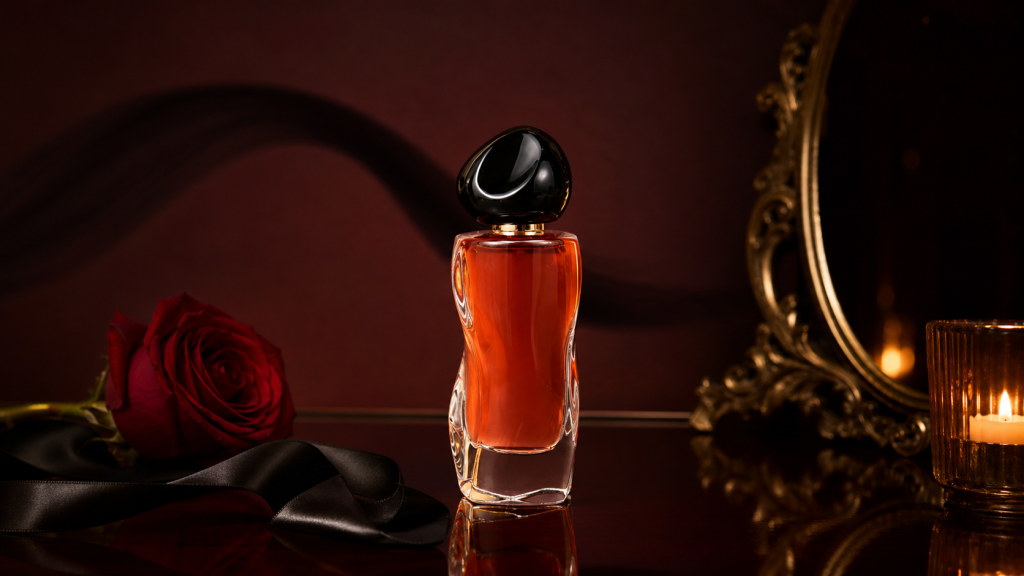
Coffee scents are strong-willed but not loud, and they reward a light hand. Keep application to one or two points — wrists, or the base of the neck — and let the fragrance do the rest. Two points will smell confident; five will smell like a coffee aisle. An eau de parfum holds its shape through a long wear, so restraint at the start pays off later in the day: the scent gets room to unfold rather than announce itself twice. Wearing it on skin rather than on clothes is also the safer choice — coffee tones can mark a light fabric, and the composition reads better warmed by the body anyway.
Give it twenty minutes before deciding anything. The opening is the brightest, bitterest part of the wear, and judging a coffee fragrance in its first minutes is like judging a book by its title page: accurate about the genre, wrong about the ending.
If you layer at all, pair it with something soft that shares its base territory — 1957 or Manor Tea Party are the natural companions — and keep the second scent light.
Coffee Perfume: Quick Answers
Does coffee perfume smell like coffee?
Like roasted coffee, not like a cup of it. Expect the bitter-warm smell of fresh grounds or dark chocolate rather than a sweetened drink — and when a fragrance does smell like a coffee drink, the drink part is coming from its base notes, not from the coffee.
Is coffee perfume sweet?
Not by itself. Sweetness arrives through the base — vanilla, honey, tonka, nougat. Read the bottom of the note list: those materials mean a creamy, rounded coffee; patchouli, woods or leather mean a drier, more savoury one.
Is coffee perfume for men or women?
Neither; notes do not carry gender. The impression comes from the surrounding materials and the wearer — Black Aya’s floral heart and soft base make it a warm unisex scent rather than a masculine one. Anyone who likes soft, warm compositions will find this kind of coffee wearable; anyone expecting a smoky masculine statement will not — and that difference is decided by the whole composition, never by the note alone.
Why does the coffee note disappear after an hour?
Because it usually sits in the opening, and top notes are the first to evaporate. The coffee has not failed; it has done its job as the first impression, and what you smell afterwards is the heart and base the composition was built around.