
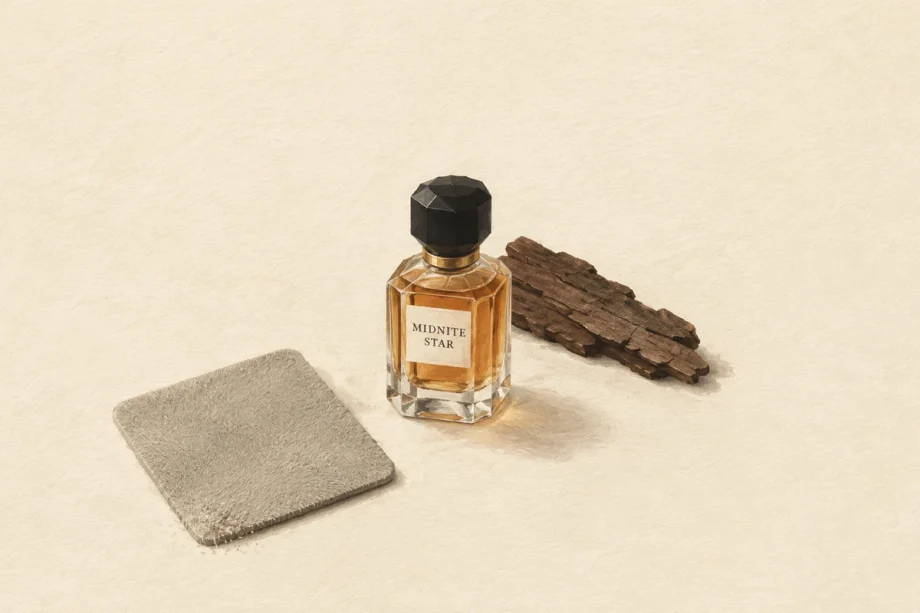
What does suede smell like in perfume? Soft, dry and faintly dusty, with the shine taken off leather and none of the tar or smoke that makes leather read sharp. It is a matte smell in a category that usually prizes gloss.
Here is the fact this page is built on: exactly one bottle in this range lists suede, and it puts it in the last row — first in that row, in fact. That placement tells you most of what the note does. Suede rarely announces a composition. It settles one.
What Makes It Read Suede Rather Than Leather
The difference between the two readings is finish, not family. Leather reads sharp, dark and slightly burnt, with a bite at the edges. Suede reads soft, rounded and a little powdery, closer to brushed cloth than to polished stone.
That is why the same territory can produce two completely different impressions. One version of it feels like an edge; the other feels like a surface you would put a hand on. Nothing about the note changes the fact that it is leathery — what changes is whether the leathery quality arrives with a shine or with a nap.
The dusty part matters as much as the soft part. Suede has a faint dryness to it, the smell of something stored rather than something new, and that dryness is what keeps it from turning sweet when it sits under vanilla, amber or musk. Take the dust away and you are left with sweetness wearing a leather coat.
There is also a question of timing. Leathery notes tend to be judged in the first minute, when the sharper version is at its loudest; the matte version is quieter early and easier to miss. A suede base often reads as “warm” rather than “leathery” for the first while, and only separates into something distinct once the brighter stages have burned off. That delay is a feature of the finish, not a flaw in the composition.
None of which is a claim about how the material is made or where it comes from. In perfumery suede is a reading — a way for a composition to land — and the reading is what this page is about.
Where It Sits in This Range
Lily of the Valley No. 7 opens on thyme and tea, moves through lily of the valley, saffron and rose, and closes on a base of suede, musk, sandalwood, frankincense and amber. Suede is listed first in that last row, and the position is the point: the leathery reading arrives late and then stays.
The result is unusual. A fresh green-floral composition would normally land clean and cool, with the flowers doing all the talking and the base politely disappearing. Here the base pulls the opposite way. The floral heart stays bright, but the floor under it is warm and textured, so the whole thing lands warm instead of clean.
It is worth noting the format as well: this is the only eau de toilette in the range of ten, which makes the depth of that base more interesting rather than less. A lighter concentration with a suede floor is a deliberate arrangement — the top stays airy, the bottom does the holding.
Three Ways to Reach Soft and Dry
This shelf happens to contain three different routes to the same impression, which makes the comparison unusually clean.
Matte suede. Lily of the Valley No. 7, above: soft, dusty, warm, and legible from the middle of the day onward. This is the version with a nap.
Smoky birch. Napoleon Eau closes on birch, ambergris, cedar, oakmoss and musk, and it earns its own copy’s description of “a long-lasting, mossy finish that stays close to the skin.” This is the tarry, burnt end of the same territory — leathery with the smoke left in, which is exactly what suede takes out.
Powdery softness with no leather at all. 1957 finishes on vanilla, honey, musk, cedar, Kashmir wood and iris root, and its copy calls the result “a creamy, slightly powdery finish.” Nothing leathery happens here at all, yet the landing is soft, dry and matte — the same destination reached without the note.
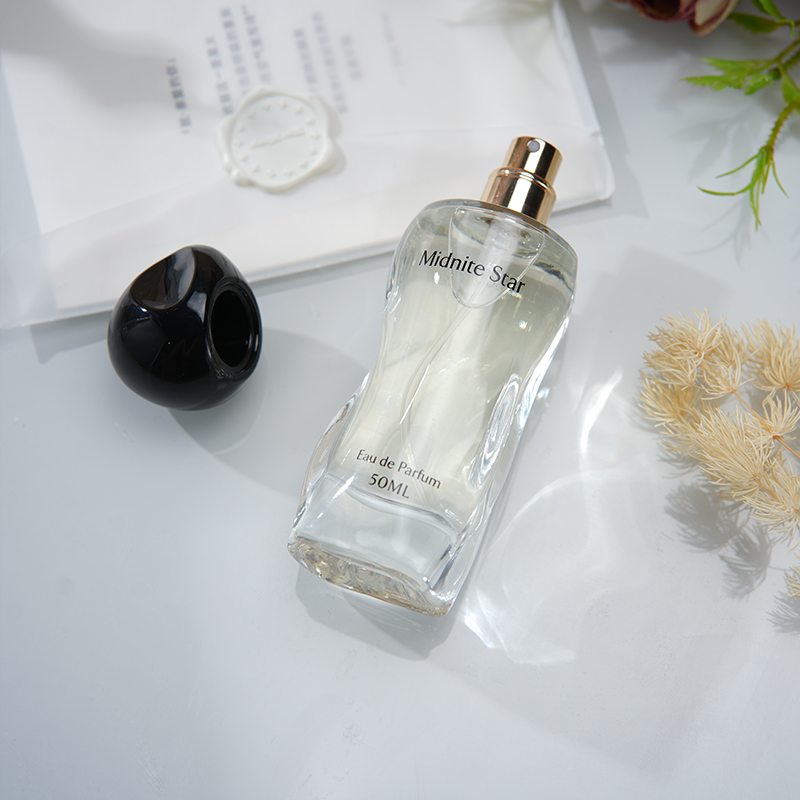
Put the three side by side and the point becomes obvious: soft and dry is not one ingredient. It can come from a suede base, from a smoky wood base read at a distance, or from a powdery iris and musk base with no leather in it whatsoever. If you like the destination but not the note, the shelf still has something for you.
There is a practical way to use the comparison. If you have smelled one of the three and disliked it, the other two are still open questions rather than variations on the same failure. Disliking the smoky end says nothing about the matte end, and disliking powder says nothing about either.
Suede the Note, and Suede-Like the Word
One distinction is worth making carefully, because this site uses both.
Elsewhere the site uses suede-like as a texture word — a way of describing how a finish feels against the brighter stages above it. That vocabulary belongs to the piece on describing perfume, which owns the language of texture and is named here without a link.
This page is about something narrower: suede as a named base note on a note list. A texture word describes an impression; a note name tells you what the composition was built with. They can point at the same feeling, but only one of them appears in the last row.
That difference matters when you are comparing bottles. Two compositions can both be described as suede-like in a review while only one of them lists suede, and the one that lists it will usually keep the note legible for longer as the composition settles. The word describes; the list declares.
How to Wear It
Suede sits close and reads matte, so it suits a particular set of intentions rather than a particular occasion.
If you want warmth without sweetness, this is the register. A suede base gives weight without sugar, which is harder to find than it sounds; most warm bases reach for vanilla, amber or honey and end up sweet by default. What keeps a warm base smoky and austere is the page for that side of the question.
If you want a light floral to survive cold weather, this is the trick. The same green-floral heart that reads thin in summer reads properly grounded when the floor underneath is dry and warm.
If you dislike projection, this is friendly. Suede does not push; it stays where it is put, which is why the close-wearing musk underneath matters so much in this kind of base — the two notes together are what keep a composition near the skin.
And if the placement itself is the part you find interesting — why the last row decides how a bottle is remembered — why the base is what you live with covers the mechanic properly.
One caution follows from all of this: do not judge a suede base from a paper strip you carried for two minutes. The matte version is the one most likely to be missed early, and the part worth testing is the part you meet later, once the opening has gone.
Who Tends to Like It
Readers who find sweet and resinous bases too heavy tend to like suede, because it gives warmth without pudding. Readers who like the smell of a soft jacket or a suede glove tend to like it for the obvious reason. And readers who want a dry edge rather than a sweet one — who like the idea of amber but not the stickiness — usually find this is the version they can wear.
The shop files the bottle under the oriental and ambery shelf. If you want the register that reads as presence rather than comfort, the presence shelf is the shop’s filing for that side of the range. Both are filings — descriptions of where a bottle sits in a shop, not instructions about who should wear it.
There is one more reader worth naming: the one who likes a note list to be honest. Suede appears in exactly one bottle here and it is declared in the last row, which means the composition is not pretending to be something else. If a leathery warmth is what you want, you can see it written down rather than guessing at it from the name on the bottle.
What Does Suede Smell Like in Perfume: Common Questions
What does suede smell like in perfume?
Matte and slightly dusty, with the roundness of brushed cloth and none of the burnt edge that sharper leather carries. The impression is warm rather than bright.
Is suede the same as leather?
No. It is the soft, matte end of the same territory — the version that reads like brushed cloth instead of a polished edge.
Why does suede smell soft rather than sharp?
Because the reading is dry and dusty rather than burnt or tarry. The dustiness rounds the edges and keeps the base from turning sweet.
Is suede a top note?
In this range it is a base note, listed first in the last row of Lily of the Valley No. 7. If you want to know where a suede sits in any composition, read the bottom of the note list first.
The last row is where this note does its quiet work, and it is the row worth reading first.