
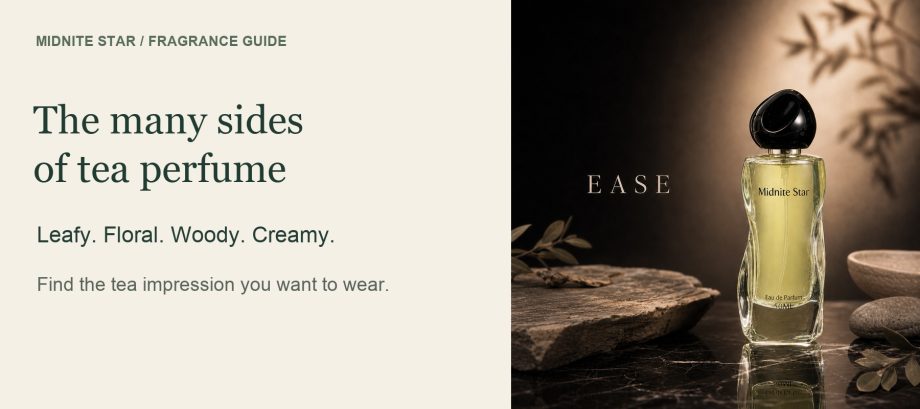
Tea perfume can smell leafy, lightly bitter, floral, woody, or creamy, depending on the blend. Some scents suggest a cup of unsweetened tea; others bring to mind citrus iced tea, a herbal infusion, or a milky chai. The word “tea” alone will not tell you which one is in the bottle.
To choose a tea perfume you’ll enjoy, look at the notes around it. They help explain whether the scent is likely to feel crisp, soft, dry, or sweet.
What Does Tea Smell Like in Perfume?
Think about the difference between dry tea leaves, freshly brewed tea, and tea with milk. Dry leaves can suggest hay, herbs, or a faint woody smell. A brewed-tea impression may feel softer or more floral. Milk and vanilla can take the same idea toward dessert.
Perfumers can build a tea accord: a blend of scent materials that creates a tea-like impression. Some formulas also use extracts. In his explanation of a black tea composition, perfumer Geza Schoen describes combining black tea extract with maté absolute to explore fresh, bitter, floral, and earthy facets.
A note list describes the intended scent rather than disclosing the full formula. “Tea” does not prove that a perfume contains tea leaves, and it does not promise an exact match to your favorite brew. A fragrance can have a recognizable tea note while smelling mostly floral or woody overall.
Different Tea Scents and How They Compare
Use these descriptions as starting points. Tea styles overlap, and the supporting notes can change the result considerably.
| Style | What it may smell like | Worth exploring if you like |
|---|---|---|
| Green tea | Leafy, fresh, lightly bitter; often brightened by citrus | Crisp scents with a green edge |
| Black tea | Dry or earthy, sometimes woody or softly smoky | Unsweetened tea and warmer woods |
| White tea | Airy or soft, often paired with florals, citrus, and musk | Gentle floral or clean-smelling blends |
| Milk tea or chai | Creamy and sweet, sometimes with warm spice | Vanilla, milky notes, or dessert scents |
| Maté and herbal styles | Green, herbal, sometimes earthy or bitter | Herbal infusions rather than sugary drinks |
Maté comes from a different plant from green, black, and white tea. In perfume, it can contribute a herbal tea impression, but it should not be treated as another name for green tea. Likewise, a white tea label does not guarantee a completely unsweetened scent.
How to Choose a Tea Perfume You’ll Enjoy
Start with the kind of tea impression you want. Would you rather smell dry leaves, a floral infusion, or a sweet latte? If you dislike sugary perfumes, look beyond a tea name and check for milk, caramel, honey, or prominent vanilla. Those notes are clues to explore, not a sweetness score.
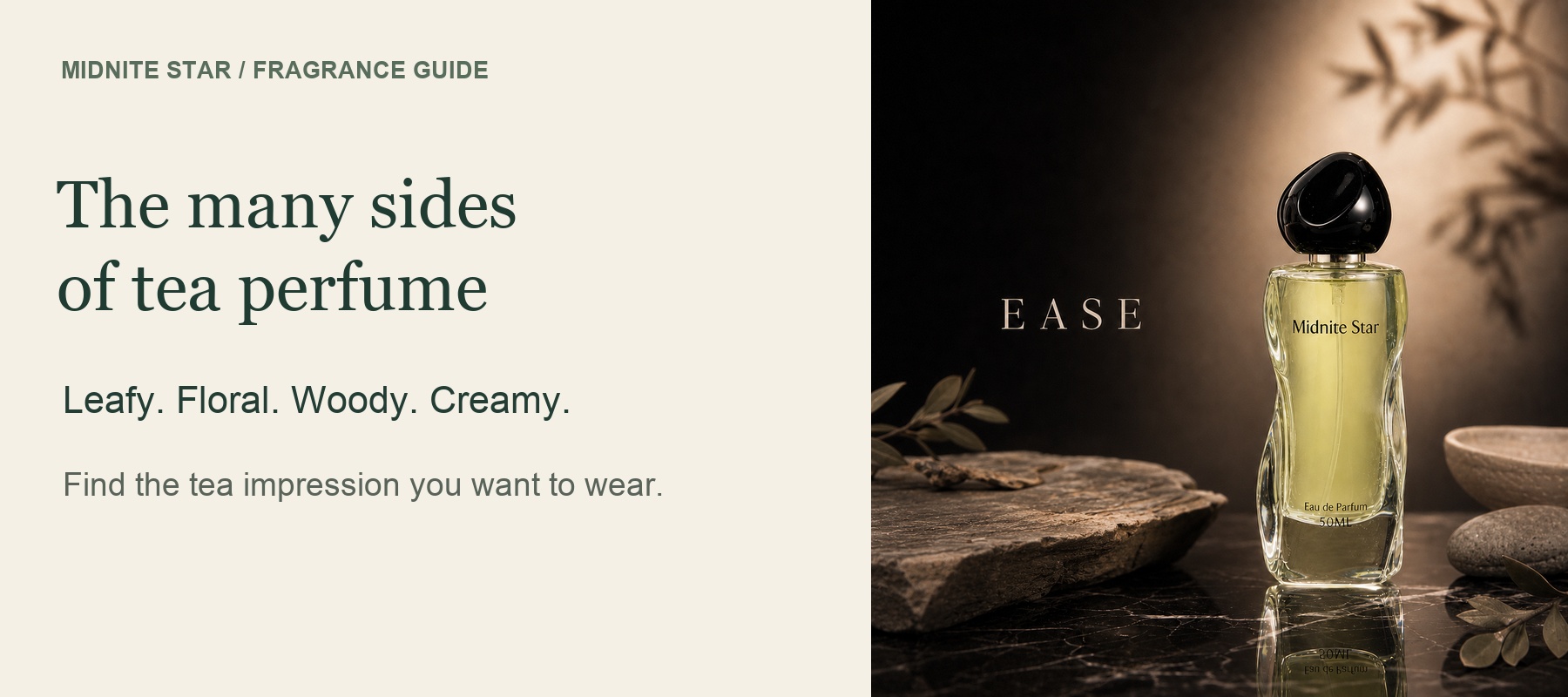
Read the whole note list. Bergamot or lemon may brighten the tea; jasmine or rose may make the flowers more noticeable. Woods, suede, or amber can give the later stages a warmer character. Ask whether you want tea to be the main impression or a detail within a larger blend.
Give a sample time to develop. If a sample or tester is available, smell it at first application, again after roughly 20–30 minutes, and later in the day. This is a practical comparison routine, not a fixed timetable for every fragrance. Note whether you still notice tea once the opening has faded, and whether you like what remains.
Check strength separately from scent. Tea does not automatically mean light, subtle, or short-lived. How long a perfume lasts and how far it carries cannot be read from the tea note alone. If you want it for work, try a light application away from the office first and assess how noticeable it is.
Buying without a sample? Look for reviews that describe sweetness, tea character, and how the fragrance changes, rather than relying only on “fresh” or “long-lasting.” Our guide to choosing perfume online covers other useful checks before a blind buy.
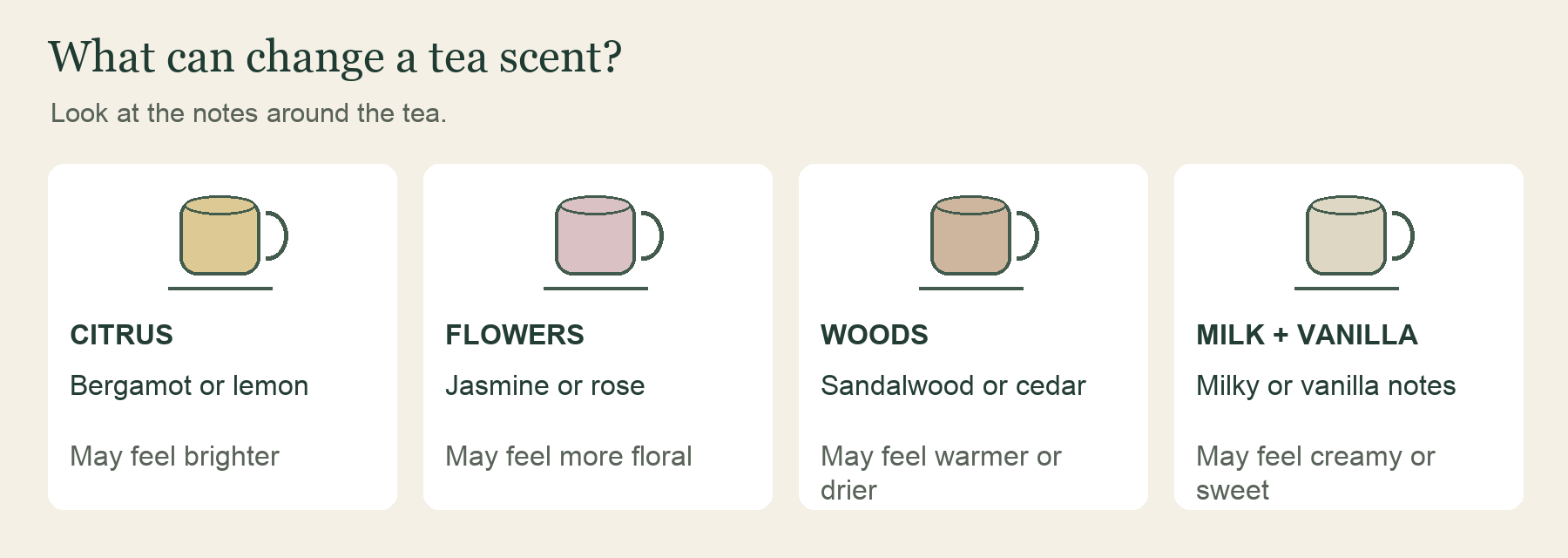
Two Tea-Inspired Scents from Midnite Star
Our collection offers two different ways to explore tea. These comparisons follow the published note profiles; they are a starting point for choosing, rather than a substitute for smelling either fragrance on your skin.
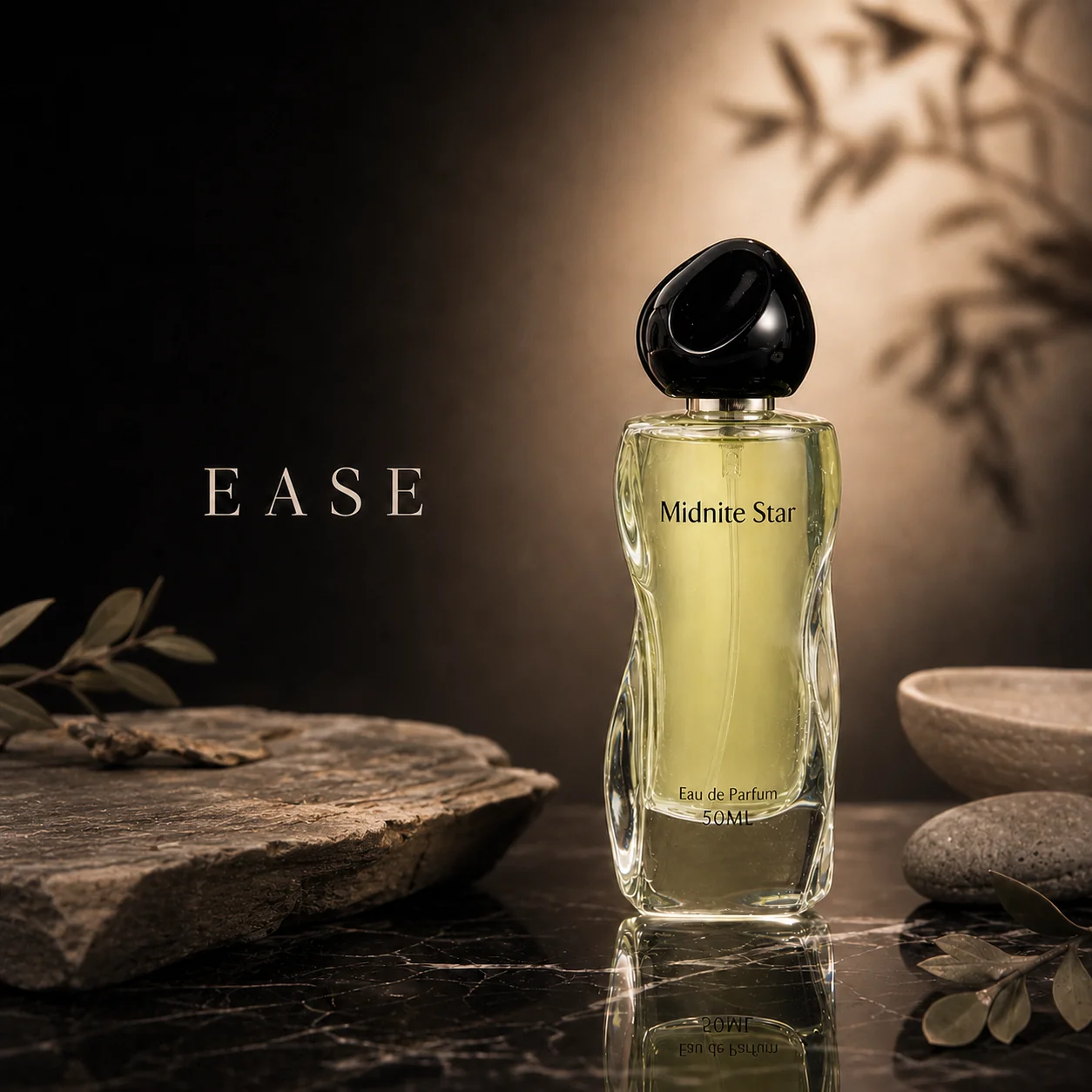
Manor Tea Party pairs chamomile at the opening with yerba maté at the heart and lavender at the base. That combination points toward a herbal tea style. If chamomile and lavender appeal to you more than a sugary latte, explore Manor Tea Party. It is listed as an Eau de Parfum, and its tea note is maté, not matcha or green tea.
Lily of the Valley No. 7 opens with thyme and tea, followed by lily of the valley, saffron, and rose. Its base includes suede, musk, sandalwood, frankincense, and amber. The note profile suggests a floral and woody composition with tea in the opening. Explore Lily of the Valley No. 7 if you like that broader combination; it is listed as an Eau de Toilette.
Start with Manor Tea Party if you are drawn to the chamomile–maté–lavender combination. Consider Lily of the Valley No. 7 if you want tea alongside flowers and a warmer base. Choose the overall scent you want to wear, not just the word “tea” on the note list.