
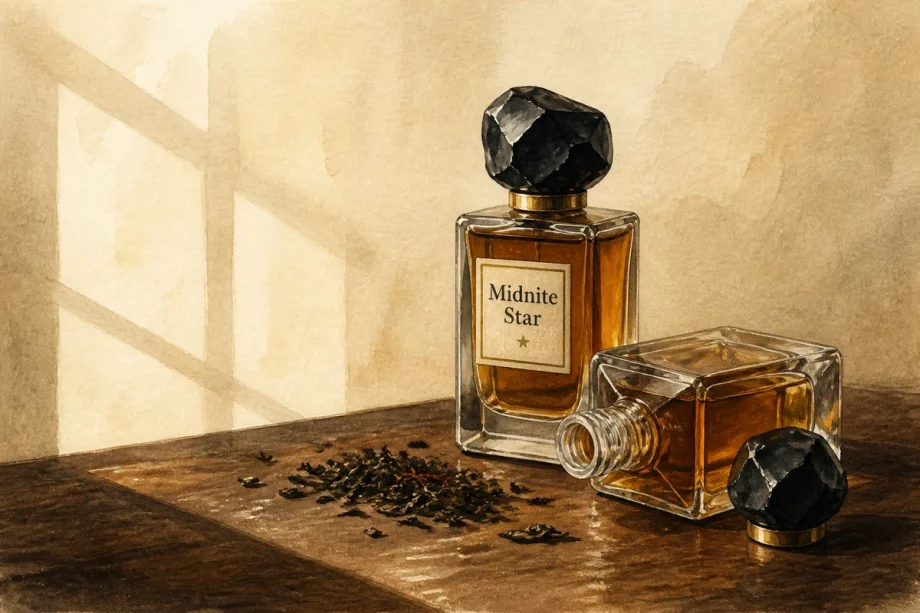
Most advice on how to layer perfume begins with intensity: two fragrances worn at once, each one pushing the other louder. That is the wrong place to start. Layering done well does not make a fragrance louder; it changes its texture, in the way a quiet musk can soften a sharp grapefruit or a warm amber can give a soft floral a spine.
That small change in texture matters most in autumn. The citrus-forward bottles that felt right in July can read thin against cooler air, and the deeper comfort scents can feel unfinished when worn alone in the morning. Layering is how you move a fragrance into the season without replacing it, and the seven combinations below are built to do exactly that, with woody, musk and tea notes carrying the foundation.
A note on what follows: every pairing names two bottles from the current Midnite Star collection, the notes those bottles actually contain, and the order to apply them in. Nothing here requires more equipment than you already own.
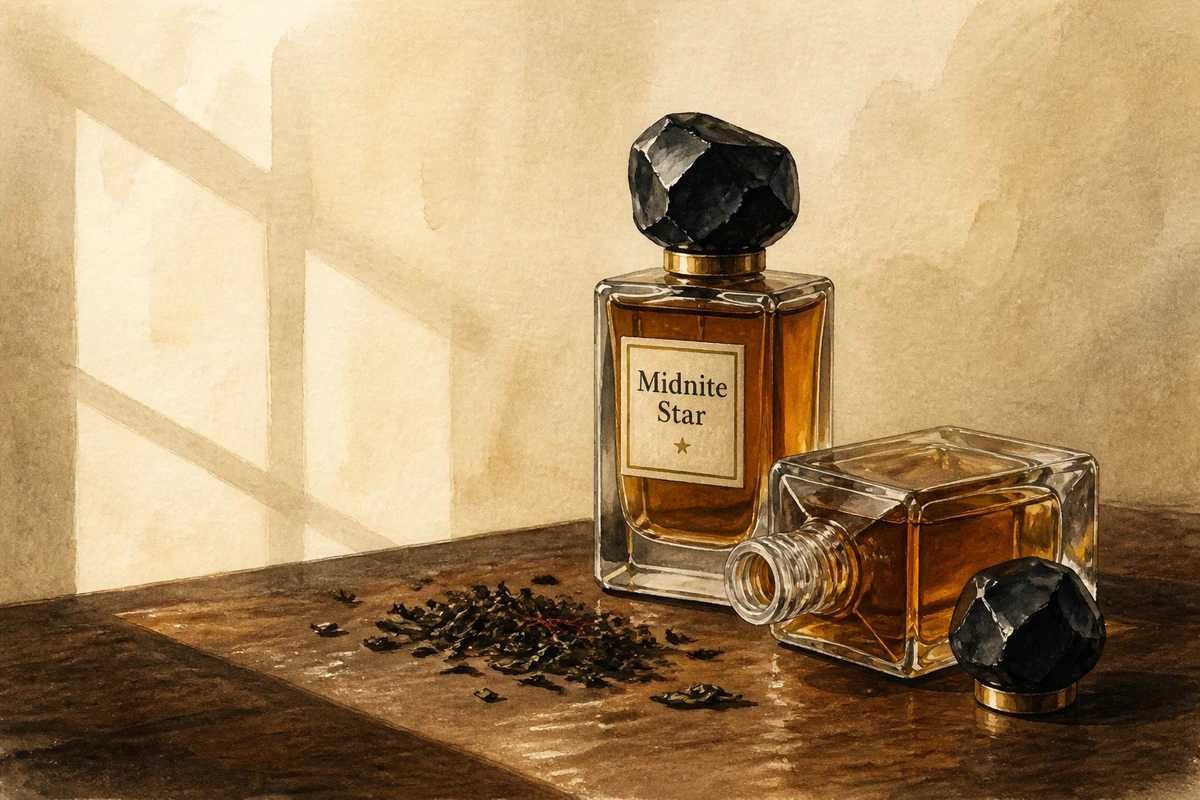
Why Autumn Rewards Layering
Through 2026, mainstream fragrance reporting has described the season in remarkably consistent terms. Autumn coverage keeps converging on warm, enveloping accords: vanilla drawn out with woods, musk or amber; coffee and spice used as accents rather than novelties; creamy sandalwood; and amber-spice pairings that read as texture rather than sweetness. Alongside the notes, the practice itself keeps appearing in the conversation. Layering, often called scent stacking, has moved from an enthusiast habit into mainstream coverage, written about as a normal way to wear fragrance rather than a trick reserved for collectors.
The reason is practical. A note that feels heavy in June feels correct in October, and a note that felt bright in June feels sparse in October. Layering lets you adjust that balance by the day rather than by the season, and it lets a single bottle follow you deeper into the year than it would otherwise go.
Our own autumn edit traced the fragrance notes defining autumn through coffee, dark fruit, tonka and tea. This piece is the working companion to that one: less about which notes are moving, more about what to do with the bottles already on your shelf once they have.
How to Layer Perfume: Base First, Accent Second
The method is older than any trend report, and it is easy to state. Perfume layering for fall, or for any season, comes down to two roles: a base and an accent.
Choose the base first. A base is the heavier or softer scent, the one that will sit closest to your skin and set the mood of the combination: a musk, a wood, an amber, a tea or a vanilla. Spray it where you normally wear fragrance, give it a full minute to settle, and let your own warmth begin working on it.
Then add the accent. An accent is the lighter layer, the one that will be noticed first and leave first: a citrus, a floral, a green note, a spice. One or two passes are usually enough, applied over the base rather than beside it.
Two rules travel with the method. The first is skin preparation. Everything that helps you make a fragrance last longer also helps a layered combination hold together: start on moisturized skin, apply to warm pulse points such as the wrists, behind the ears, the sides of the neck and the inner arms, and do not rub. Rubbing does not blend two fragrances into one; it crushes the top notes of both and shortens the life of the pairing.
The second rule concerns concentration. Lily of the Valley No. 7 is an eau de toilette, the lightest format in the collection, while the other nine fragrances are eau de parfum. When a pairing includes both, let the eau de parfum take one measured pass and give the eau de toilette a second, so the lighter layer is not swallowed by the heavier one. A pass, for the record, means one full press of the sprayer, applied from a short distance as a fine mist, the way the bottles themselves recommend.
If you are choosing a bottle specifically to serve as a base layer, the woody family is the honest place to begin: cedar, sandalwood and musk sit comfortably under almost anything.
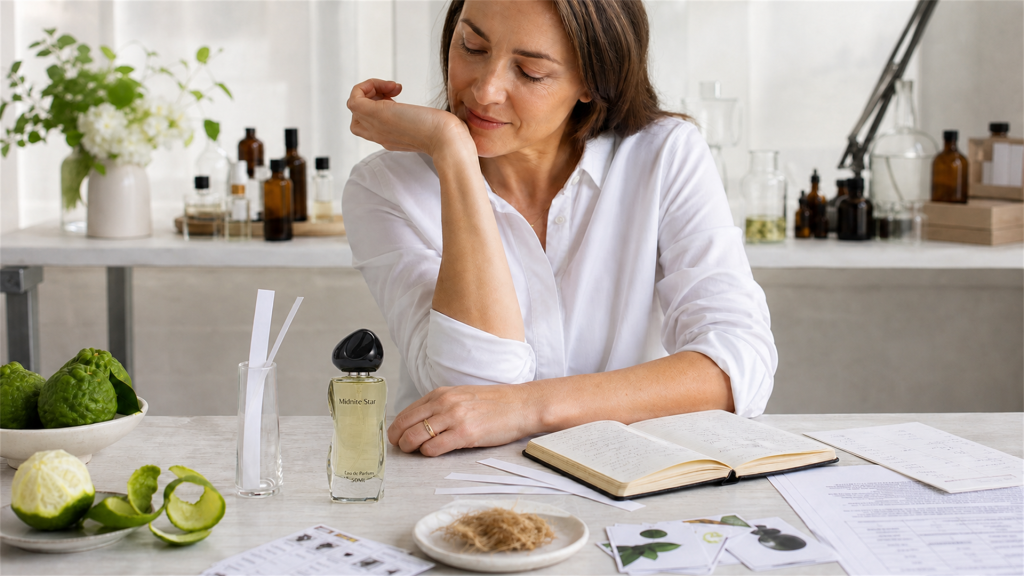
Two Ways Layering Goes Wrong
Most disappointing combinations fail in one of two ways, and both are easy to see coming once you know their shape.
The first is two loud citrus tops fighting. Bright openings are accustomed to being the first thing you notice, and when two of them are applied together, the result is not twice the freshness. It is one flat, loud top note that burns through its own liveliness within twenty minutes and leaves an oddly empty trail behind. The fix is not to avoid citrus; it is to make sure only one layer is playing that role. Give the citrus a quiet base underneath, a musk, a tea or a wood, and let it be the single source of brightness in the blend.
The second is a sweet gourmand layered under a dry green floral. Sugar and green notes pull in opposite directions: the sweetness tries to round everything toward dessert while the cut stems try to sharpen it toward bitterness, and both lose the argument. The combination smells confused rather than complex, and no amount of adjusting the quantities will fix it, because the problem is the pairing itself. Keep those two registers for separate days, or bridge them with a layer of musk, the one material that sits comfortably beside both sugar and green.
Seven Fall Combinations That Work
If you have ever wondered what to layer with woody perfume, the pattern below answers the question seven times over: a soft, warm or woody base first, a brighter layer over it, and in every case two bottles that share enough ground to belong together. These seven perfume layering combos walk through the collection from clean morning citrus to a rose-wrapped coffee for late dinners.
1. White Musk Under Cold Citrus: 1957 and Midnight Star
Start with 1957. Its white musk runs from the opening into the base, where honey, vanilla, cedar and Kashmir wood gather beneath a soft iris powder that keeps the whole composition gentle. One minute later, add Midnight Star over it: grapefruit, lemon and mint first, then ginger and nutmeg resting on its own cedar, musk and sandalwood base.
What this pairing does is give the grapefruit a cushion. On its own, Midnight Star is a cold, polished scent with a mint edge; worn over 1957 it keeps the citrus bite but gains a musky warmth underneath, the way a chilled glass warms slightly in the hand. It is the combination for early autumn mornings and for offices where a fully woody fragrance would feel like too much before noon.
Both bottles share musk, jasmine and cedar, which is why they merge instead of blurring: the second layer finds familiar ground in the first.
2. Tea Under Coffee: Manor Tea Party and Black Aya
Begin with Manor Tea Party, one of the quietest compositions in the collection: chamomile at the opening, yerba mate through the middle, a soft lavender finish. Once it has settled, apply Black Aya’s coffee and citrus opening lightly over the top, and let it rise together with its orange blossom, evening jasmine and jade, over the musk, vanilla and patchouli waiting below.
The result is less like a mocha than like a warm café that also serves a good pot of tea: the bitterness of coffee kept in check by the herbal calm beneath it. Chamomile and lavender stop the roast from turning harsh, while the jasmine and jade in Black Aya’s heart keep it from turning into dessert. This is the pairing for slow weekend mornings and long afternoons when you are not going anywhere in a hurry.
3. Suede and Amber Under Spiced Fruit: Lily of the Valley No. 7 and Napoleon Eau
Napoleon Eau is the most extroverted bottle in the collection: lemon, pink pepper, apple and blackcurrant up front; pineapple, jasmine and patchouli through the heart; birch, cedar, ambergris and oakmoss holding the finish. Worn alone, it arrives loudly. Worn as a topper, over the right base, it behaves like a spice.
The right base here is Lily of the Valley No. 7, and because it is an eau de toilette, give it two passes. Its thyme and tea opening, saffron heart, and suede, sandalwood, frankincense and amber base make a warm, textured ground. Then one controlled pass of Napoleon Eau over it, sprayed from a distance, and the chypre’s fruit and spice sit on top of suede and amber instead of in front of everything. This is the dressed-up pairing of the seven: dinner, a concert, an evening that asks for a little drama.
4. Two Roses Over Soft Nougat: Enchanted Fox and Pink Encounter
Enchanted Fox goes on first: rose and orange over musk and woody notes, with nougat underneath giving the composition a soft center. Then Pink Encounter over it, its grape and blackcurrant opening followed by jasmine and Rose Taif Flower, completed by white musk and vanilla cedar.
What you get is rose layered on rose: the fuller rose of Enchanted Fox beneath the fresher Rose Taif of Pink Encounter, with the fruit in the upper layer keeping both from turning powdery or heavy. The two bases, nougat and vanilla cedar, belong to the same family of softness, so the drydown stays smooth rather than collapsing into sugar. This is the most romantic combination of the seven, and the least demanding to wear: neither bottle needs a careful hand.
5. Green Leaves Over Ripe Stone Fruit: True Goddess and Hawthorn Blossom
True Goddess first: magnolia, cantaloupe, peach, pear, lemon and orange opening into evening jasmine, plum, violet and orchid, over musk, vanilla, cedar and blackberry. Hawthorn Blossom over the top: violet and lemon, then jasmine, lily of the valley and green leaves, resting on iris root, musk and patchouli.
The two share more than they first appear to. Jasmine, violet and musk all appear in both, so the layers knit together instead of competing, and the fruit in the base keeps the green notes from smelling clipped and cold, while the greens keep the fruit from tipping into syrup. This is the combination for the warm afternoons of early autumn, when the garden is still doing its best and the evenings have only just begun to cool.
6. Coffee With a Rose Veil: Black Aya and Enchanted Fox
Begin with Black Aya once more, this time as the foundation: coffee and citrus over orange blossom, jasmine and jade, grounded in musk, vanilla and patchouli. When it has settled, add a light pass of Enchanted Fox: rose, orange, and a heart of musk and woody notes over nougat.
The coffee stays the subject, but a rose veil goes over it, and the two vanillas, Black Aya’s and the nougat beneath Enchanted Fox, quietly agree with each other. The patchouli keeps the sweetness honest. The combination reads darker and more deliberate than either bottle does alone, which makes it the pairing for late dinners and the first genuinely cold evenings of the year.
7. The Lily, Doubled: Lily of the Valley No. 7 and Hawthorn Blossom
Both bottles carry lily of the valley at the center of their hearts, and that is the trick of this pairing: one flower, heard twice. Start with Lily of the Valley No. 7, two passes again because of the eau de toilette format, its tea and thyme resting over saffron, rose, suede and amber. Then Hawthorn Blossom over it, its violet and lemon opening falling into jasmine, lily of the valley and green leaves.
The second layer is the bright, dewy version of the flower. The first is what the same flower would smell like in a warm room in October, with saffron, suede and frankincense around it. Together they give you a lily of the valley that survives the season, and that reads more clearly than either bottle does on its own.
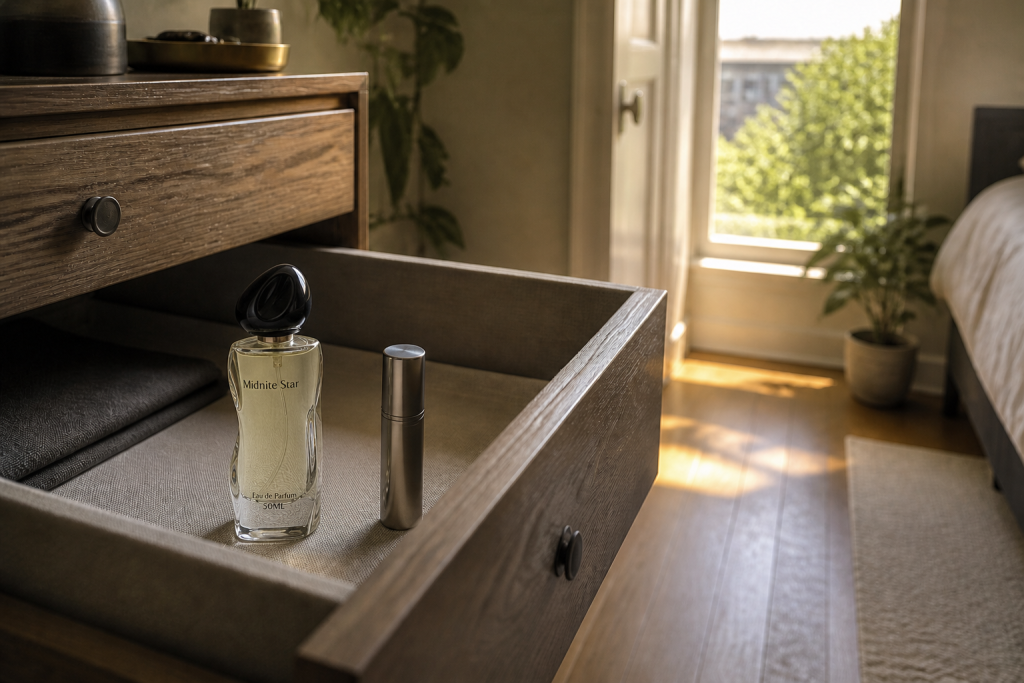
A Checklist for Your First Attempt
If all of this sounds like a lot of variables, it collapses into four decisions.
- Choose one base and one accent: musk, wood, amber, tea or vanilla underneath; citrus, floral, green or spice on top.
- Moisturize first, apply to warm skin, and let the base settle for a minute before the accent goes on.
- Test combinations on skin, not on paper. A blotter shows you notes; only skin shows you the blend, including how your own warmth changes it.
- Keep a written record of what worked. Two names, the order, and a date in your phone notes is enough.
One last word about buying with layering in mind. If your second layer is a bottle you have never smelled, the usual precautions for choosing perfume without smelling it first matter twice as much, because you are committing two fragrances to one outcome. Buy the base you can predict, and keep the accent on the safer side of the note list.
None of this is complicated, and none of it is expensive if the bottles are already on your shelf. If you test on skin and write down what worked, within a few days you will have a small private library of combinations that no one else carries, built from nothing more than restraint and two good bottles.