Written by {{Midnite star}}. Reviewed by {{Midnite star}}, only after a real editorial review. Updated August 5, 2026.
A good summer perfume should feel comfortable in heat, remain interesting as it develops, and suit the places where you actually spend warm days. That does not mean every summer fragrance must smell like lemon or seawater. Citrus, aquatic, green, tea, floral, musk, and light woody compositions can all work beautifully when their balance feels airy rather than dense.
This summer perfume guide explains how warm weather changes the way fragrance is perceived, which scent families tend to feel refreshing, how to choose a perfume for your climate and routine, and how to improve longevity without overspraying. It is designed as a practical starting point rather than a set of rigid seasonal rules. Personal taste still matters, and the most useful test is always how a fragrance behaves on your skin over several hours.
Table of Contents
What Makes a Summer Perfume Work in Hot Weather?
Temperature affects how quickly aromatic materials evaporate and how strongly a perfume projects. On a warm day, a fragrance may open more quickly, spread farther, and move through its top notes sooner than it would in cool weather. A rich composition that feels smooth in winter can therefore seem sweeter, heavier, or more persistent in humid heat.
The best summer perfume is not necessarily the weakest perfume. Balance matters more than a simple concentration label. An eau de parfum built around sparkling citrus, transparent woods, and clean musk may feel easier in heat than a sweet eau de toilette with dense vanilla or syrupy fruit. Concentration can influence performance, but the formula, materials, dose, skin, clothing, temperature, and humidity all shape the result. Our fragrance concentration guide explains those differences in more detail.
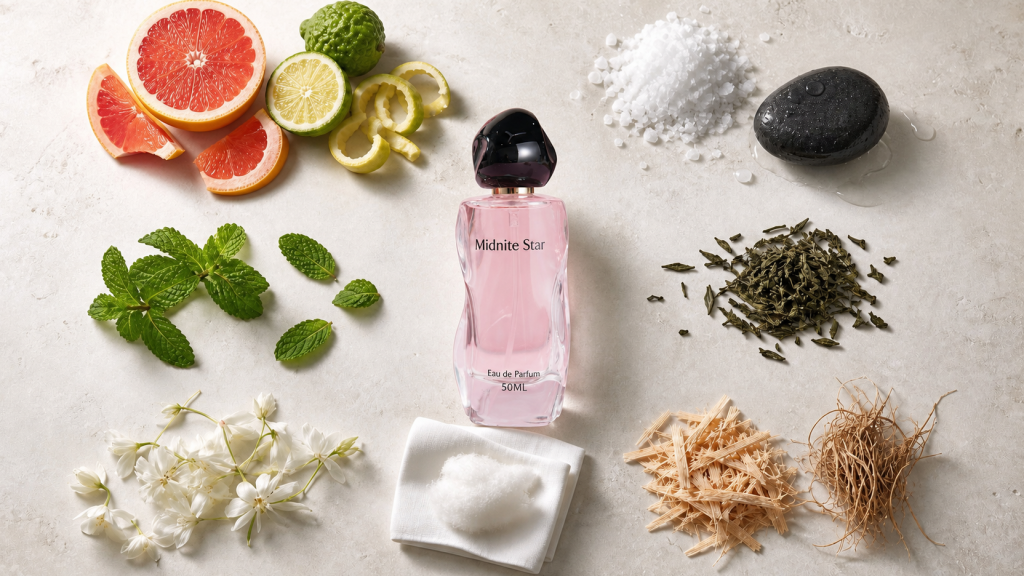
Freshness is also an impression rather than a single ingredient. Bergamot can suggest brightness, mint can evoke cool air, marine notes can recall open water, tea can feel dry and calm, and vetiver can create a clean earthy finish. A successful summer perfume usually combines one or more of these effects with enough structure to prevent the scent from disappearing after the opening.
Freshness Without Harshness
A sharp opening is not always the same as a refreshing one. Too much acidity, alcohol bite, or piercing aromatic material can make a summer perfume feel aggressive, especially in enclosed spaces. A better formula creates contrast. Bright top notes are softened by petals, tea, musk, mineral accords, or pale woods, producing freshness that remains comfortable after the first spray.
Projection Without Overload
Heat can make fragrance more noticeable to everyone around you. For commuting, shared offices, flights, restaurants, and other close environments, moderate projection is often more useful than maximum power. The goal is a summer perfume that forms a pleasant personal scent cloud, not one that enters the room before you do.
Longevity With a Clean Drydown
Many volatile citrus and aromatic notes naturally fade faster than resins, vanilla, amber, and dense woods. That does not make fresh perfume poorly made. A well-constructed summer perfume can begin with lively top notes and then settle into tea, musk, vetiver, cedar, or sheer amber materials that extend wear while preserving a clean character.
Seven Summer Perfume Styles Worth Exploring
There is no universal best scent family for warm weather. The right choice depends on whether you want energy, calm, polish, softness, or an impression of being near the coast. These seven styles cover the main ways a summer perfume can create freshness without becoming repetitive.
Citrus Perfume for Immediate Brightness
Citrus is the classic starting point for a summer perfume because it creates an immediate sense of light and movement. Bergamot is elegant and slightly floral, lemon is crisp, mandarin is softer and sweeter, grapefruit can feel tart and modern, and bitter orange introduces a green edge. Neroli and orange blossom can extend the citrus theme while adding a clean floral body.
The strongest citrus compositions do more than reproduce the smell of juice or peel. They place citrus against herbs, tea, musk, vetiver, or light woods so that the fragrance has a recognizable shape after the sparkling opening fades. Someone seeking an easy daytime summer perfume might enjoy bergamot with green tea and musk, while a sharper grapefruit and vetiver pairing can feel more tailored.
Explore our citrus perfume collection to compare bright, green, floral, and woody interpretations of this family.
Aquatic and Marine Scents for an Open-Air Feeling
An aquatic fragrance can suggest sea spray, rain, mineral water, wet stone, or clean air. These scents became closely associated with summer because they create an impression of space and temperature rather than literal sweetness. They are especially effective for people who want a summer perfume that feels casual, sporty, or quietly clean.
Not every marine accord smells the same. Some are salty and windswept, some are melon-like and transparent, and others combine mineral notes with citrus, herbs, or driftwood. If older aquatic perfumes feel too sharp or synthetic to you, look for modern formulas that pair marine effects with sage, fig leaf, tea, iris, musk, or pale woods. Those supporting notes often create a smoother and more natural drydown.
Green and Herbal Perfume for Crisp Energy
Green fragrance does not try to imitate cold water. Instead, it evokes crushed leaves, stems, garden herbs, shaded paths, or grass after rain. Basil, mint, shiso, galbanum, tomato leaf, violet leaf, rosemary, and clary sage can give a summer perfume a vivid, outdoorsy character.
This family is useful when citrus feels too familiar and marine perfume feels too clean-cut. Green notes introduce texture and a slightly bitter quality that can balance fruit, flowers, and musk. Mint deserves particular care: in a refined formula it can suggest cool air, but in excess it may resemble toothpaste or personal-care products. Look for mint blended with citrus peel, tea, soft florals, or woods rather than presented as a single loud effect.
Tea Fragrances for Dry, Quiet Freshness
Tea perfumes offer a different interpretation of freshness. Green tea can feel delicate and airy, black tea can be dry and faintly smoky, white tea often appears soft and musky, and matcha-inspired accords may combine leafy bitterness with creamy facets. Tea works well in a summer perfume because it creates clarity without relying entirely on bright citrus or obvious marine notes.
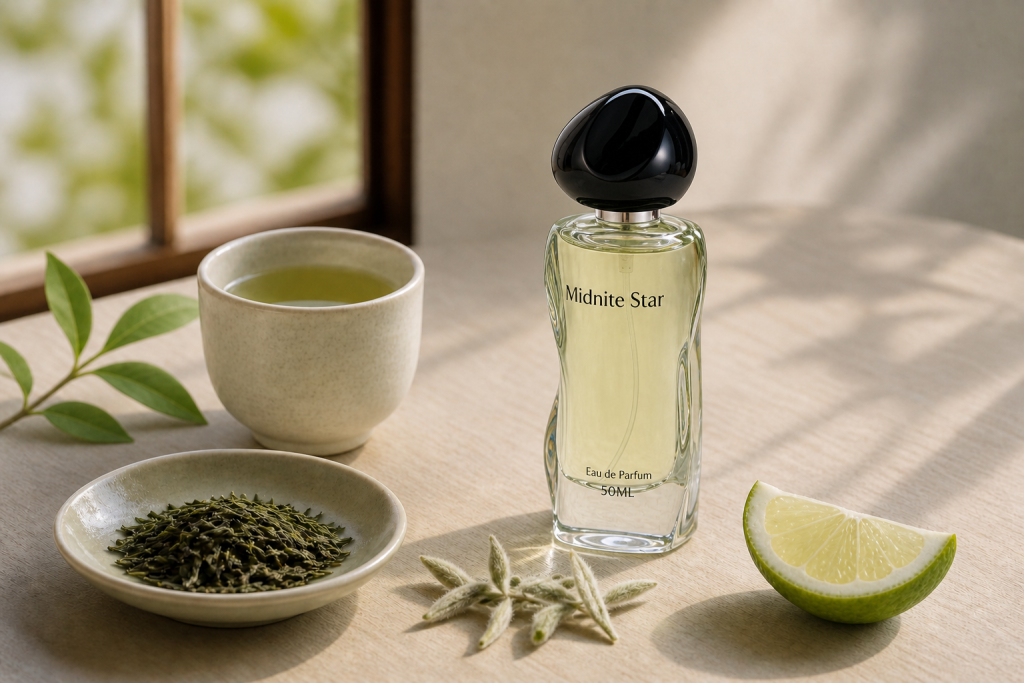
A tea fragrance is particularly suited to offices, study spaces, travel, and occasions where you want to smell polished without wearing something assertive. Tea with bergamot recalls the refined brightness of Earl Grey, while tea with fig, jasmine, iris, or clean musk can feel more meditative. For better staying power, look for a base of cedar, vetiver, ambrette, or transparent amber rather than expecting the tea note itself to remain unchanged all day.
Transparent Floral Scents for Warm Evenings
Floral perfume can work beautifully in summer when the composition leaves room around the petals. Neroli, orange blossom, freesia, magnolia, peony, lotus, rosewater, and sheer jasmine can feel luminous rather than dense. The distinction lies in treatment: transparent flowers usually avoid the heavy sweetness, thick fruit, and warm gourmand base that can become overwhelming in heat.
For daytime, a floral summer perfume with citrus, watery petals, or green leaves can feel fresh and approachable. For dinner or an outdoor evening, a slightly richer floral supported by soft musk or sandalwood can provide more presence without losing its seasonal ease. White florals do not have to be excluded, but indolic or very creamy formulas deserve a light hand when the weather is humid.
Clean Musk for a Skin-Scent Effect
Clean musk fragrances are useful when you want a summer perfume to smell less like a conventional perfume and more like warm, freshly washed skin. Depending on the formula, musk may feel cottony, powdery, mineral, soapy, creamy, or subtly woody. These perfumes are often easy to wear in close environments because they tend to remain nearer to the body.
Musk can also extend lighter notes after citrus and aromatics fade. A bergamot-musk scent feels bright and minimal, while tea and musk create a calm, dry effect. Floral musk can feel soft and intimate for evening. Because people perceive musk materials differently, sampling is important. A note that smells clean and smooth to one person may seem faint or overly laundry-like to another.
Light Woods for a Polished Drydown
Woody perfume is not limited to cold weather. Cedar, vetiver, cypress, light sandalwood, and mineral woods can give a summer perfume structure without the weight of dense oud, smoke, leather, or heavy amber. Vetiver is especially versatile because it can smell grassy, earthy, citrus-like, smoky, or clean depending on its origin and treatment.
Light woods are a strong choice for professional settings and warm evenings. They provide a composed drydown after brighter notes disappear and often make a fragrance feel gender-inclusive. Citrus and cedar feel crisp, fig and sandalwood feel creamy but relaxed, and vetiver with grapefruit or herbs creates a drier, more energetic profile.
How to Choose the Best Summer Perfume for Your Life
A useful summer perfume guide should help you narrow choices rather than simply present more bottles. Start with climate, setting, and the emotional effect you want. Then test the complete development of the fragrance instead of judging only its first bright minutes.
Match the Fragrance to Heat and Humidity
Dry heat and tropical humidity do not produce the same wearing experience. In dry conditions, fragrance may sit closer to dehydrated skin and seem to fade quickly. In humidity, projection can feel fuller and sweetness may become more noticeable. A citrus-woody summer perfume may work well in both climates, but the number of sprays and application points may need to change.
Air conditioning also matters. Someone moving between hot streets and cold interiors may prefer a balanced fragrance with a fresh opening and a slightly warmer base. Someone spending an entire day outdoors may value a lighter scent that can be reapplied without becoming dense.
Choose for the Occasion, Not Only the Season
A beach day, office, wedding, city commute, and late dinner create different fragrance needs. For work, tea, green notes, citrus, soft florals, and clean musk usually provide controlled freshness. For outdoor leisure, aquatic, aromatic, and sparkling citrus styles can feel more relaxed. Evening settings allow a summer perfume to carry more floral depth, soft woods, or a restrained touch of sweetness.
Thinking in occasions also prevents the search for one theoretical bottle that must do everything. A quiet daytime scent and a more expressive evening scent may serve you better than a single compromise.
Test the Drydown Before Buying
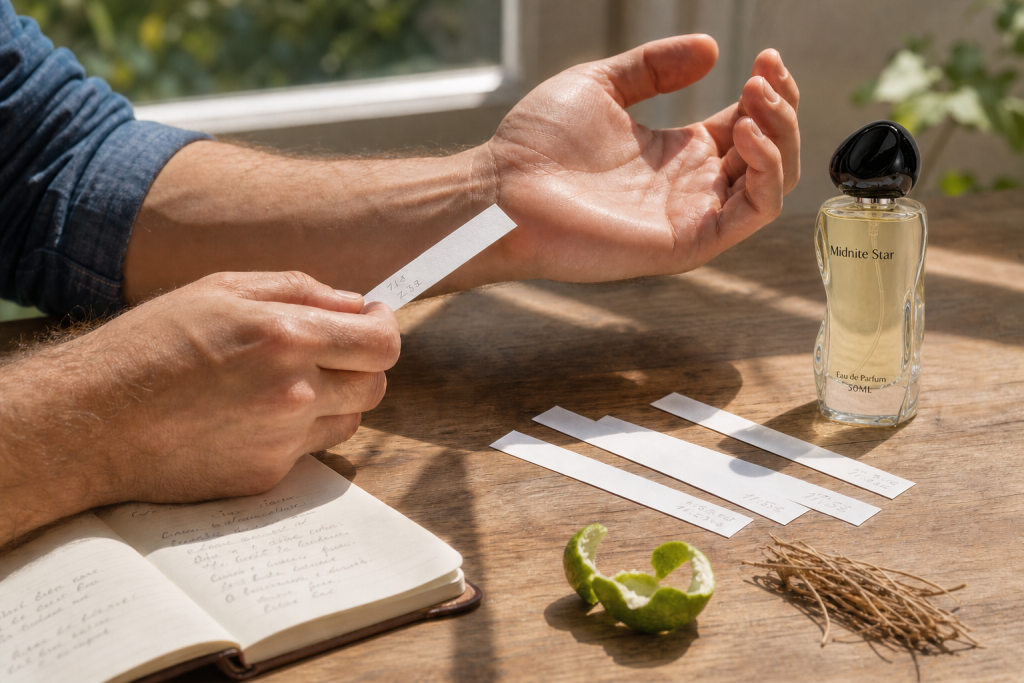
Paper blotters are useful for comparing openings, but skin reveals how a perfume interacts with warmth, moisture, and personal scent. Apply a small amount, avoid testing too many fragrances at once, and observe the scent after the top notes have settled. Pay attention to whether the drydown remains pleasant, whether projection suits your environment, and whether you still want to smell it several hours later.
Sample sizes reduce guesswork and make it easier to test a summer perfume in real conditions. Wear the sample during an ordinary day rather than only inside a store. The best summer perfumes should fit your routine as convincingly as they fit the season.
How to Make Summer Perfume Last Longer
Fresh fragrances are often built with volatile materials, so their opening may naturally move faster than that of a dense amber or gourmand composition. Longevity can still be improved through application, skin preparation, storage, and sensible reapplication.
Apply to Comfortable, Moisturized Skin
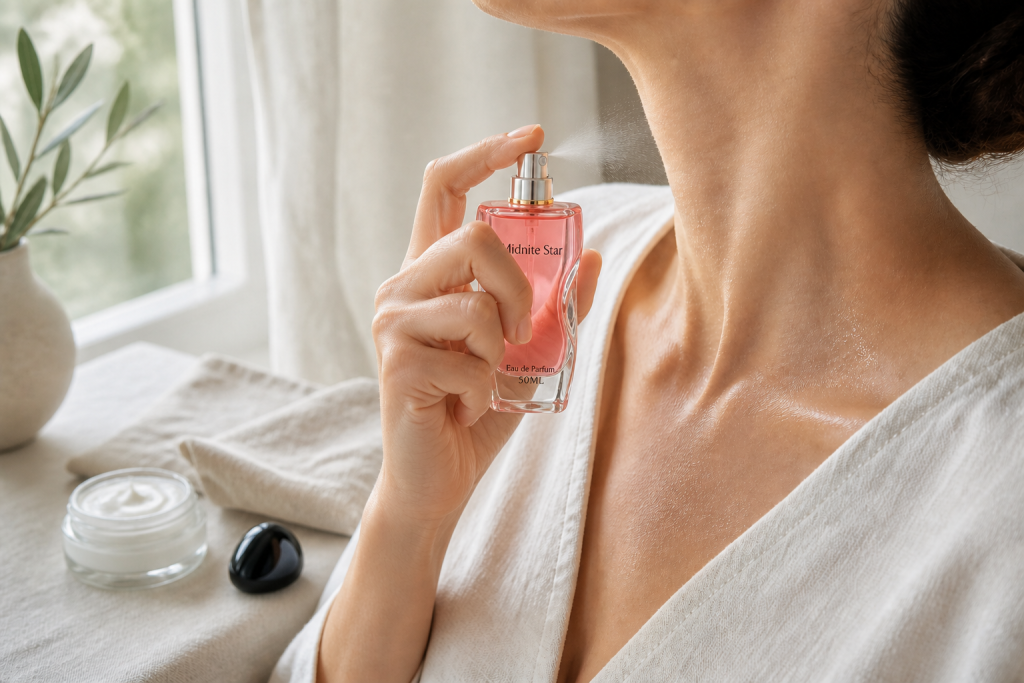
Fragrance often lasts better on skin that is not dry. Use an unscented moisturizer, allow it to absorb, and then apply perfume to areas where it will not be immediately washed or rubbed away. The sides of the neck, upper chest beneath clothing, inner elbows, and shoulders can work well, although skin sensitivity and personal preference should guide placement.
Pulse points are not mandatory, and the hottest area is not always the best one. Excessive heat can make a summer perfume bloom quickly and then seem to disappear. Distributing a modest amount across two or three locations often creates a steadier effect than concentrating every spray in one place.
Avoid Rubbing the Fragrance
Rubbing wrists together does not permanently destroy a perfume, but it can spread the liquid, increase evaporation at the surface, and blur the way you experience the opening. Spray, let the fragrance settle, and allow the composition to develop normally.
Clothing can hold fragrance longer than skin, but test delicate fabric first and follow the product instructions. Some perfume materials may stain, and spraying jewelry is generally unnecessary. A light mist on a suitable garment can support longevity without requiring more perfume on exposed skin.
Reapply With Restraint
Your nose adapts to familiar smells, so a summer perfume may still be noticeable to others after you stop detecting it clearly. Before reapplying, step into fresh air or ask someone you trust whether the scent remains present. A travel spray or sample vial allows controlled reapplication, but the goal is to refresh the fragrance rather than rebuild the entire opening several times.
For more practical advice, read our guide to making perfume last longer.
How to Store Summer Perfume Correctly
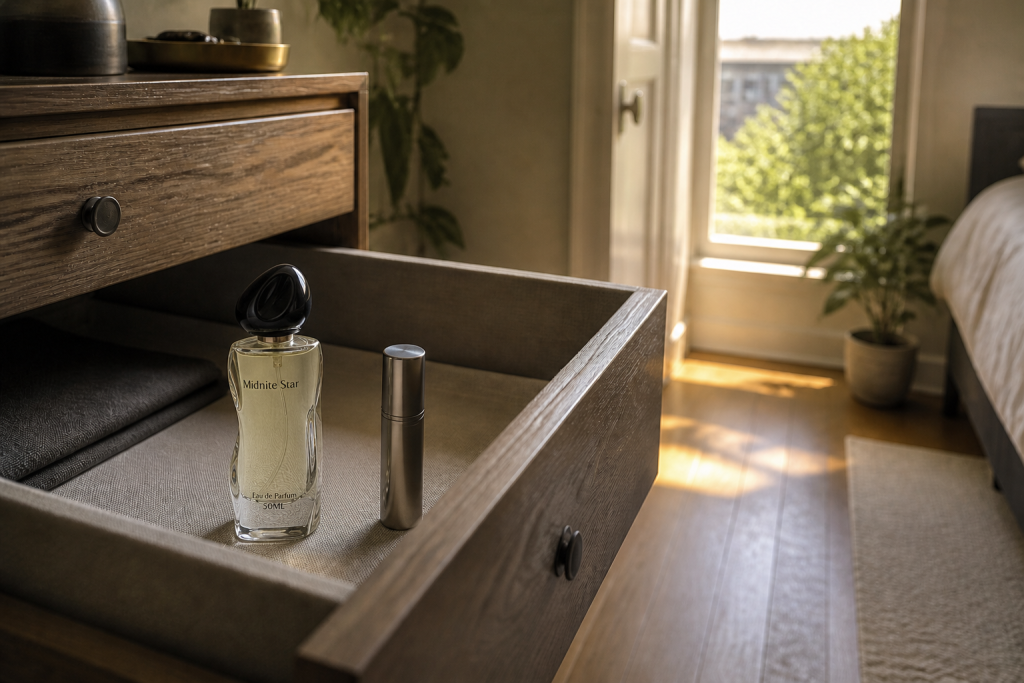
Light, repeated heat, and temperature fluctuations can gradually alter a fragrance. Keep perfume in a cool, dry, dark place with the cap secured. A bedroom drawer or closed cabinet is usually more stable than a sunny windowsill, bathroom shelf, or parked car.
Refrigeration is not required for most perfume. More important is avoiding extremes and repeated movement between hot and cold environments. If you carry a fragrance during summer, use a small travel atomizer and leave the main bottle at home. This protects the bottle while making reapplication easier.
Changes in color do not always mean a fragrance is unusable, especially when a formula contains materials that naturally darken. A sharp change in odor, texture, or performance is more meaningful. When in doubt, compare the perfume with a newer sample or contact the manufacturer.
Can Sweet, Spicy, or Woody Perfume Be Worn in Summer?
Seasonal fragrance rules are preferences, not laws. A person who loves vanilla, amber, spice, or dark woods does not need to abandon them in June. The better question is how the composition behaves in heat and how much you apply.
A sweet summer perfume can work when the sweetness is balanced by salt, citrus, fruit skin, airy flowers, tea, or dry woods. Coconut can feel beach-like when paired with mineral notes or musk, while vanilla can become lighter beside citrus and transparent florals. Spices such as cardamom, pink pepper, and ginger can add lift rather than warmth when used with restraint.
Woody scents also vary widely. Cedar, cypress, and vetiver often feel dry and fresh, while dense oud, smoke, leather, and resin may project more heavily. If you enjoy a rich fragrance in summer, reduce the dose, wear it in the evening, or reserve it for air-conditioned settings. Comfort and context matter more than a seasonal label.
Summer Perfume, Skin Sensitivity, and Sun Exposure
Fragrance safety deserves more precision than the common claim that every perfume becomes dangerous in sunlight. Phototoxicity is associated with particular materials and exposure levels, not with all fragrance as a category. Certain expressed citrus oils may contain naturally occurring furocoumarins, which is one reason professional fragrance standards place limits on specific phototoxic ingredients.
The International Fragrance Association guidance on IFRA Standards explains how restrictions are established for phototoxic fragrance ingredients. Consumers generally do not have access to full formula percentages, so the practical approach is to buy from responsible manufacturers, follow label directions, and contact the brand when a product’s intended use is unclear.
If your skin is sensitive, patch testing a new summer perfume on a small covered area can help identify irritation before broader use. Stop using a product if discomfort occurs. When you expect prolonged sun exposure and are uncertain about the formula, applying fragrance to suitable clothing or to skin that will remain covered is a cautious option. Perfume is not sunscreen and should never replace sun-protection measures.
How This Summer Perfume Guide Was Developed
This article is an editorial guide, not a laboratory test or a universal ranking of individual products. It was developed by comparing established fragrance-family characteristics, the evaporation behavior commonly associated with top, heart, and base notes, manufacturer-published note descriptions, practical application methods, and IFRA safety guidance.
We have intentionally avoided assigning universal longevity numbers. Claims such as “lasts exactly eight hours” are rarely meaningful without controlled testing because performance changes with formula, dose, skin condition, clothing, climate, and scent perception. Product-specific recommendations on this website should be supported by documented wear tests, original photographs, the tester’s climate, application method, and the date of testing.
For stronger transparency, this page should display a real author biography and, when available, a genuine review by a fragrance professional or experienced evaluator. A reviewer should only be credited after reviewing the finished article. Clear authorship, a visible editorial process, accurate corrections, and links to primary sources are more trustworthy than unsupported claims of expertise.
Frequently Asked Questions About Summer Perfume
What Is the Best Summer Perfume Family?
There is no single family that works for everyone. Citrus is bright and energetic, aquatic fragrance feels open and clean, green perfume is crisp, tea is dry and quiet, transparent floral scents are polished, musk creates a skin-scent effect, and light woods provide structure. The best option is the one that remains comfortable in your climate and fits your daily environment.
Is Eau de Toilette Better Than Eau de Parfum in Summer?
Not automatically. Eau de toilette often has a lower aromatic concentration, but concentration does not describe the full character of a formula. A fresh eau de parfum may feel lighter than a sweet eau de toilette. Compare the notes, projection, drydown, and number of sprays rather than choosing by label alone.
How Many Sprays of Summer Perfume Should I Use?
There is no universal number. Formula strength, spray output, weather, clothing, and setting all matter. Begin with a modest application, observe how the perfume projects after fifteen to thirty minutes, and adjust on a later wear. Enclosed spaces generally call for less fragrance than outdoor settings.
Why Does Fresh Perfume Fade Quickly?
Many citrus, herbal, and aromatic materials are highly volatile and are designed to create an expressive opening. As they fade, the perfume should transition into its floral, tea, musk, or woody foundation. Moisturized skin, appropriate clothing application, stable storage, and a restrained midday refresh can support performance.
Can the Same Summer Perfume Be Worn by Any Gender?
Yes. Fragrance materials do not have an inherent gender. Citrus, marine notes, flowers, tea, musk, and woods can be worn by anyone. Marketing categories may help shoppers navigate a large catalog, but personal preference and the way a fragrance develops on skin are more useful guides.
Should Perfume Be Sprayed Directly Before Sun Exposure?
Follow the product directions and consider your skin sensitivity. Phototoxicity relates to specific ingredients and concentrations rather than every perfume, but consumers may not know the full formula. If you are unsure and expect strong sun, applying to suitable clothing or covered skin is a cautious choice. Sunscreen and protective clothing remain separate necessities.
Find a Summer Perfume That Feels Like You
The most satisfying summer perfume does more than smell conventionally fresh. It supports the way you want to feel in warm weather, whether that means energized by grapefruit, calmed by tea, refreshed by marine air, surrounded by transparent flowers, or grounded by vetiver and cedar.
Begin with the fragrance family that matches your preferred mood, test it through the full drydown, and judge it in the climate and setting where you will actually wear it. Use seasonal advice as a filter rather than a rule. A perfume earns a place in your collection when it remains comfortable, distinctive, and enjoyable after the first bright impression has passed.
Explore our summer perfume collection to compare fresh citrus, aquatic, green, tea, floral, musk, and woody scents created for warm-weather wear.