
Perfume is meant to stay with you, but anyone who wears fragrance regularly knows that some scents seem to disappear within a few hours while others linger from morning to night. This often leads to one simple question: how long does perfume last?
The answer depends on more than the perfume bottle itself. In most cases, perfume lasts anywhere from two to twelve hours on skin, but the exact wear time can change based on concentration, fragrance notes, skin type, body chemistry, climate, and application habits. A fresh citrus scent may fade before lunch, while a warm amber, musk, vanilla, or woody fragrance may still be noticeable at the end of the day.
Understanding perfume longevity can help you choose the right scent for your lifestyle and wear it in a way that lasts longer. Instead of assuming a fragrance is weak when it fades quickly, it helps to know how perfume actually works on skin and why certain scents naturally perform better than others.This guide answers the question, “How long does perfume last?”, on skin, clothing, and in the bottle, while explaining the factors that influence fragrance performance.
How Long Does Perfume Last on Skin?
When people ask how long does perfume last, they are usually talking about how long the scent remains noticeable on skin. On average, lighter fragrances may last around two to four hours, while stronger formulas can stay for six to eight hours or more. Some rich parfums and extrait de parfums can last well beyond twelve hours, especially when they contain deep base notes.
Skin is a living surface, which means perfume behaves differently on every person. Heat, natural oils, dryness, pH level, and even daily habits can affect how a scent develops. This is why the same fragrance may last all day on one person but fade quickly on another.
It is also important to remember that perfume changes as it wears. The scent you smell in the first few minutes is not the same scent you experience several hours later. A perfume opens with brighter notes, settles into its heart, and eventually dries down into its base. Sometimes people think their perfume has vanished, when in reality the sparkling top notes have faded and the softer base is staying closer to the skin.
Why Perfume Concentration Matters
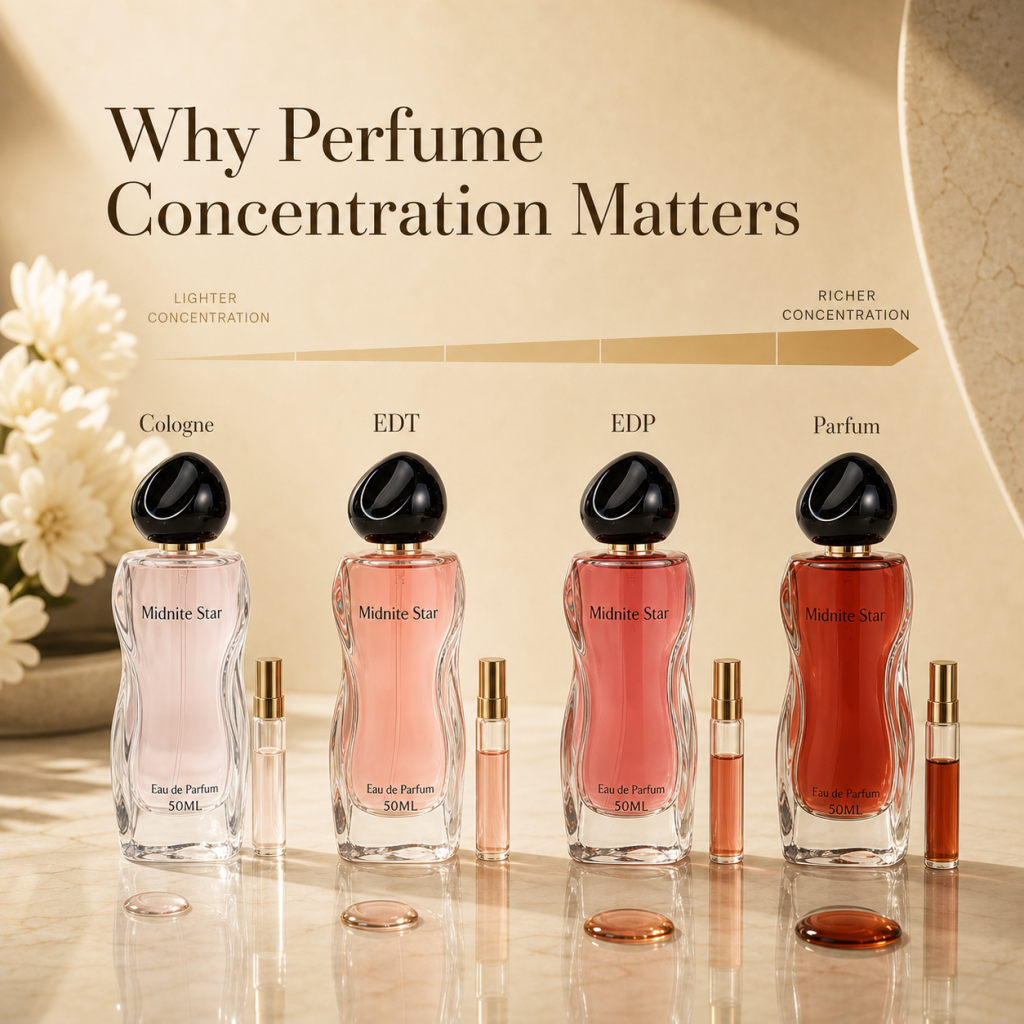
One of the biggest reasons perfume longevity varies is concentration. Fragrance products are usually made with aromatic compounds blended into alcohol and sometimes water. The more concentrated the fragrance oils are, the longer the perfume usually lasts.
Eau de cologne and eau fraîche are often light, refreshing, and short-lived. They are designed for a quick burst of freshness rather than all-day wear. Eau de toilette is usually stronger and can work well as an everyday fragrance, especially for people who prefer something clean and not too heavy. Eau de parfum tends to have more depth and lasting power, which makes it a popular choice for people who want their scent to remain noticeable for much of the day. Parfum or extrait de parfum is the most concentrated option and often has the richest, longest-lasting effect on skin.
Still, concentration is not the only factor. Some eau de toilettes perform extremely well, while some eau de parfums are intentionally soft and intimate. A fragrance can be expensive, well-made, and beautiful without being powerful. Longevity depends not only on concentration but also on the ingredients and structure of the perfume.
The Notes That Make Perfume Last Longer
To understand how long does perfume last, it helps to understand fragrance notes. Perfumes are usually built in layers: top notes, heart notes, and base notes. Each layer evaporates at a different speed, which is why a fragrance changes over time.
Top notes are the first impression. They often include lemon, bergamot, orange, grapefruit, green notes, aquatic notes, or light fruits. These notes can make a perfume feel bright, clean, and energetic, but they usually disappear quickly because they are more volatile.
Heart notes appear after the opening begins to fade. This is where many floral, spicy, fruity, herbal, or aromatic elements become more noticeable. The heart gives the fragrance its character and helps connect the fresh opening to the deeper dry-down.
Base notes are the reason some perfumes last much longer than others. Ingredients such as musk, amber, vanilla, sandalwood, cedarwood, patchouli, oud, tonka bean, leather, incense, benzoin, and labdanum tend to stay on skin for a long time. They evaporate slowly and create the lingering trail that remains after the lighter notes have disappeared.
This is why a fresh citrus fragrance usually fades faster than a warm vanilla or amber perfume. It does not necessarily mean one is better than the other. They are simply designed for different moods, seasons, and occasions.
Why Does Perfume Fade So Fast?
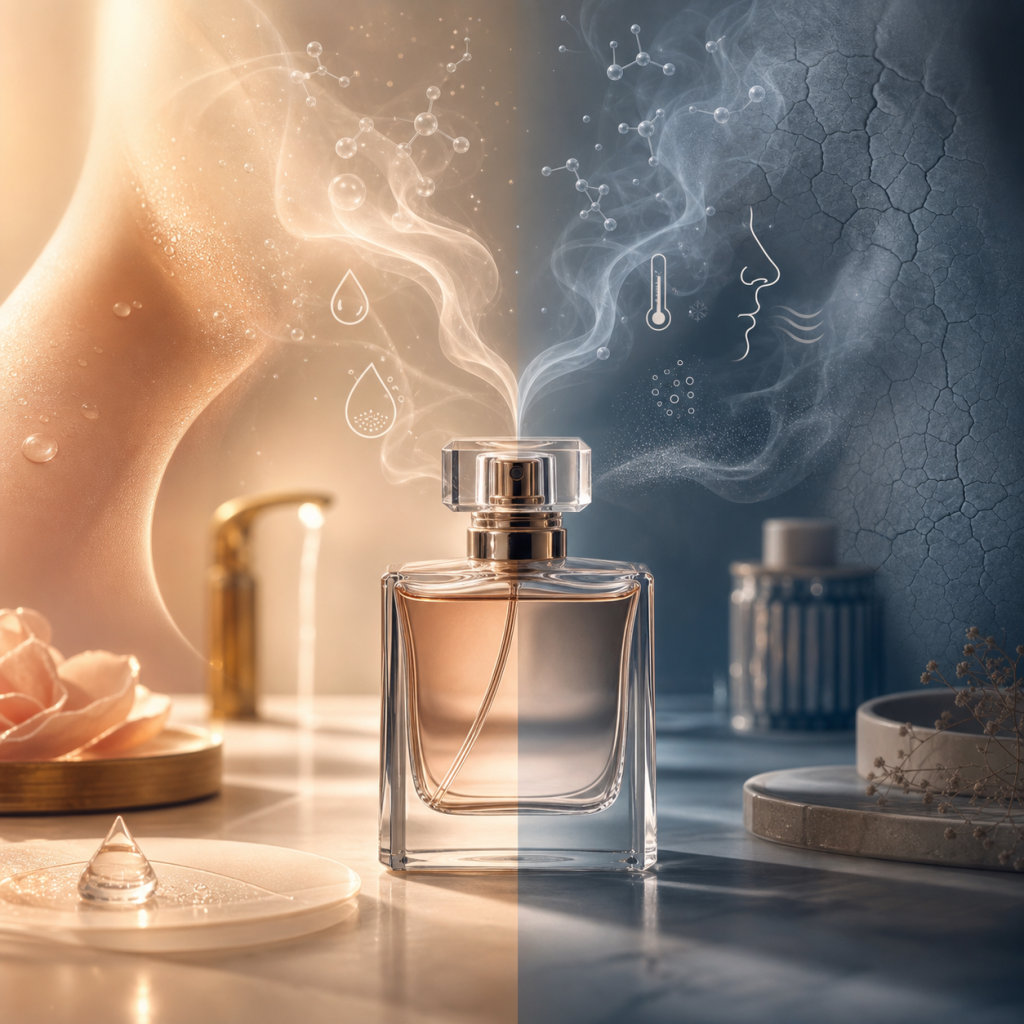
If you often wonder why perfume fades quickly on your skin, the reason may not be poor quality. Dry skin is one of the most common causes of short perfume wear. Fragrance molecules cling better to hydrated skin, while dry skin allows perfume to evaporate faster.
Body temperature also matters. If your skin runs warm, your perfume may project strongly at first but burn off more quickly. If your skin is cooler, the fragrance may stay closer to the body and develop more slowly. Your natural oils, pH level, hormones, and even diet can influence the way a scent smells and lasts.
Weather can also change the way perfume performs. In hot weather, fragrance molecules evaporate faster, so a scent may feel stronger in the beginning but fade sooner. In cold weather, perfume often lasts longer because evaporation slows down, although it may not project as much. Humidity can make a scent feel fuller and more noticeable, while dry air can make it seem weaker.
Another reason perfume may seem to fade is olfactory adaptation, sometimes called nose blindness. When your nose is exposed to the same scent for an extended period, you may gradually become less aware of it. As a result, you may stop noticing your perfume even while other people can still smell it. This is why relying only on your own nose may lead you to overapply fragrance during the day.
How to Make Perfume Last Longer
If you want to make perfume last longer, the first step is to apply it to moisturized skin. Clean, hydrated skin gives fragrance something to hold onto. After a shower, dry your skin, apply an unscented lotion or body cream, and then spray perfume on warm areas of the body.
Pulse points are especially useful because they naturally release heat. The wrists, neck, inner elbows, chest, collarbone, and behind the ears are common places to apply fragrance. The warmth helps the perfume unfold gradually instead of sitting flat on the skin.
It is also better not to rub your wrists together after spraying. Many people do this automatically, but rubbing can disturb the fragrance and make the top notes fade faster. Let the perfume dry naturally so the layers can develop as intended.
Clothing can also help a scent last longer. Fabric often holds fragrance better than skin and may keep the scent noticeable for many hours. However, perfume should be sprayed carefully on clothing because some formulas can stain delicate or light-colored fabrics. A light mist from a distance is usually safer than spraying heavily in one spot.
Layering can improve perfume longevity as well. A matching body lotion, body oil, shower gel, or hair mist can help build a longer-lasting scent experience. If matching products are not available, unscented moisturizer is usually the best option because it supports the fragrance without changing the smell.
Does Perfume Last Longer on Skin or Clothes?
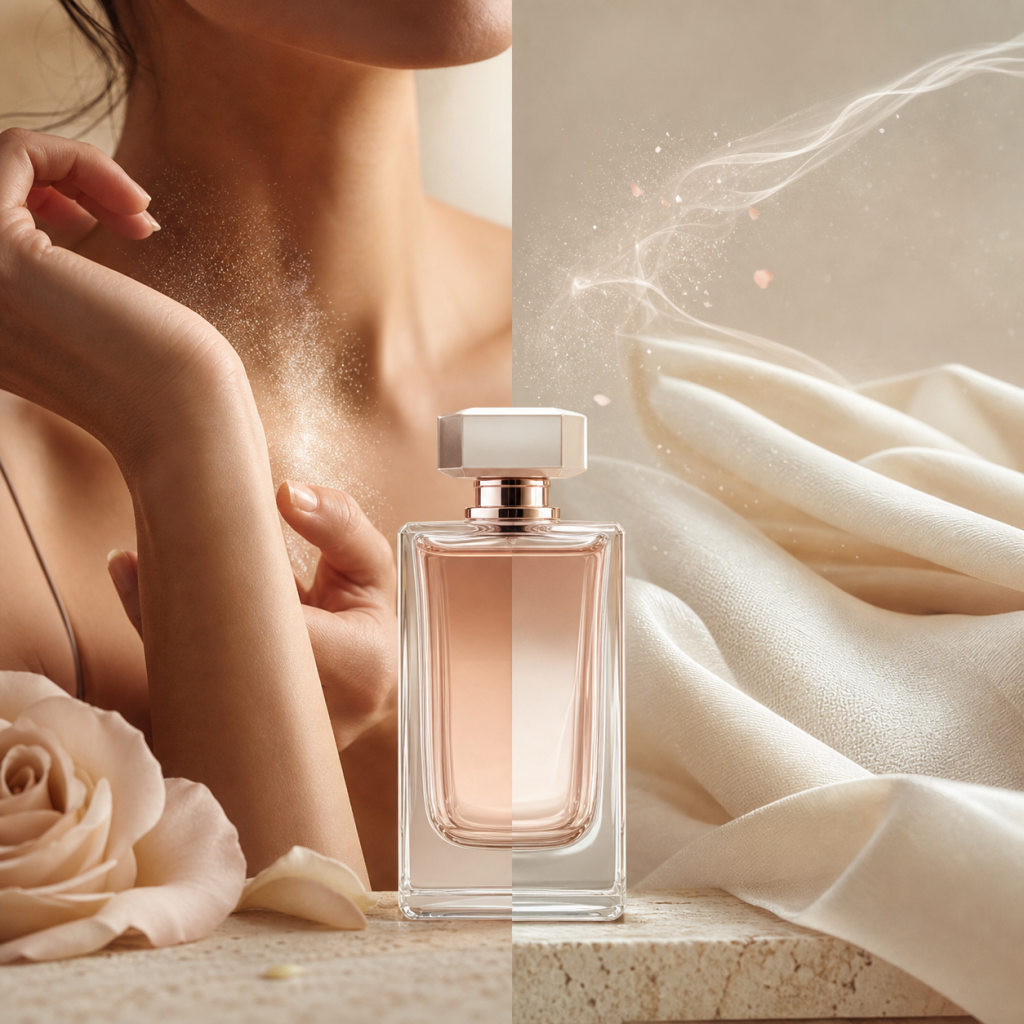
Perfume usually lasts longer on clothes than on skin. Skin produces heat and oils, which help a fragrance develop but also cause it to evaporate. Fabric does not behave the same way, so it can hold onto scent for a longer time.
This does not mean clothes are always better than skin. On skin, perfume feels more alive because it interacts with body chemistry. The scent warms up, changes, and becomes more personal. On clothing, perfume may last longer but can smell more linear because it does not develop in quite the same way.
For the best effect, many people apply perfume to both skin and clothing. Skin application gives the fragrance character and warmth, while a light spray on fabric helps extend the scent trail. This approach works especially well with softer fragrances that fade quickly on skin.
How Long Does Perfume Last in the Bottle?
Another version of the question how long does perfume last is about shelf life. Most perfumes can last for several years if stored properly, but they can change over time when exposed to light, heat, air, and humidity.
A perfume bottle should be kept in a cool, dark, dry place. Direct sunlight can damage fragrance molecules, while heat can speed up oxidation. Bathrooms are not ideal because humidity and temperature change often. A drawer, closet, or shaded shelf is usually a better place for fragrance storage.
When perfume begins to turn, it may smell sour, metallic, dusty, flat, or simply very different from how it used to smell. The color may also darken, especially in fragrances with vanilla or natural materials. Some perfumes age beautifully, but poor storage can shorten their life.
Keeping the cap tightly closed and avoiding extreme temperature changes can help preserve the original scent and performance for longer.
Is Long-Lasting Perfume Always Better?
It is easy to think that a perfume is better if it lasts longer, but that is not always true. Some fragrances are designed to be light, fresh, and intimate. They may not last twelve hours, but they can be perfect for warm weather, office settings, casual days, or people who prefer subtle scents.
A long-lasting perfume can be wonderful, but it also needs to fit the occasion. Heavy oud, amber, tobacco, leather, or sweet vanilla fragrances may last all day, yet they can feel overwhelming in hot weather or close indoor spaces. A soft citrus, tea, floral, or clean musk fragrance may fade sooner, but it can feel more comfortable and elegant in the right setting.
The best perfume is not simply the one with the strongest performance. It is the one that smells good on your skin, suits your mood, and lasts long enough for the way you plan to wear it.
Choosing a Perfume That Lasts
If longevity is important to you, pay attention to the concentration and the note profile. Eau de parfum and parfum formulas usually offer better staying power, especially when they contain musk, amber, woods, vanilla, resins, patchouli, tonka bean, leather, or oud.
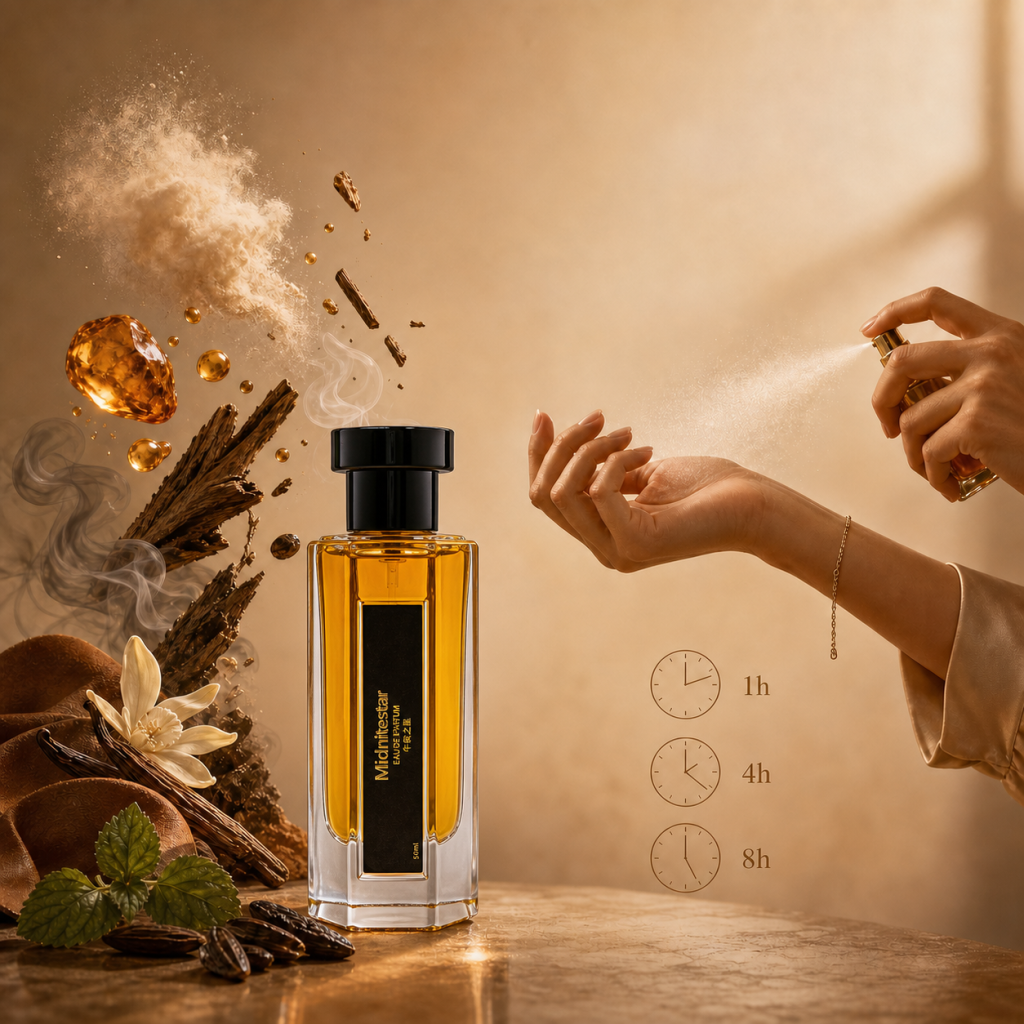
Reviews can also help, but they should not be the only deciding factor. Since perfume reacts differently with each person’s skin, the best way to judge longevity is to test it on yourself. Spray it on your skin and check how it smells after one hour, four hours, and eight hours. A true wear test gives you a much better idea than a paper strip or first impression.
If you are shopping online, fragrance descriptions can still give useful clues. Words like warm, woody, ambery, musky, resinous, creamy, smoky, or spicy often suggest better lasting power than descriptions focused only on fresh, sparkling, watery, or citrus notes.
Final Thoughts: How Long Does Perfume Last?
So, how long does perfume last? On skin, most perfumes last between two and twelve hours. Light colognes and fresh eau de toilettes may fade within a few hours, while eau de parfums and parfums with rich base notes can stay noticeable much longer. On clothes, perfume may last even longer, and in the bottle, a well-stored fragrance can remain beautiful for years.
If your perfume fades too quickly, try applying it to moisturized skin, choosing warmer pulse points, avoiding wrist rubbing, and adding a light spray to clothing. You can also choose fragrances with longer-lasting base notes such as musk, amber, vanilla, woods, patchouli, oud, or resins.
Perfume longevity is not only about strength. It is about how a fragrance opens, evolves, and leaves a lasting impression. Once you understand what affects the way perfume wears, you can enjoy your favorite scent for longer and choose fragrances that truly suit your skin.