
Learning how to choose perfume online can feel almost impossible when you cannot smell the fragrance before placing an order. You may recognize several notes you already love, read a polished description, and scroll through dozens of positive reviews, only to discover that the perfume smells completely different from what you imagined.
Perhaps the bergamot is sharper than expected. The jasmine may feel richer and sweeter, or the cedarwood might disappear beneath a warm amber base. Sometimes the scent itself is pleasant, but its projection is too strong for work. In other cases, the opening is beautiful, yet the fragrance becomes powdery or overly sweet after an hour.
These surprises do not necessarily mean the product description is inaccurate. Fragrance notes simply tell one part of the story. They can suggest what you may smell, but they rarely explain how the perfume feels, how strongly it projects, or how it changes throughout the day.
The most reliable way to choose a perfume is still to test it on your skin. When that is not possible, however, you can make a more informed decision by looking beyond the note list. The following guide explains how to judge scent character, sweetness, performance, dry down, reviews, and samples before committing to a bottle.
1.How to Choose Perfume Online Without Relying Only on Notes
A fragrance note list is useful, but it should be treated as a starting point rather than a formula. The notes shown on a product page are not necessarily a complete ingredient list, nor do they reveal the precise proportions of a composition. They are scent impressions selected to communicate the perfume’s structure and character.Imagine two perfumes that both list rose, vanilla, and sandalwood. One might be soft, creamy, and romantic. The other could feel dark, spicy, and dry. Although they share the same three named notes, the materials surrounding them and the way they are balanced can create entirely different experiences.
Rose is a clear example. It may smell like fresh petals covered in morning dew, or it may have a powdery quality reminiscent of vintage cosmetics. In another composition, rose can become sweet and jammy, sharply green, peppery, earthy, or even smoky.Vanilla is equally varied. It may suggest cake, caramel, or warm sugar, but it can also feel woody, resinous, leathery, or dry. A vanilla fragrance blended with fruit and amber may be noticeably sweet, while one paired with incense and cedarwood may feel much more restrained.
When deciding how to choose perfume online, do not ask only whether the fragrance contains a note you enjoy. Ask how that note is presented and which other materials shape its character. A favorite note is a reason to investigate a perfume, not a guarantee that you will love it.
2.Look Beyond Fragrance Notes and Consider Scent Texture
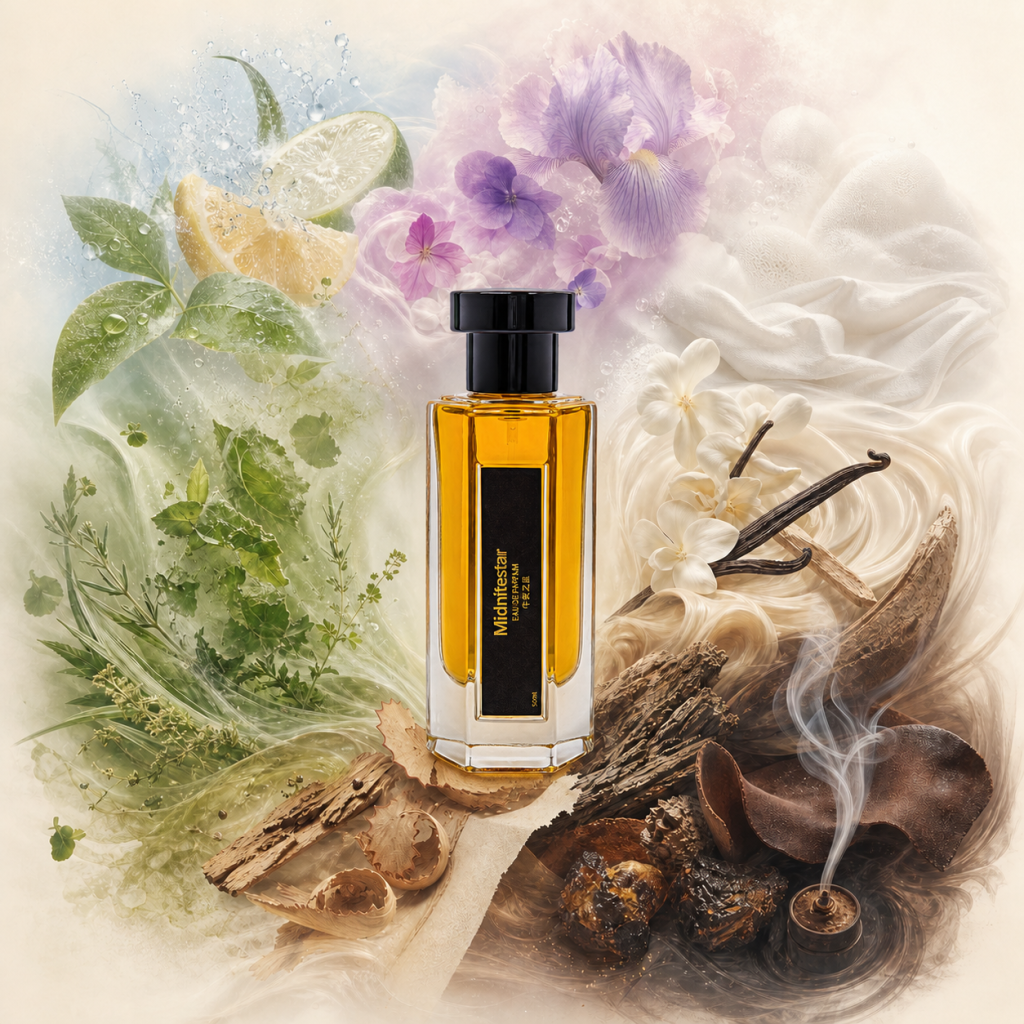
The most helpful perfume descriptions often explain how a fragrance feels rather than simply listing what it contains. Words such as fresh, powdery, soapy, creamy, green, dry, and smoky can reveal more about the wearing experience than the note pyramid alone.
A fresh fragrance may feel bright, crisp, and transparent. It can create an impression of clean air, sparkling citrus, aromatic herbs, or cool water. However, fresh does not always mean weak or short-lived. Some fresh compositions are highly diffusive and remain noticeable for many hours.A powdery perfume may recall face powder, soft petals, lipstick, or freshly laundered fabric. Iris, violet, heliotrope, and certain musks are frequently associated with this effect, although any of these materials can behave differently depending on the formula.
Soapy fragrances often suggest clean skin, fine soap, shampoo, or a freshly pressed shirt. Some people find this style comforting and polished. Others feel it resembles personal-care or cleaning products too closely. Neither reaction is wrong; it is a matter of scent association.
Creamy perfumes tend to feel smooth and rounded. Sandalwood, coconut, vanilla, and some white florals can create this texture. Green scents may evoke crushed leaves, stems, herbs, or grass, while dry woody fragrances can suggest cedar, bark, paper, or pencil shavings. Smoky styles may bring to mind incense, burnt wood, tobacco, leather, or dark resins.
These descriptions are particularly useful when you know what you dislike. If you avoid sweet fragrances, for example, staying away from vanilla alone will not be enough. Fruit, amber, white florals, honey, caramel, and certain musks can also create noticeable sweetness. Meanwhile, a fragrance containing vanilla may remain dry when balanced with woods, spice, or smoke.To choose perfume online more accurately, focus on the atmosphere and texture produced by all the notes together.
3.Decide How Sweet You Want the Perfume to Be
Sweetness is one of the most common reasons an online perfume purchase fails. It is also difficult to predict from a note list because sweetness can come from many different places.Vanilla, caramel, chocolate, honey, praline, and tonka bean are obvious signals. However, ripe fruit, amber accords, tropical flowers, soft musks, and certain woods may also make a fragrance feel sweet. A perfume can be classified as floral, woody, or fruity while still having a rich, sugary character.Try to identify how much sweetness you enjoy before shopping. You may prefer fragrances with almost no perceptible sweetness, or you may like a small amount that adds warmth without becoming gourmand. Alternatively, you may actively want a rich, dessert-like perfume.
Product descriptions can offer clues. Words such as luscious, indulgent, syrupy, candied, decadent, and gourmand often indicate obvious sweetness. Terms such as dry, mineral, crisp, aromatic, and earthy usually point in the opposite direction, although no descriptive word is an absolute guarantee.
Customer reviews are helpful here because reviewers often compare a scent’s sweetness with familiar references. Comments such as “less sweet than expected,” “vanilla appears only in the dry down,” or “the fruit becomes syrupy in warm weather” give you more usable information than a simple star rating.
Climate matters too. A warm, sweet fragrance may feel comforting in cool weather but become overwhelming on a hot and humid day. If you live in a warm climate, consider whether the perfume has enough freshness, dryness, or transparency to balance its sweeter elements.
4.Choose the Occasion Before You Choose the Fragrance
One of the most practical ways to understand how to choose perfume online is to begin with the setting in which you intend to wear it. Instead of asking which fragrance is best overall, ask which fragrance suits your daily life.
For an office or another shared space, a controlled scent is often easier to wear. Clean musks, tea, gentle woods, citrus, aromatic notes, and understated florals can work well, although almost any scent family may be appropriate when applied lightly.Projection matters as much as the style of the fragrance. A soft amber perfume can be more office-friendly than a highly diffusive citrus scent. The label fresh does not automatically mean subtle, and the label warm does not necessarily mean overpowering.
For everyday wear, versatility may be more valuable than novelty. A perfume that works with your climate, clothing, and routine will probably receive more use than a dramatic fragrance purchased for an imagined future occasion.A date fragrance may feel warm, smooth, or intimate, especially if it settles close to the skin. For an evening event, you may prefer greater richness and presence through spices, amber, leather, deep florals, or gourmand notes. Formal occasions can suit polished florals and structured woods without requiring the strongest scent in the room.
Thinking about context helps you move beyond popularity. A trending perfume can still be the wrong choice if it does not fit where, when, and how you plan to wear it.
5.Understand Longevity, Projection, and Sillage
People frequently use longevity, projection, and sillage as if they mean the same thing, but each describes a different part of perfume performance.
Longevity refers to how long the fragrance remains detectable on your skin or clothing. Projection describes how far the scent radiates from you, especially during the earlier stages of wear. Sillage refers to the scent trail left behind as you move.A perfume can last for eight hours while remaining close to the skin. Another may project strongly during the first hour but become noticeably quieter afterward. A third may not fill a room when you are standing still but leave an obvious trail when you walk past.
None of these behaviors is automatically good or bad. The best performance depends on your preferences and environment. Someone who works in a shared office may appreciate a long-lasting fragrance with restrained projection. Someone choosing a perfume for a night out may want more presence.
Concentration labels offer guidance, but they do not guarantee performance. An Eau de Parfum is not automatically stronger or longer lasting than every Eau de Toilette. Formula, materials, skin, temperature, humidity, and application all affect the result.When reading product pages and reviews, look for separate descriptions of duration and strength. “Long-lasting” does not necessarily mean loud, and “subtle” does not necessarily mean short-lived.If you are sensitive to fragrance, projection may be more important than longevity. Even a scent you enjoy can become uncomfortable when applied too heavily or worn in a small enclosed space.
6.Pay Attention to the Dry Down
The opening is only the first stage of a fragrance. Bright citrus, sparkling fruit, and aromatic herbs may dominate immediately after application, but they can soften considerably as the perfume develops.
The scent that emerges after the opening has settled is commonly called the dry down. At this stage, woods, musk, vanilla, amber, resins, and other longer-lasting impressions often become more noticeable.The dry down matters because it may remain with you for several hours. A fresh citrus opening can eventually become a warm musky scent. A juicy fruit fragrance may settle into sweet vanilla, while a bold floral can finish as quiet woods and clean musk.When you choose perfume online, search product descriptions and reviews for comments about how the fragrance changes. Phrases such as “after one hour,” “as it settles,” and “in the dry down” are especially useful.
A review that says a perfume smells fresh is less informative than one explaining that it opens with sharp citrus, becomes floral after twenty minutes, and ends with dry cedarwood. The second description allows you to imagine the complete wearing experience instead of only the first few minutes.Be cautious when reviews discuss only the initial spray. In a store, people often make a decision after smelling a blotter for a short time, but the perfume they take home may spend most of its life in a very different stage.
7.Read Perfume Reviews for Evidence, Not Approval
Online reviews can help you choose perfume online, but star ratings alone offer limited guidance. Fragrance preference is personal, and a high score does not mean a perfume will suit your skin, taste, or lifestyle.
Look for descriptions of specific qualities. A useful reviewer may explain that the fragrance becomes powdery, feels sweeter in warm weather, projects strongly for two hours, or settles into a close skin scent. They may mention the number of sprays used, the climate, and whether they tested on skin or clothing.Repeated observations are more valuable than isolated opinions. If several reviewers independently describe a perfume as creamy or smoky, that characteristic is worth considering. If comments about longevity vary widely, differences in skin, weather, and personal sensitivity may explain the inconsistency.
The reviewer’s normal taste also affects their judgment. Someone who regularly wears powerful amber fragrances may describe a gentle musk as weak. A person who prefers subtle scents may find the same fragrance perfectly noticeable.Be careful with comparisons to popular perfumes. Saying that two scents are similar does not mean they are identical. They may share an opening or general mood while differing significantly in sweetness, texture, or dry down.Use reviews to build a picture of how a fragrance behaves. Do not use them only to confirm that other people approve of it.
8.Use Familiar Fragrances to Identify Your Preferences
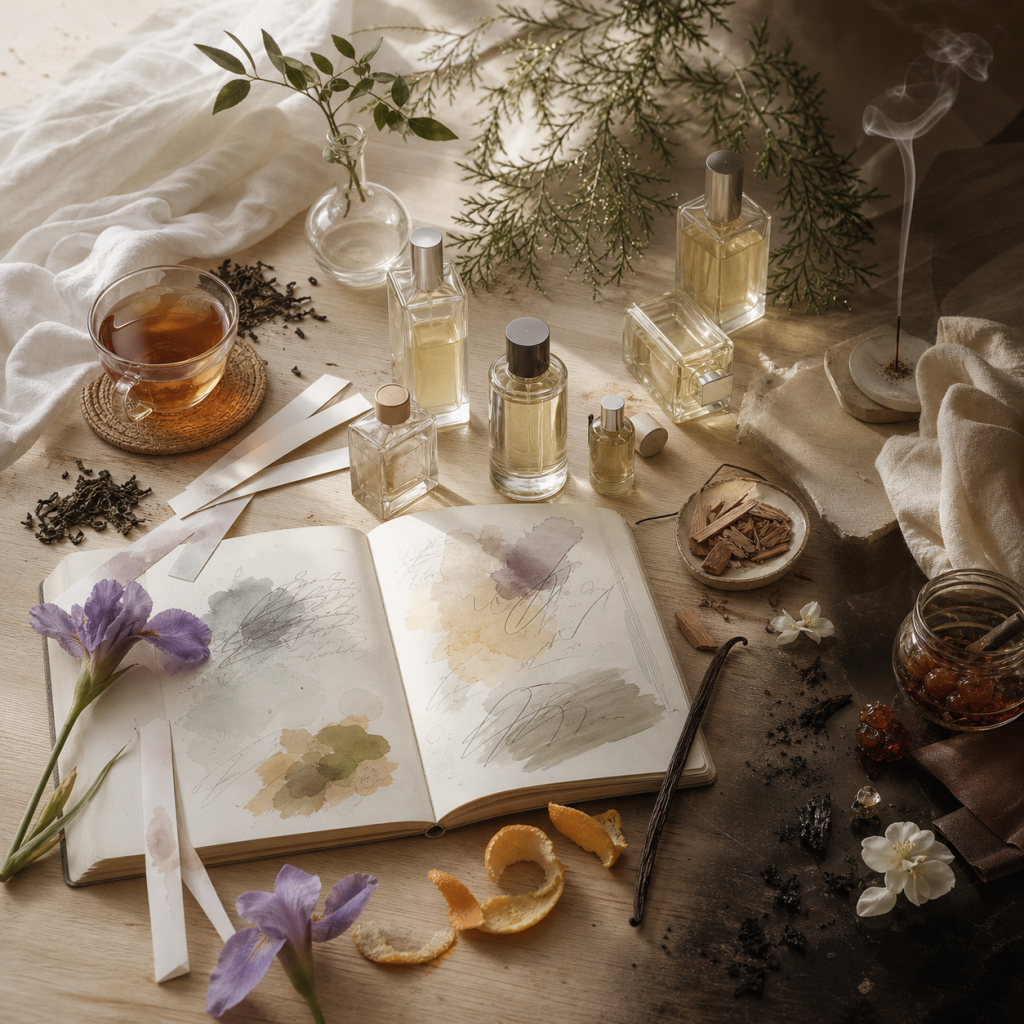
If perfume terminology feels abstract, begin with scents you already know. Review bottles you own, samples you finished, or personal-care products you frequently use. Consider what they have in common.You may notice that your favorite fragrances share tea, citrus, iris, sandalwood, or musk. More importantly, they may share a feeling: clean and airy, soft and powdery, warm and creamy, or dry and woody.Then examine the perfumes you dislike. Try to determine whether the problem was excessive sweetness, strong projection, powderiness, smoke, leather, sharp green notes, or dense white florals. Knowing your deal-breakers can be more useful than maintaining a long list of favorite notes.
If you have access to a fragrance database or the official websites of perfumes you already enjoy, compare their scent families and descriptive language. Treat those patterns as clues, not strict rules.You can also use familiar smells outside perfume. Your preference for black tea, citrus peel, fresh linen, vanilla desserts, forest air, or incense may help you identify directions worth exploring. Still, remember that a perfume interpretation can differ from the real-world object. A “coffee” fragrance may smell sweet and creamy rather than like unsweetened espresso.
The goal is to build a personal vocabulary. The better you can describe what you enjoy, the easier it becomes to evaluate a product page.
9.Sample the Perfume Before Buying a Full Bottle
No guide can completely remove the uncertainty of buying perfume online. Skin temperature, body chemistry, weather, humidity, application, and personal perception influence how a fragrance develops.If you have concerns about skin exposure or fragrance safety, consult the International Fragrance Association’s information on the safe use of fragrance and follow any warnings provided by the manufacturer.
For this reason, a sample or discovery set is usually the safest option when available. Sampling is not merely an extra expense. It can prevent the larger cost of buying a full bottle that you rarely wear.Apply a small amount and give the fragrance time. Notice the opening, return to it after an hour, and check again later in the day. Pay attention not only to whether it smells pleasant, but also to whether the sweetness, projection, and dry down feel comfortable.
Test the perfume during your normal routine. A scent that seems attractive during a quick evening trial may feel too heavy during a full workday. Likewise, a fragrance that initially appears quiet may become exactly the type of subtle perfume you enjoy after several wearings.Whenever possible, test more than once and in different conditions. Your perception can change with mood, temperature, and context. Avoid applying several unfamiliar perfumes close together, as this can make them difficult to judge.
If you can only use a paper blotter, let it develop for several hours rather than smelling it once. Skin testing is still preferable because it shows how the fragrance interacts with warmth and movement.For expensive fragrances, sampling is especially sensible. A full bottle should be the final stage of the decision rather than the first experiment.
Not ready to commit to a full bottle? Explore our [fragrance samples and discovery sets] before choosing your next scent.
Common Mistakes When Buying Perfume Online
One common mistake is buying a fragrance because one favorite note appears in its description. As discussed earlier, a perfume’s character comes from the complete composition, not one isolated element.
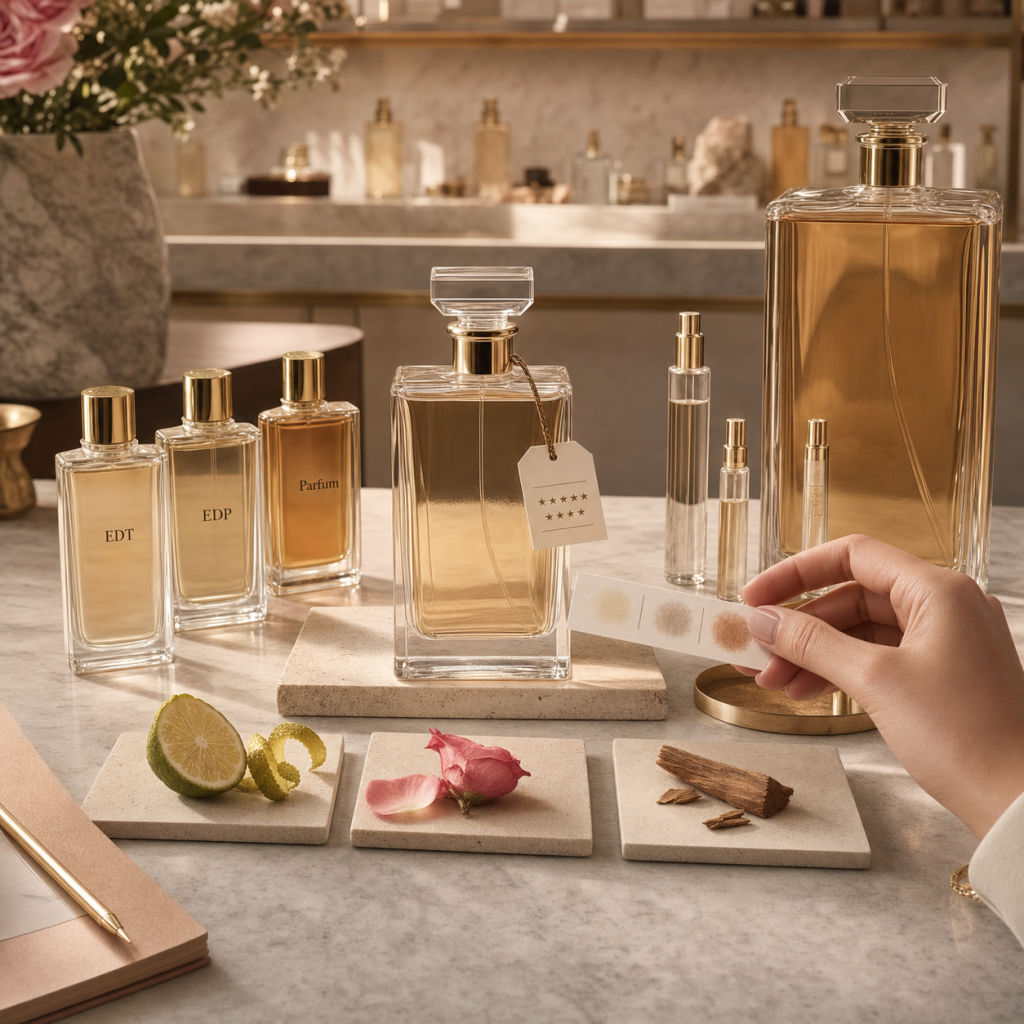
Another is assuming that a well-known or highly rated perfume will suit everyone. Popularity indicates broad appeal, but it does not account for your preferences, climate, or intended setting.Shoppers also tend to overvalue the opening. The first spray may be memorable, yet the dry down is the part that remains on the skin for much longer. Before committing to a bottle, try to understand both stages.Confusing concentration with performance is another source of disappointment. Eau de Parfum does not always mean louder or longer lasting, and Parfum does not always mean stronger projection. Concentration is only one part of the formula.
Finally, buying the largest bottle because it appears to offer better value can be risky. A lower price per milliliter is not a saving if the perfume remains unused. A sample, travel size, or smaller bottle may provide better practical value until you know the fragrance suits you.
How to Choose Perfume Online With More Confidence
Understanding how to choose perfume online is less about finding a perfect prediction and more about reducing uncertainty. Fragrance notes are helpful, but they are only one layer of the decision.Look at scent texture and sweetness. Consider where you intend to wear the fragrance and how noticeable you want it to be. Distinguish longevity from projection, investigate the dry down, and read reviews for specific evidence rather than general approval.Your existing preferences can provide valuable clues, especially when you identify the qualities you dislike as clearly as the notes you enjoy. When a sample is available, use it to experience the complete fragrance before investing in a bottle.
The right perfume should not only create an appealing first impression. It should feel comfortable in your environment, suit the way you want to be noticed, and remain enjoyable as it develops throughout the day.If you are still unsure, start small. A discovery set allows you to explore several fragrances at your own pace and decide which one truly belongs in your collection.
[Explore Our Discovery Sets]