
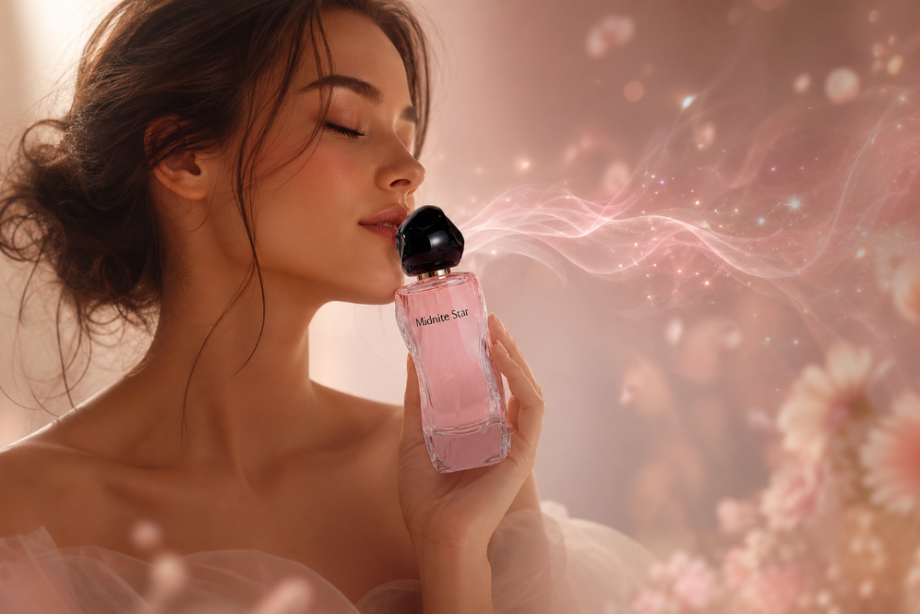
You apply your favorite perfume in the morning, enjoy its opening notes as you get ready, and then wonder by lunchtime: Where did it go?
Fragrance naturally evolves after it touches your skin. Bright top notes usually appear first and fade sooner, while heart and base notes unfold more gradually. Your skin type, application technique, environment, fragrance concentration, and even the way you store the bottle can all influence how long the scent seems to last.
Fortunately, making perfume last longer does not require spraying an excessive amount. A few thoughtful changes to your routine can help you experience every stage of your fragrance more fully.
Here are ten practical ways to make perfume last longer on your skin.
1. Apply Perfume After You Shower
One of the best times to apply perfume is shortly after a shower, once you have dried your skin.
Clean skin gives fragrance a fresh base without interference from sweat, strongly scented soap, or other competing aromas. The warmth and residual moisture after bathing can also create a more fragrance-friendly surface than very dry skin.
Spray your perfume when your skin is dry to the touch rather than visibly wet. Allow it to settle for a moment before getting dressed so that your clothing does not rub against the application areas before the fragrance dries.
2. Moisturize Before Applying Your Fragrance
Perfume often holds better on moisturized skin than on dry skin. When the skin lacks moisture, a fragrance may seem to fade more quickly.
Before spraying your perfume, apply an unscented body lotion to the areas where you intend to wear it. An unscented moisturizer is usually the safest choice because it will not compete with the fragrance or alter its character. If your perfume has a matching body lotion, using the two together can create a more seamless scent experience.
Allow the moisturizer to absorb before applying the fragrance. The goal is to create a hydrated base without leaving a thick or greasy layer of product on the skin.
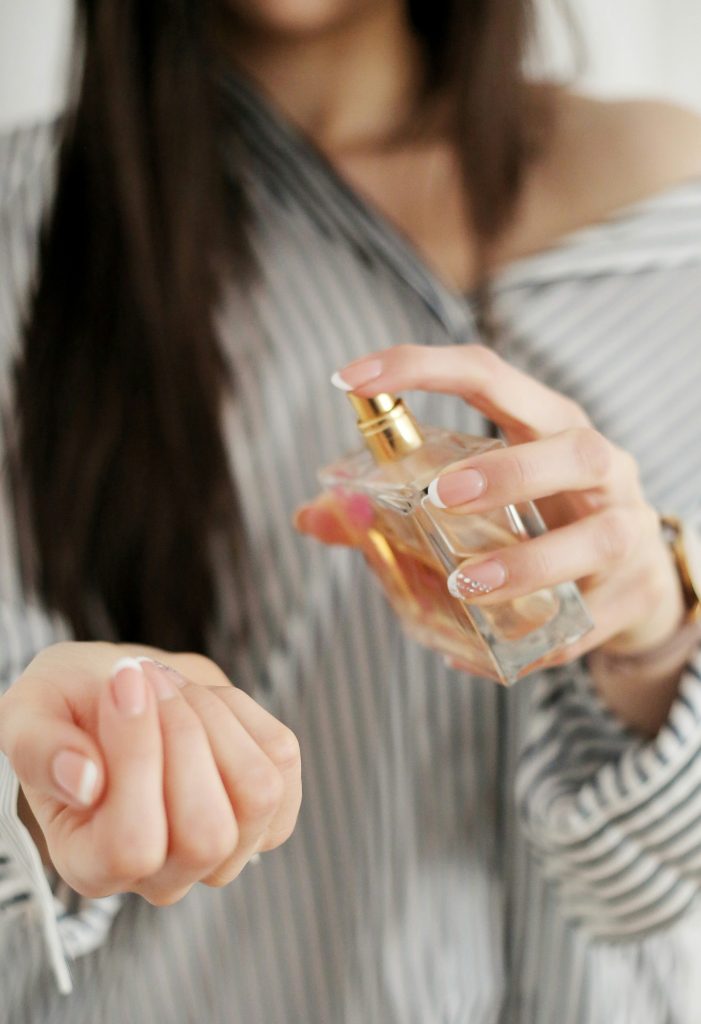
3. Spray Perfume on Your Pulse Points
If you are wondering where to spray perfume, begin with warm pulse points. These are areas where blood vessels sit closer to the skin, creating gentle warmth that can help diffuse fragrance throughout the day.
The wrists, sides of the neck, areas behind the ears, inner elbows, backs of the knees, and upper chest are all commonly used application points. There is no need to spray every area at once. Choosing two or three locations according to your outfit, environment, and preferred intensity is usually enough.
For everyday wear, a light application to the wrists and sides of the neck may be sufficient. When wearing a dress or skirt, applying fragrance behind the knees can create a subtle scent trail as you move.
Avoid using perfume on irritated, broken, or freshly shaved skin. Perfume should not be applied as an underarm product either, because alcohol-based formulas may cause irritation and are not a substitute for deodorant.
4. Don’t Rub Your Wrists Together
Rubbing your wrists together after applying perfume is a common habit, but it is unnecessary. Friction spreads the fragrance across the skin and may affect the way its delicate opening develops.
Instead, spray the perfume and allow it to dry naturally. If you want to transfer a small amount to the other wrist, gently press the wrists together rather than rubbing them vigorously. Better still, spray each selected pulse point directly and let the fragrance settle on its own.
Giving perfume time to develop naturally allows you to experience its intended progression from top notes to heart notes and, eventually, base notes.
5. Layer Your Fragrance Thoughtfully
Fragrance layering can create a longer-lasting scent foundation, and it does not necessarily mean combining several perfumes.
You can begin by washing with an unscented or lightly scented shower gel, following with an unscented or matching body lotion, and finishing with your perfume. If the fragrance brand offers a coordinating body cream, fragrance oil, or shower product, these products can complement the perfume without introducing unrelated aromas.
It is also possible to layer two perfumes for a more personalized result, but the process should begin gradually. Fragrances that share a note or belong to compatible families are often easier to combine. Citrus can work well with woods, florals with musk, vanilla with amber, and rose with soft spices.
Start with one spray of each fragrance, test the combination on your skin, and allow it to develop before adding more. Thoughtful layering should add depth and dimension without making the result overwhelming.
6. Choose the Right Fragrance Concentration
Fragrance concentration can influence both intensity and longevity. In general, formulas containing a higher proportion of aromatic compounds tend to last longer than lighter formats, although performance also depends on the composition, skin, climate, and individual product.
Body mists are usually light and refreshing and may be designed for generous or repeated application. Eau de Cologne is often fresh and relatively delicate, while Eau de Toilette is typically airy and suitable for everyday wear. Eau de Parfum tends to be richer and more concentrated than Eau de Toilette, and Parfum or Extrait de Parfum is usually among the most concentrated fragrance formats.
If longevity is a priority, an Eau de Parfum or Parfum may be a suitable option. However, concentration is not the only factor. The ingredients and overall structure of the formula also matter.
Fresh citrus and airy green notes may create a bright opening but fade sooner, while woods, musk, amber, vanilla, patchouli, and resins often form a deeper and more persistent base. This does not mean that every woody fragrance will automatically outlast every citrus fragrance. The complete composition should always be considered rather than judging performance by a single note.
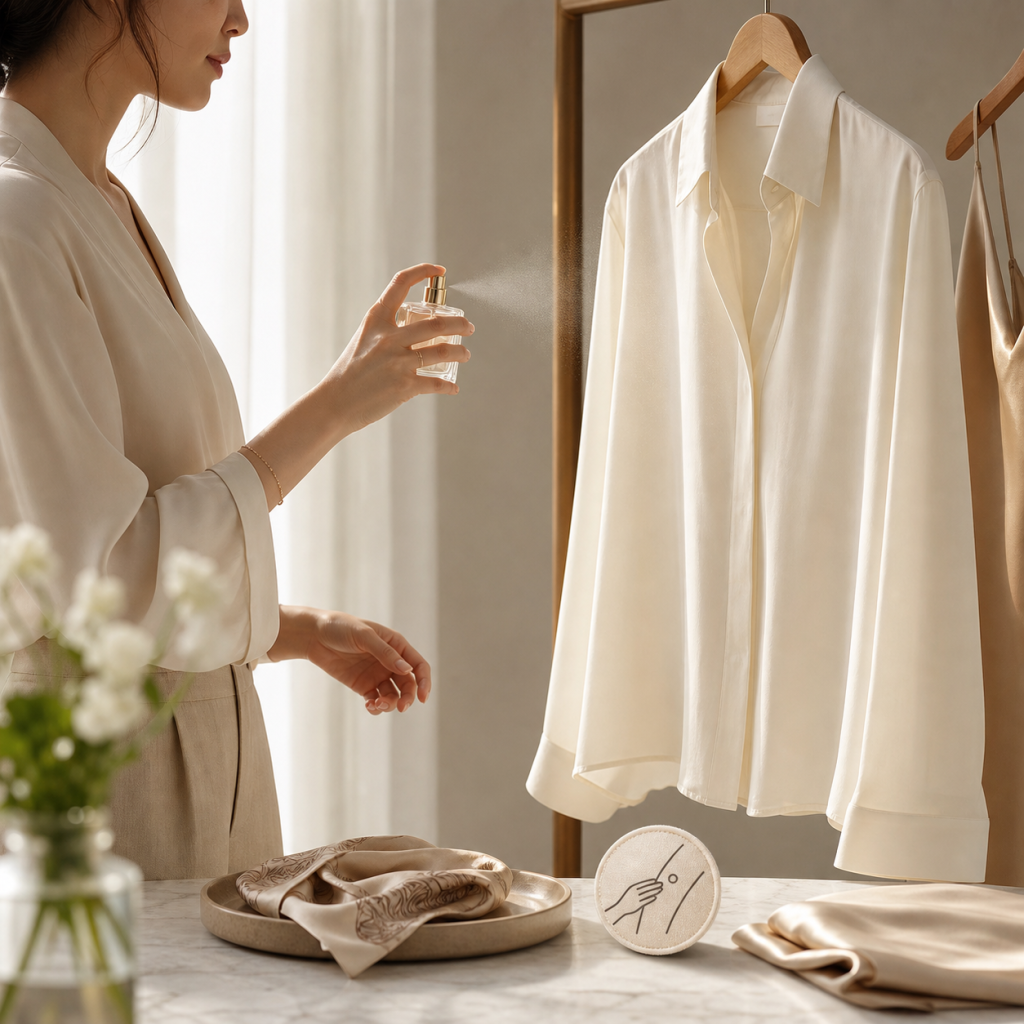
7. Apply Fragrance to Clothing Carefully
Fabric often holds scent differently from skin and may retain it for longer, so a light spray on clothing can complement the fragrance worn on your pulse points.
However, perfume may stain, discolor, or damage certain materials. Extra care is needed with silk, satin, leather, suede, light-colored fabrics, delicate or vintage garments, jewelry, and coated accessories.
Always check the garment’s care instructions and test the perfume on an inconspicuous area first. Spray from a reasonable distance and avoid soaking the fabric. When you are uncertain whether a material is suitable, apply the perfume to your skin instead.
Keep in mind that fragrance develops differently on fabric because clothing does not provide the warmth or natural chemistry of skin. As a result, the scent on your clothes may differ slightly from what you experience on your wrist.
8. Be Gentle When Scenting Your Hair
Hair can carry fragrance beautifully, especially as it moves, but repeatedly spraying an alcohol-based perfume directly onto the hair may contribute to dryness.
A gentler approach is to spray a small amount onto a hairbrush, wait a few seconds, and then lightly brush it through the lengths of your hair. Avoid the scalp and do not saturate the brush.
Alternatively, choose a product specifically formulated as a hair mist. Hair perfumes are designed for this purpose and may offer a softer way to create a subtle scent trail.
9. Store Your Perfume Properly
Proper storage helps preserve the fragrance inside the bottle. Heat, direct sunlight, humidity, and repeated temperature changes can affect perfume over time. Although a decorative bottle may look beautiful on a sunny vanity or bathroom shelf, those locations often do not provide a stable environment.
Keep your perfume in a cool, dark, and dry place, away from windows, direct sunlight, heaters, and other sources of heat. Avoid storing it in a humid bathroom. Secure the cap when possible, and consider keeping the bottle inside its original box for additional protection from light.
A bedroom drawer, closed cabinet, or shaded shelf with a stable temperature is generally a better choice than a windowsill or bathroom counter. There is also no need to shake the bottle before applying the fragrance. Gentle handling and stable storage conditions are sufficient.
10. Reapply Strategically Instead of Overspraying
More perfume does not necessarily mean better performance. Applying too much at once can become overpowering for both you and the people around you.
Begin with a moderate amount and allow the fragrance to develop before deciding whether you need more. The opening notes may seem powerful immediately after application, while the dry-down naturally becomes softer and stays closer to the skin.
For a long day, consider carrying a travel spray, rollerball, or sample-sized bottle. A small afternoon touch-up often provides a fresher and more controlled result than overspraying in the morning.
When reapplying, one or two light sprays may be enough. Always take your surroundings into account, as an amount that feels appropriate outdoors may be too intense in an office, restaurant, airplane, or other enclosed setting.
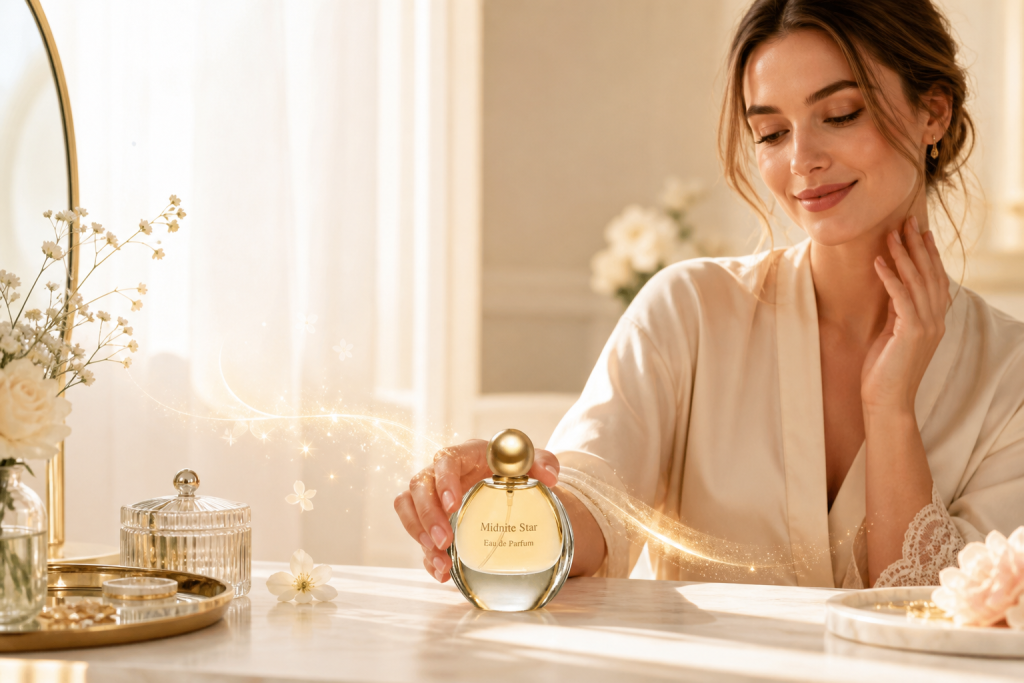
Why Can’t I Smell My Perfume Anymore?
Sometimes your perfume has not disappeared—you may simply have become accustomed to it.
This phenomenon is often described as olfactory adaptation or nose blindness. After continuous exposure to the same aroma, your brain may begin to pay less attention to it. Other people may still notice your fragrance even when you can no longer detect it clearly.
Before applying more, step outside for some fresh air or ask someone you trust whether they can still smell the fragrance at a comfortable distance.
To reduce the chance of becoming accustomed to the scent too quickly, avoid spraying heavily near your nose or directly onto the front of your neck. Wearing perfume on the wrists, inner elbows, or behind the knees may create a gentler fragrance trail. Rotating between a few different perfumes can also help each scent remain more noticeable and distinctive.
Common Perfume Mistakes to Avoid
Many perfume-performance issues come from applying fragrance to very dry skin. Using an unscented moisturizer first can create a better base and help the scent feel more persistent.
Rubbing the wrists together is another common mistake. Instead of rubbing, allow the perfume to dry and develop naturally on your skin.
Storage also makes a difference. Bathrooms expose bottles to humidity and temperature fluctuations, while windowsills and sunny vanities expose them to light and heat. A cool, shaded place with a stable temperature is a more suitable choice.
When applying perfume to clothing, avoid spraying delicate fabrics without testing first, as some formulas may leave marks or damage the material. Repeatedly spraying alcohol-based fragrance directly onto the hair may also contribute to dryness, so a brush application method or dedicated hair mist is preferable.
Finally, resist the urge to apply more perfume as soon as you stop noticing it. Olfactory adaptation may be the reason the scent seems to have disappeared. It is also important not to expect every fragrance to perform in the same way. Concentration, notes, formula, skin type, temperature, humidity, and activity level can all influence longevity.
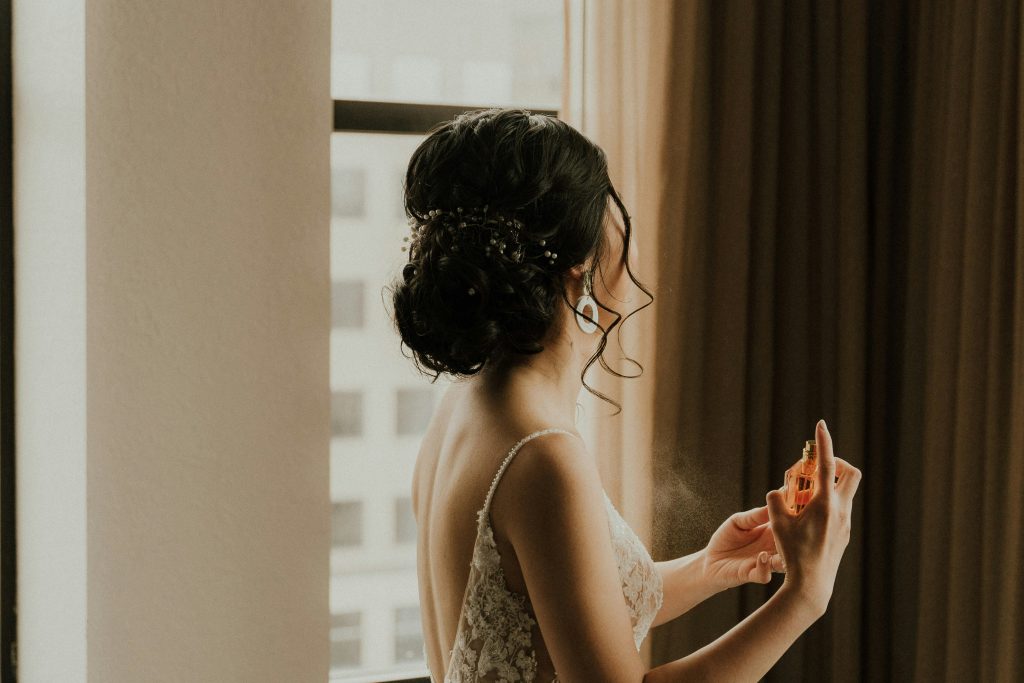
How Long Does Perfume Last on the Skin?
There is no universal answer because fragrance longevity is affected by many interconnected factors.
The concentration and composition of the fragrance play an important role, as do skin type, hydration, application amount, and application area. Temperature, humidity, physical activity, clothing, fabric, and individual scent perception can also change how long a perfume remains noticeable.
An Eau de Parfum often lasts longer than a lighter body mist or Eau de Toilette, but this is a general tendency rather than a guarantee. A well-constructed Eau de Toilette may sometimes outperform a particular Eau de Parfum, depending on its formula and the conditions in which it is worn.
Rather than judging a fragrance only by its first hour, pay attention to how it evolves. A bright opening may gradually become a quieter heart before settling into a warm, skin-like base. A softer dry-down does not necessarily mean the perfume has completely disappeared.
Final Thoughts
Making perfume last longer is less about applying more and more about creating the right conditions.
Apply fragrance to clean, moisturized skin and focus on a few warm pulse points. Let the perfume dry without rubbing it, layer complementary products when appropriate, and keep the bottle away from heat, humidity, and sunlight. If you need to refresh the scent later in the day, reapply lightly rather than overspraying at the beginning.
Most importantly, enjoy the way your fragrance changes throughout the day. Perfume is not meant to remain frozen in its opening moment. Its evolution—from the first impression to the final trace—is part of what makes wearing fragrance so personal.
Ready to discover your next signature scent? Explore the [Brand Name] [Fragrance Collection], featuring [brief, truthful description of your collection].
[Explore the Collection →]([Collection Link])
Frequently Asked Questions
Where should I apply perfume so it lasts longer?
Apply perfume to warm pulse points such as the wrists, sides of the neck, areas behind the ears, inner elbows, and backs of the knees. You do not need to spray every area; choosing two or three points is generally enough.
Should I apply perfume before or after getting dressed?
Applying perfume to moisturized skin before getting dressed allows it to interact naturally with your skin. Let the fragrance dry briefly before putting on your clothes. You may also lightly scent clothing, but always test the fabric first.
Does perfume last longer on skin or clothes?
Fragrance may remain detectable on fabric longer than on skin, but it develops more naturally on warm skin. Combining careful skin application with a light, fabric-safe spray can provide both natural development and greater longevity.
Does petroleum jelly make perfume last longer?
Applying a very small amount of petroleum jelly to a pulse point may create an occlusive base that helps some fragrances cling to the skin. However, an unscented body lotion is often easier to spread over larger areas and may feel more comfortable.
Why shouldn’t I rub perfume into my wrists?
Rubbing creates friction and may interfere with the natural development of the fragrance’s opening. Spray the perfume and allow it to dry on its own.
Is Eau de Parfum always longer-lasting than Eau de Toilette?
Eau de Parfum usually contains a higher fragrance concentration and often lasts longer, but this is not an absolute rule. The formula, fragrance notes, skin chemistry, climate, and environment also influence performance.
Can I spray regular perfume on my hair?
You can, but repeated direct application of an alcohol-based perfume may dry the hair. A gentler option is to spray a small amount onto a brush before running it through the lengths, or to use a dedicated hair mist.
Should perfume be stored in the refrigerator?
In most cases, refrigeration is unnecessary. A cool, dark cabinet with a stable temperature is sufficient. Avoid direct sunlight, high heat, humidity, and frequent temperature changes, and follow the manufacturer’s guidance if the product has special storage requirements.
Does perfume expire?
Perfume can change over time, especially when exposed to heat, air, humidity, or sunlight. A noticeable alteration in color, texture, or scent may indicate that the fragrance has deteriorated.